

Sales Development

Lauren Daniels
August 20, 2026

If you're building pipeline for an HR tech or staffing platform, you've probably noticed something odd: the tactics that work for a typical SaaS company convert at half the rate here.
There's a reason for that. HR tech and staffing platforms usually sell into two distinct groups at once, and sometimes both in the same deal.

Group one is internal HR and talent acquisition teams at companies looking to fix a process problem: too much time spent screening resumes, too many hires falling through in the first 90 days, no visibility into hiring pipeline health.
Group two is staffing and recruitment agencies themselves, who need your platform to make their own client-facing operations faster, whether that's sourcing, matching, or placing candidates.
These two buyers care about completely different things. An internal HR leader wants to know your platform reduces time-to-hire and integrates with their existing HRIS. A staffing agency wants to know it helps them fill more roles, faster, without adding headcount.
Send both groups the same pitch deck and neither one feels like you built this for them.
A few numbers explain why HR tech lead generation has gotten tougher over the last couple of years:

It means the companies getting meetings booked are the ones adapting their targeting and messaging to these realities, not the ones sending the same sequence to every HR-titled contact they can find.
The single biggest lever for lead generation for HR tech and staffing platforms is separating your outreach by buyer type entirely, rather than just by industry.
For internal HR and TA teams, the message needs to center on measurable operational relief:
For staffing and recruitment agencies, the message needs to center on throughput and margin:
Trying to write one email that serves both audiences usually results in messaging so generic it doesn't land with either. Split your sequences early, even if it means running two smaller campaigns instead of one large one.
Email remains a primary channel for HR tech outreach, largely because HR and recruiting professionals still operate heavily out of their inbox. But volume is the enemy here. Recruiters and HR leaders send and receive an enormous number of emails daily, which means poor deliverability quietly kills campaigns before a prospect ever sees the message.
Getting flagged as spam, even occasionally, compounds over time. If your domain reputation takes a hit, every future campaign suffers. This is a genuinely underrated risk in HR tech lead generation specifically, because the target audience's inbox is already so saturated with vendor noise that spam filters trained on aggregate behavior tend to be aggressive.
What helps: keeping messages short, avoiding sales-heavy language that trips filters, and warming up new sending domains properly before scaling volume.
This is worth sitting with: your buyers, both HR leaders and staffing professionals, are more active on LinkedIn than almost any other B2B audience, because LinkedIn is directly relevant to their day job. HR and recruiting professionals check LinkedIn as part of their actual work, along with networking.
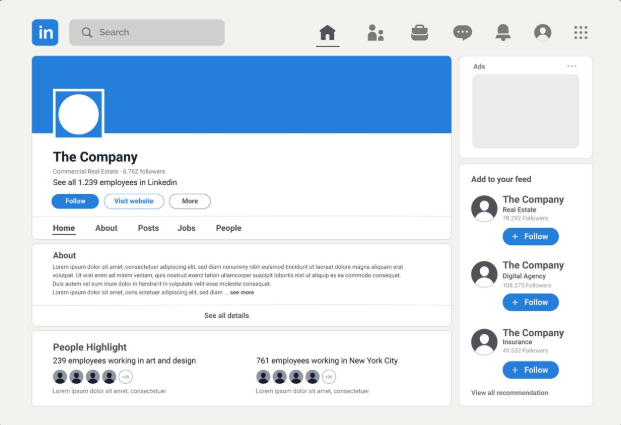
That means LinkedIn outreach in this category doesn't feel as intrusive as it does in other industries. A recruiter accepting a connection request or reading a DM from a relevant vendor is a normal part of their week.
Practical ways to use this:
HR and staffing professionals attend industry events at a higher rate than many other B2B categories, largely because relationship-building and reputation matter enormously in a services-adjacent industry like staffing.
A pattern that works well: research event attendee lists or relevant conference hashtags in advance, identify prospects planning to attend, and send personalized outreach ahead of the event rather than waiting to network cold on-site.
This turns a conference from a passive brand-awareness exercise into an active pipeline-building one.
Job market conditions shift constantly, but your positioning around specific hiring verticals doesn't need to. Content addressing specific pain points, healthcare staffing compliance, IT contractor classification, and seasonal retail hiring tends to outperform generic AI recruiting software content because it signals real domain expertise rather than surface-level familiarity.
This works particularly well as a complement to outbound rather than a replacement for it. Inbound leads from content tend to arrive further along in their evaluation, which shortens your sales cycle when outbound and content strategies run in parallel.
Treating HR as one homogenous title. An HR generalist at a 50-person company and a VP of Talent Acquisition at an enterprise have almost nothing in common in terms of buying authority, budget, or urgency. Segment accordingly.
Ignoring market cyclicality. If tech hiring has slowed and manufacturing or healthcare hiring is surging, continuing to target tech-vertical staffing agencies at the same rate is a resourcing mistake. Shift targeting toward verticals with active demand.
Overusing AI-powered as a differentiator. At this point, nearly every competing vendor claims some AI capability. Leading with that term alone in your messaging blends you into the noise rather than separating you from it. Lead with the specific outcome instead.
Under-resourcing deliverability. Given how saturated HR inboxes are, a domain reputation issue can quietly suppress response rates for months without an obvious cause. This is one of the most common reasons a previously working campaign suddenly stops converting.
Failing to qualify individual job seekers out of the funnel. If your platform serves staffing agencies, expect some inbound interest from individuals hoping to be placed themselves rather than genuine agency buyers. Build qualification steps early to avoid wasting SDR time on the wrong conversations.
HR tech and staffing platforms handle candidate and employee data, which means your lead generation practices need to hold up to the same scrutiny as your product does.
This shows up in a few practical ways:
None of this needs to slow you down. It just needs to be built into your process rather than treated as an afterthought.
HR tech and staffing platforms aren't struggling to generate leads because the market has dried up. Hiring, staffing, and workforce management remain constant needs regardless of economic conditions.
The struggle is almost always a targeting and messaging problem: treating two genuinely different buyers as one audience, leaning on generic AI positioning in a market oversaturated with that exact claim, and under-investing in the deliverability and compliance groundwork that this specific industry demands.
Get the segmentation right, lead with LinkedIn and events where your buyers are already paying attention, and treat compliance as part of the strategy rather than a legal afterthought, and this category responds well to outbound. It's a market that runs on trust and specificity, and the platforms that show up with both tend to win the meeting.
If you're working on outbound for an HR tech or workforce company, the challenge is knowing who to reach, how to reach them, and what makes a conversation relevant to them. At Whistle, we support HR and workforce companies with SDR programs that combine ICP and targeting with phone, email, and LinkedIn outreach, with the focus on creating qualified conversations and opportunities for sales teams.
If this is something you're working through right now, book a call with the Whistle team. We’re always happy to compare notes on what’s working, what isn’t, and where things tend to get stuck.