The short answer is no, the longer answer is that you’re asking the wrong question. The better question to ask is how you can use AI cold calling without disrupting your sales process.
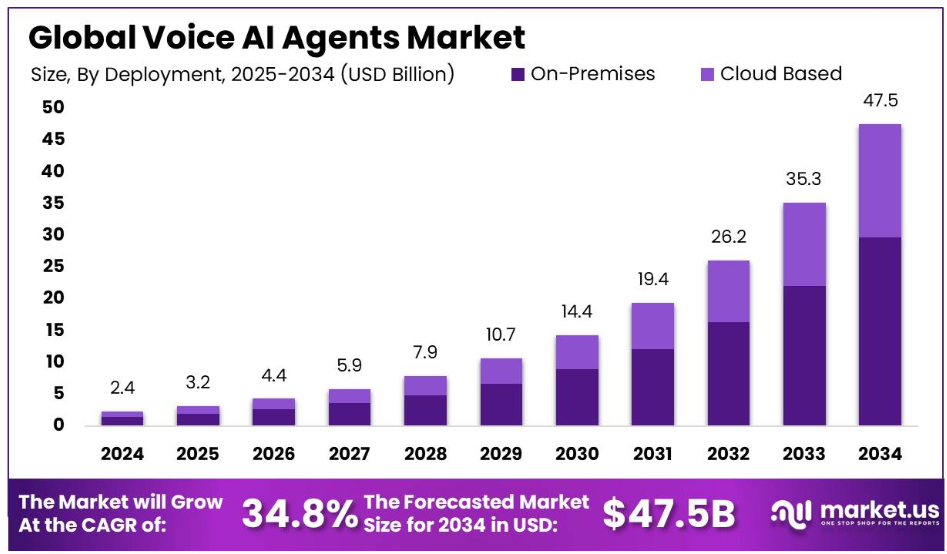
Let’s be honest, there are no signs of the technology slowing down. The voice AI agents market was valued at $2.4 billion in 2024, and is expected to reach $47.5 billion by 2034, according to research published by Market.us. This is a 34.8% annual growth rate. Market analysis by AIVoiceResearch further reveals that implementation of production voice agents rose by 340% year-on-year across more than 500 organisations, in 2025 alone. The proof is clear; your competitors are testing it while some others are already running it.
At the end of the day, it comes down to the right pairing, more than the right tool. Gartner surveyed 1,026 B2B sellers and found that those who partner effectively with AI tools are 3.7 times more likely to meet their quota than those who do not.
This is how we think about the three models at Whistle: Fully automated calling hands every conversation to a machine that cannot read a room. Human-only calling runs out of hours. A blend of both uses AI for volume, and people for judgement. Eventually, that is the model which makes sense for most B2B tech teams.
The answer to the AI vs human SDRs question therefore, is not to replace your human SDRs. It’s to use the machine to take volume off your human SDRs, and free up their bandwidth so they can handle the complexities that your AI tools cannot.
What AI cold calling succeeds at:
AI wins on volume, consistency and speed. So the comparison with human SDRs is lopsided to favour AI on these three measures. But here’s where it truly earns its place:
Unlimited scale. It works through thousands of numbers without fatigue, so every account on your list gets a first call.
Lead qualifications. It asks the same questions on every call, and flags basic fit in terms of role, company size and whether the problem exists.
Scheduling meetings. It handles calendar logic and time zones. So a yes becomes an invitation before the call ends.
Follow-up sequences. No step is skipped, and no callback is forgotten, irrespective of how long the sequence runs.
Voicemail handling. It recognises voicemail quickly, leaves the right message, and logs the attempt.
Phone tree navigation. Some platforms get through automated attendants to reach the right person.
24/7 availability. It calls across time zones, so a team in one market can reach prospects in another during their working day. For example, a team sitting in the US can reach prospects based in London or Sydney.
Data processing speed. It reads CRM and enrichment data in seconds, and routes each call by priority.
Pattern recognition. It spots which openers, scripts and call windows convert. Then, it repeats only what works.
It’s important to remember that AI is only as good as the data behind it. A clean target list matters more than the tool, which is why we wrote about ABM list building. In the AI sales agents vs human sales reps debate, this is the part of the scoreboard that AI owns, but only when the inputs are right.
So far we’ve established that there are some things that AI does better than people. But the machine stops where judgement starts, and that’s where human SDRs take over. In head-to-head tests cited by Salesmotion, human SDRs generated 2.6 times more revenue, $147,000 against $56,000, and 71% of their meetings showed up, against 52% for AI. There is a skill gap that AI cannot close, and that’s where human SDRs lead the way.
Deep account research. Most AI personalisations happen based on LinkedIn profiles and company descriptions. A human SDR, in comparison, reads the earnings call, spots the hiring pattern, and notices the competitor move that makes an opener land. Generic personalisation from a LinkedIn headline doesn’t come anywhere close.
Relationship building. Enterprise and B2B tech deals need trust to be established with several stakeholders, and that can happen over months. An AI voice agent can book the first call, but it cannot earn a second one from a sceptical CFO. That’s where a human SDR wins.
Creative problem solving. When a prospect says something the script never planned for, AI often ends up replying with something generic or awkward, which costs credibility. Humans, on the contrary, know how to adapt to the flow of the conversation without needing a script.
Conversational intelligence. Gartner found that sellers who infer a buyer’s unspoken beliefs, feelings and intentions are 2.9 times more likely to meet quota. This is a skill called mentalising, where a person hears the pause before “we’re happy with our current vendor,” and knows whether it means not now or not ever. This is a differentiation AI doesn’t always know how to make.
Complex negotiations. Procurement, commercial terms and legal questions need judgement from a real person who can assess the situation and commit to a next step accordingly.
Strategic thinking. A human SDR can expertly decide whether an account needs a call, a LinkedIn touch or a warm introduction. In such situations, timing becomes the real bottleneck, and judging whether an account is ready or not takes real human work.
In an AI SDR vs. human SDR contest, people win hands-down on judgment, because ultimately that’s what decides which meetings turn into deals. Human SDRs should then focus on excelling where machines continue to struggle. Conversational intelligence is an integral part of that excellence.
What human SDRs should focus on
The role of human SDRs is changing. AI can take on roughly 70% of a human’s time spent on research and admin. This leaves the sales reps free for the complex tasks that need their attention. We call this a productivity shift, and there are five habits that separate the SDRs who gain from this shift.
Learn to work with AI. Set up the AI cold calling campaign, review which prospects the tool qualified, and take the warm handoffs. In the AI vs human SDR conversation, the humans that end up succeeding are the ones that treat AI less as a tool, and more as a teammate.
Double down on what AI can’t fix. Spend the freed up hours and bandwidth on objections, multi-stakeholder politics, and discovery that shapes the deal.
Prioritise conversational intelligence. Review both AI and human call recordings on a weekly basis. Make a note of which objections keep coming up and where exactly AI misread the room. Without that insight, you can neither coach the machine nor your team in order to make the next call better.
Invest in AI literacy. Understand what your tool can and cannot do. Platforms differ on customisation, compliance controls and handoff. So the human SDRs who understand those trade-offs set up better campaigns.
Focus on quality over quantity. Picture an AI voice agent that books 100 meetings in a week, but 80 of them are unqualified. What this essentially means is you have not gained a pipeline. Instead, you have burned 80 calendar slots. This is why a human SDR is necessary as the real filter.
How to decide what model works best for you
There is no single right answer to the AI cold calling vs human SDRs decision. But there are five notable factors that can help settle it.
Model
What it means
Where it breaks
Where it fits
Fully automated AI
AI makes and qualifies every call.
Misreads the room, weaker show rates, potential brand risk.
Narrow, high volume tasks, with simple messaging.
Human only
SDRs research, dial, qualify and follow up every conversation manually.
Limited capacity, patchy follow-up, and time lost to admin.
Complex, high value deals with several stakeholders.
Hybrid
AI handles volume, voicemail, scheduling and follow-up. SDRs handle live conversations.