

Sales Development

Lauren Daniels
August 14, 2026
.jpg)
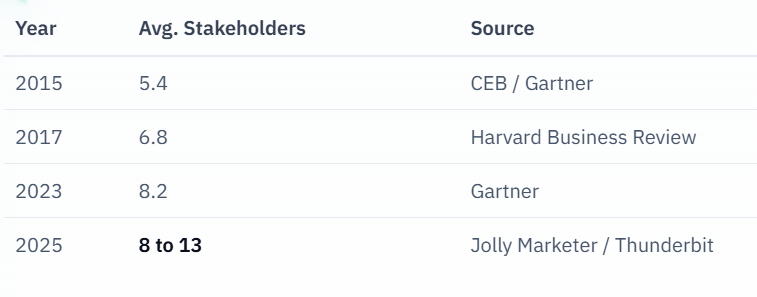
Most B2B lead generation advice assumes a buyer who moves in weeks, responds to urgency, and can make a purchase decision without consulting eight other people. PropTech breaks all of those assumptions.
A PropTech purchase typically involves 8 to 13 stakeholders across facilities, finance, sustainability, and IT departments. Each of those stakeholders carries different priorities. A facilities director is evaluating uptime and maintenance costs. A CFO is looking at total cost of ownership and compliance exposure. A sustainability director needs ESG metrics and emissions reporting. A property manager cares about tenant experience and operational efficiency. None of them are the same conversation.
Enterprise sales cycles in real estate tech run 12 to 18 months. Mid-market cycles run 3 to 9 months. And unlike most B2B categories, the triggers that create genuine purchase intent in PropTech are often external events: IFRS 16 and ASC 842 compliance deadlines, building permit activity, energy performance issues, EHR upgrade cycles, portfolio acquisitions, and leadership changes. Outreach that is not timed to those signals tends to land in the wrong window and generate no response.
The data behind this is consistent. Nearly 86% of B2B purchases stall during the buying process. Buyers spend only 17% of their purchase time directly with suppliers. That means the window for a meaningful conversation is narrow, and the window for an irrelevant one is enormous.
The companies building real estate lead generation B2B pipelines that actually move are the ones who treat buying signal timing and multi-stakeholder coverage as the core of the strategy, not an optional extra layer on top of volume-based outreach.
The single biggest mistake in PropTech lead generation is treating commercial real estate as
PropTech lead generation at a meaningful conversion rate depends on knowing which signals indicate a buying window, not just which companies match a demographic profile.
The signals that consistently correlate with active buying intent in this space include:
Building-level triggers. Permit activity, energy cost spikes, maintenance issues, and occupancy rate changes indicate operational pressure. A building experiencing Energy Star score declines while facing an upcoming compliance deadline is a high-probability prospect. A property that just went through a portfolio acquisition is likely to be evaluating technology at the portfolio level.
Compliance signals. IFRS 16 and ASC 842 lease accounting mandates create defined, non-negotiable buying windows. ESG reporting deadlines tied to city benchmarking ordinances create urgency that is external and not deferrable. Companies with upcoming compliance exposure are actively looking for solutions, and reaching them before the deadline rather than after it is the difference between being on the shortlist and missing the evaluation entirely.
Technographic data. Knowing which property management systems a prospect currently runs Yardi, MRI, RealPage and what gaps exist in their current stack tells you what the conversation needs to be about. It also tells you which competitors are already embedded and what switching costs look like.
Hiring signals. When a real estate company hires a new Director of Sustainability, Head of Proptech, or VP of Facilities, it signals an internal priority shift. Those hires are almost always followed by technology evaluation cycles within 60 to 90 days.
Leadership changes. New CFOs, new COOs, and new property management leadership consistently trigger vendor re-evaluations within the first year of tenure. Outreach timed to those transitions lands at a moment of genuine openness.
Flat-volume cold sequences ignore all of these signals. They treat every company in the ICP with equal probability regardless of where they are in their actual buying journey. The result is low response rates and a pipeline full of contacts who are not in any kind of buying window.
The single-threaded campaign is the most common failure mode in PropTech lead generation. A team identifies a facilities director as the primary contact, runs a sequence, books a meeting, and then watches the deal stall in procurement because four other stakeholders were never engaged.
With 8 to 13 people involved in a PropTech purchase, a champion at the facilities director level is necessary but not sufficient. Finance needs a cost justification built around total cost of ownership. IT needs a security and integration answer. Sustainability needs ESG reporting capability. If those conversations only start after the champion has already presented internally, the cycle stretches by months, and the deal frequently dies waiting for alignment.
Coordinated multi-channel outreach running across email, phone, and LinkedIn against the full buying committee shortens that cycle. It builds familiarity with multiple stakeholders before any single one of them is asked to champion the purchase internally. By the time a champion presents to their CFO, the CFO has already seen the company's name in a LinkedIn touch and read a compliance-specific email. That is not the same as a cold introduction from a colleague.
Campaigns using email, phone, LinkedIn, and events in structured 8 to 12 touch sequences over 3 to 4 weeks reduce cost per lead by 31% compared to single-channel efforts. Speed matters in follow-up too. Companies responding to inbound lead activity within one hour are 7 times more likely to qualify those leads than companies that respond later.
ROI calculators and compliance-focused content convert at 8.7% lead capture rates versus under 1.5% for generic content. Calculator leads request demos at 44% compared to 15% for other content formats. When outreach references specific operational challenges and quantified outcomes, the response rate reflects that specificity.
For PropTech companies, the prospecting problem is almost always a coverage problem. The buying committee is large, the cycle is long, and a sales team that is also trying to close deals cannot maintain consistent multi-stakeholder outreach across 12 to 18 months of nurture.
Whistle's outsourced SDR model addresses that directly. Vetted SDRs run coordinated outreach across cold calling, cold email, and LinkedIn as a single sequenced campaign. Each channel is assigned based on which persona it reaches most effectively. A sustainability director does not respond to the same touchpoint as a CFO evaluating lease accounting compliance. The SDRs assigned to your account are selected based on vertical familiarity, which means they understand the buying personas and the asset-class context before the first outreach goes out.
For PropTech companies where inbound interest from compliance-related content needs fast, credible follow-up to stay warm, that combined capability closes a gap that most outsourced providers do not address.
The channel mix for real estate lead generation B2B needs to be matched to the persona being reached, not defaulted to whatever is cheapest or easiest to scale.
Email remains effective for compliance-focused outreach. A message referencing a specific regulatory deadline, citing the prospect's property address, and linking to a quantified case study in their asset class performs significantly better than a generic product introduction. The average B2B cold email open rate is 27.7%, but relevance-to-persona drives the reply rate far more than subject line optimisation.
Phone breaks through to operations and facilities contacts who are often unreachable by email and not active on LinkedIn. It is the right channel for mid-level property management contacts who make or strongly influence vendor selections but do not engage with digital outreach. It is also the right channel for follow-up after an email sequence has already established context.
LinkedIn reaches CFOs, sustainability directors, and senior IT buyers who research quietly, rarely answer cold calls, and treat their inbox as low priority. It is also the platform where B2B thought leadership in the PropTech space lands. 76% of B2B marketers rated LinkedIn their most effective channel for thought leadership. For senior personas in real estate technology, appearing in their feed with technically credible content before a direct outreach lands creates familiarity that converts cold contacts into warm ones.
Webinars and events are high-converting formats in this space specifically because biotech and real estate buyers are trained on seminars. On24's 2026 benchmarks show average webinar registration-to-attendee conversion at 60%, average engagement at 49 minutes, and demo bookings driven by webinars up 73% year over year. A webinar on ASC 842 compliance or ESG benchmarking, co-presented with a real estate industry expert, fills a room with exactly the buying committee members that cold outreach struggles to reach.
The key across all channels is asset-class specificity. Generic outreach that treats all commercial real estate the same achieves under 1.5% response rates. Outreach that references specific building-level challenges and asset-class context achieves 4 to 7x higher response rates. Every channel benefits from that specificity. None of them compensates for its absence.
These apply regardless of whether the pipeline function is internal or outsourced. Getting them wrong at the start produces activity that does not convert.
1. Define your ICP at the asset-class level, not the industry level. "Commercial real estate" is not an ICP. "Facilities directors at multifamily REITs managing 2,000 or more units in markets with active city benchmarking ordinances" is an ICP. The specificity determines whether outreach is relevant or ignored.
2. Map the full buying committee before the first outreach goes out. Identify every persona with veto power or meaningful influence in the purchase decision. Build persona-specific messaging for each one. A generic message sent to the full committee is worse than no message at all. It signals that the outreach is not tailored to anyone's actual role.
3. Identify the buying triggers that are live in your target accounts right now. Which accounts have upcoming compliance deadlines? Which ones have recently hired a Director of Sustainability? Which portfolios just went through an acquisition? Those accounts are in active buying windows. Start with them.
4. Set realistic pipeline expectations. First qualified conversations arrive in 30 to 60 days from a properly structured program. Real pipeline builds steadily over quarters. Any agency promising 20 booked meetings in the first month is calendar-stuffing with unqualified contacts. A healthy ramp looks like a small number of high-quality meetings early, building as messaging and targeting tighten.
5. Track multi-stakeholder engagement. MQL counts and email open rates are vanity metrics in PropTech. The signal that matters is whether multiple stakeholders at target accounts are engaging across channels. That is what predicts a deal moving forward. Single-threaded engagement with one champion is not a pipeline indicator.

For PropTech companies weighing the build-vs-outsource decision on their SDR function, the comparison is straightforward once the full cost is included.
A fully loaded US-based SDR costs $90,000 to $100,000 annually when salary, benefits, tools, and management time are included. Recruiting takes 60 to 90 days. Ramp to full productivity takes another 60 to 90 days. Annual SDR turnover averages 35% across B2B companies. That means a meaningful portion of the first year's investment is in a rep who leaves before year two.
Outsourced SDR programs at the mid-market level run between $4,000 and $7,500 per month. The reps are already trained. The tools are included. The onboarding is days, not months. And the turnover problem sits with the agency, not with your headcount plan.
The crossover point where in-house becomes more cost-effective than outsourced is when a company has 10 or more SDRs running consistently below-average turnover on a proven playbook. Most PropTech companies building out their pipeline function are not at that point. For those companies, outsourcing generates more qualified meetings, faster, with less operational risk.
The model that consistently works for PropTech companies at the growth stage is to use outsourced SDRs to prove the outbound motion, validate ICP and messaging, and build a pipeline foundation, then bring strategic accounts in-house once the playbook is proven. That approach produces a functioning pipeline much faster than building the internal function from scratch while also trying to close deals.
Real estate lead generation B2B is a precision, timing, and coverage problem. The companies generating consistent PropTech pipeline are running asset-class-specific outreach timed to buying signals, coordinating campaigns across multi-stakeholder buying committees, and using content that quantifies operational value at the property level.
Generic sequences do not work here. Single-threaded campaigns stall at the first procurement review. And building an in-house SDR function to cover a 12-to-18-month buying cycle across eight to thirteen stakeholders is expensive and slow to produce results.
If you want to understand what a structured PropTech outbound program would look like for your specific ICP, asset class, and buying committee, book a call with the Whistle team. We will map out the approach before you commit to anything.