

B2B Insights

Lauren Daniels
September 17, 2026

Most sales conversations start in the wrong place.
The rep opens with the product. They explain the features. They walk through what it does. The prospect nods politely, says something like, “Interesting. Let me think about it,” and the conversation goes nowhere.
The product was rarely the real issue. The conversation started too far down the road.
Before someone is ready to consider a solution, they need to recognize that they have a problem worth solving. They need to understand what that problem is costing them, why it matters now, and what happens if they leave it alone.
That is where problem selling comes in.
Instead of leading with the solution, you start with the problem. You identify it, dig into its impact, and make the cost of doing nothing clear. Once the prospect sees the problem for what it is, the solution has a reason to matter.
Problem selling is the practice of identifying a customer's need or problem before they have fully recognised it themselves and then building awareness around that problem. It is sometimes called problem-centric selling as well. Your product or service becomes the solution to a problem they now believe is real.
Start with the problem. Make the need for a solution clear.
That distinction changes everything about how a sales conversation runs. In traditional solution selling, you lead with what you offer and hope it connects to something the prospect is experiencing. In problem selling, you start with what they are experiencing or what they should be experiencing and work forward from there.
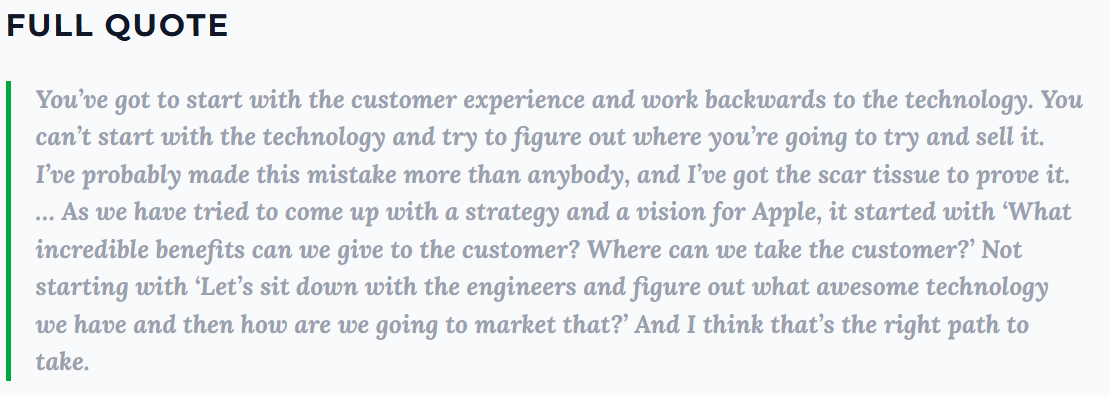
Steve Jobs articulated this principle clearly. He believed in starting with the customer experience and working backwards to the technology. Figure out what the customer needs first. Then build the product that fills it. Problem selling applies the same logic to the sales process itself.
Here is something worth sitting with: according to CSO Insights, many sales businesses lose more deals to "no decision" than to a competitor.
The prospect liked the product. They were interested. And then they did nothing.
This happens for three main reasons, and all three are problems that problem selling directly addresses.
The risk of change feels greater than the benefit. As a deal moves toward a close, stakeholders start to question whether the change is worth the disruption. They have been through failed implementations before. They are sceptical. Without a clear, felt sense of why the current situation is unacceptable, the safer option is always to stay put.
The status quo is not painful enough. If a prospect can live with how things are, they will. The problem needs to feel urgent before action becomes more appealing than inaction. Salespeople need to help prospects calculate the real cost of staying where they are. That includes the immediate pain and the compounding consequences of leaving the problem unsolved.
There are more important priorities. A rep can run a flawless sales process, have a great solution, and still lose the deal because the prospect decided to spend budget on something else. If the problem you solve is not tied to a business priority that matters right now, it will always lose to something that is.
Problem selling addresses all three by making the problem real, urgent, and impossible to ignore before the solution ever enters the conversation.
Step 1: Identify the underlying problem

Start with questions, rather than the pitches. The instinct in most sales conversations is to move toward the product the moment the prospect expresses any interest. Problem selling requires slowing that impulse down.
When a prospect asks what you do, turn it around. Ask what they are dealing with. Ask what is getting in the way. The goal in this first step is to surface a problem that exists. Ideally, one the prospect has not fully named yet.
Step 2: Understand the problem through their story
Once you have a thread to pull, follow it. Ask the prospect to tell you more about where that problem came from, what they have tried already, and what happened when those attempts fell short.
The stories prospects tell in this stage reveal the bigger picture. They show you what has failed before. They surface the emotional dimension of the problem. They tell you what a solution needs to do and what it absolutely cannot do.
This is invaluable information. Most reps skip it because they are in a hurry to get to the demo.
Step 3: Make the problem undeniable
This is the step that separates strong problem sellers from average ones.
Once you understand the problem and why it persists, help the prospect see its full impact. Make the cost clear across their team, revenue, time, and risk exposure. Give them a complete picture of what the problem is costing them.
The goal is for the status quo to feel harder to justify. The prospect should see a clear reason to make a change.
The prospect needs to feel this, not just understand it analytically. When they say "yeah, this is actually a real issue for us," you are ready for step four.
Step 4: Sell the solution
Now the product has something to land on. The prospect understands the problem, has felt its weight, and is open to a solution. Your job is to show clearly why what you offer addresses the problem better than anything else they have tried or considered.
Because you have listened properly and gathered their story, you can make this specific. A direct connection between what they told you and what you can do about it rather than a generic pitch.
Knowing the framework is one thing. Executing it consistently requires a few specific skills.
Research before the conversation. Problem selling without preparation is just guessing. You need to understand the market, understand the buyer's context, and have genuine insight into what challenges are likely to be present before you walk into the conversation. That research is what allows you to ask targeted questions rather than fishing blindly.
Open dialogue over scripted pitching. Problem selling depends on active listening. Listen closely to what the prospect is telling you. Pay attention to the details, context, and concerns behind their words.
Empathy, genuine curiosity, and the ability to let the conversation go where the prospect takes it are all essential.
Customer-centric framing throughout. The conversation should feel like it is about the prospect's situation, rather than your product. Problem-centric selling places the customer's needs at the centre of the interaction and keeps them there. Even when the solution comes up, the framing stays anchored to their world only.
A clear value case. Once the problem is real and the prospect is open to a solution, they need to know why yours is the right one. In a crowded market, that means being specific. What does it do for a business like theirs? What does the outcome actually look like? Generic value statements do not move deals forward. Specific, relevant ones do.
One of the most practical tools in problem selling is a written need narrative. This forces you to articulate the problem your product solves in a way that has nothing to do with the product itself.
A strong need narrative covers multiple things. It defines the target audience. It explains the problem they consistently face. It shows how they manage it today. It explains why those workarounds fall short. It also shows what becomes possible when the problem is solved.
The test for a good need narrative is simple. When a potential customer hears it, they should self-identify with every part of it. They should feel like you are describing their situation accurately. When that happens, they are already open to whatever comes next.
This is the kind of narrative that should underpin every cold email, every LinkedIn message, every first call. The product does not appear until the problem has been established and validated.
It is a philosophy that should run through the entire outbound motion from the first touch to the final proposal.
Cold outreach built on problem selling references a specific pain the prospect is likely experiencing. It does not lead with features. It leads with a situation the reader recognises. A well-crafted first email does not say "we help companies with X." It says "companies like yours are typically dealing with Y, here is what that tends to look like." The response rate difference is significant.
The same principle applies to follow-up. Each touch should deepen the problem. Introduce a new angle each time. Highlight a consequence the prospect may have overlooked. Give them a reason to act now.
At Whistle, our SDRs are trained to lead with the problem. Every sequence we run is built around the specific pain points of the buyer's role and situation. That is what earns the conversations that actually convert. A message that makes the prospect feel understood before they have said a word.
If your outbound is leading with the solution and not converting the way it should, the first place to look is whether the problem is being sold at all. It is worth a conversation with the team about what that looks like for your ICP.
What is problem selling?
Problem selling, or problem-centric selling, is the approach of identifying and building awareness around a customer's problem before presenting a solution. The goal is to make the prospect fully convinced that the problem is real and worth solving before the product is introduced.
How is problem selling different from solution selling?
Solution selling starts with the solution and works backward to connect it to customer pain points. Problem selling starts with the problem itself and works forward to the solution only once the problem has been fully established. The order changes the outcome because a prospect who feels the weight of a problem is far more receptive to a solution than one who has just heard a product pitch.
Why do so many deals end in "no decision"?
CSO Insights research shows that many B2B sales businesses lose more deals to "no decision" than to a competitor. This happens when the prospect does not feel the problem urgently enough, when the perceived risk of change outweighs the potential benefit, or when competing priorities take budget and attention. Problem selling addresses all three by making the problem real and urgent before the solution is presented.
What are the four steps of problem selling?
Uncover the underlying problem through questions rather than pitches. Understand the full depth of the problem by listening to the prospect's story. Make the problem undeniable by helping the prospect see its full cost and consequences. Then sell the solution as the specific, logical answer to the problem they now recognise as real.
What is a need narrative and why does it matter?
A need narrative is a written description of the customer problem that does not refer to your product. It describes who experiences the problem, what it looks and feels like, what workarounds exist and why they fall short, and what becomes possible when the problem is solved. A strong need narrative is the foundation of all effective problem selling because it forces you to fully understand and articulate the problem before you ever think about the solution.
Does problem selling work for outbound sales?
Yes and it is one of the most underused approaches in outbound. Cold emails and LinkedIn messages that lead with a specific, recognisable problem consistently outperform those that lead with product features or capabilities. The prospect does not know you yet. They do know their own problems. Starting there is what earns the next conversation.