
Sales Development
August 31, 2026
Most sales sequences fail because they are built on the wrong assumptions. Too many touches packed too close together, one channel doing all the heavy lifting, and messages so generic they could go to anyone.
The result is predictable. Reply rates stay low, pipeline becomes inconsistent, and teams start wondering whether outbound works at all. Usually, it’s the sequence that’s broken.
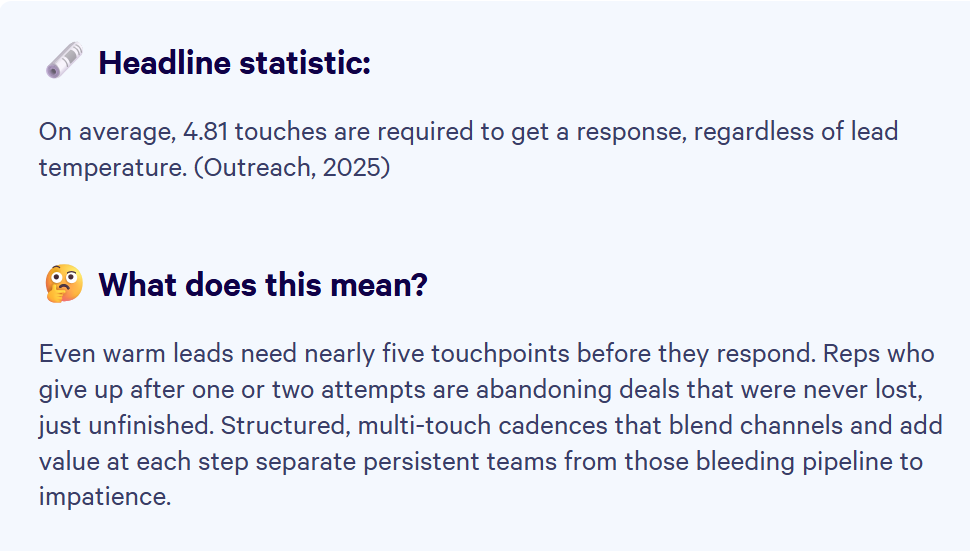
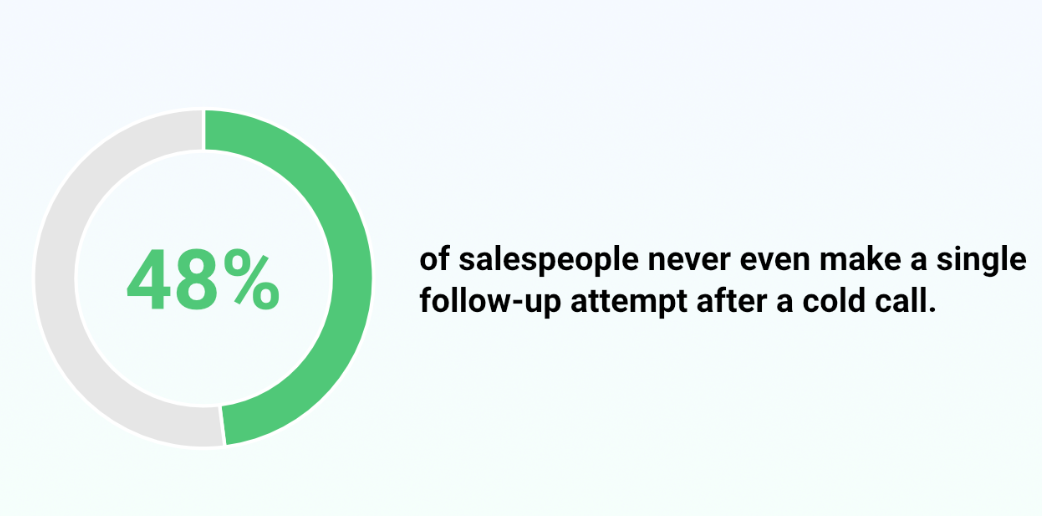
On average, 4.81 touches are required to get a response, yet 48% of salespeople never make more than one follow-up attempt. The deals lost to impatience far outnumber the deals lost to bad messaging. In other words, a lot of opportunities are being abandoned simply because someone stopped reaching out too soon.
High-performing sequences tend to get a few fundamentals right: the structure, the timing, the channel mix, and the logic behind each message. Once those pieces are in place, it becomes much easier to see what’s actually working and what needs to change when results start to flatten out.
From structuring a sequence that converts to choosing the right mix of channels beyond email and tracking the metrics that reveal what needs fixing, every element plays a role in turning outreach into results.
A sales sequence is a planned series of touchpoints across channels and time. It is designed to engage a specific prospect, move them toward a meeting, and give each touch a reason to exist beyond "just following up."
That last part is what most sequences miss. The goal is the right contact at the right moment with something worth reading or hearing.
A well-built B2B sales sequence typically combines:
What separates a proper sales sequence from spray-and-pray outreach is intentionality at every step. Each touch builds on the last, adds something new, and moves the prospect meaningfully closer to a response. Repetition without progression is the same message sent multiple times with different subject lines.
60% of customers reject an offer four times before buying, yet the average rep stops following up long before that point. The most common reason sequences fail is that they stop too soon.
4 patterns quietly kill sequence performance, and most underperforming programmes run at least two at once.
Relying on a single channel. Sales sequences using three or more channels produce 287% higher response rates than single-channel outreach. Running every touch through email means reaching a fraction of the available audience and putting the entire programme on one channel's deliverability and open rates.
Touching too fast. Spacing follow-ups two to three days apart increases reply rates by 11% compared to daily contact or longer gaps. Back-to-back emails read as desperation. Prospects need time to see the message and decide whether it is worth responding to.
Generic messaging. Personalisation beyond a first name referencing a specific role pain, a company trigger, or a piece of content the prospect published can drive reply rates two to three times higher than standard outreach. A message that could have been sent to anyone tends to be treated like it was sent to no one.
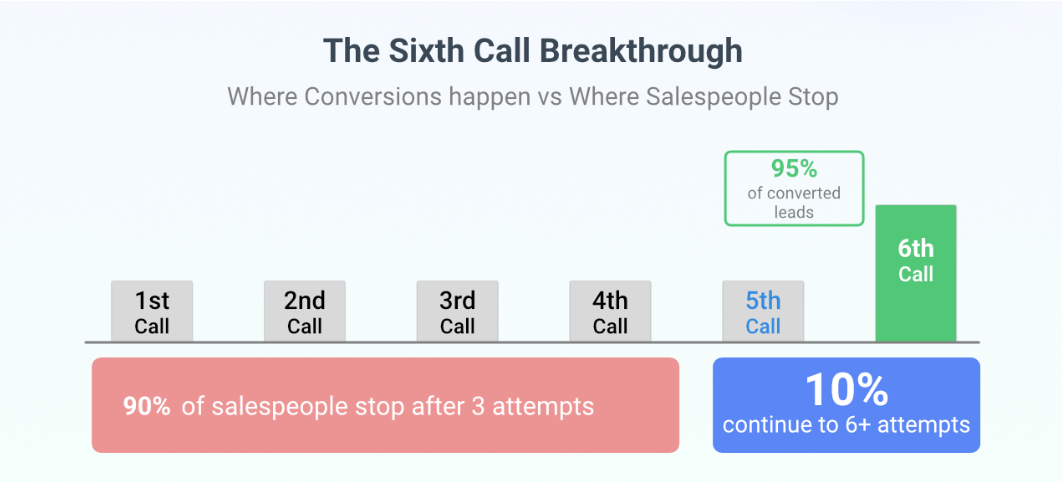
Stopping too early. 95% of converted leads are reached on the sixth contact attempt, yet only 10% of salespeople make more than three. Most reps abandon sequences that were about to work.
48% of salespeople never follow up at all after the first contact. The gap between the average rep and the top performer is a consistency and structure problem. The best sales sequences are built around that reality.
The best sales sequences in B2B run 8 to 12 touches across two to three weeks, spread across at least three channels, with each touch carrying a distinct purpose. Booking a first meeting averages 8 touches across a direct outreach sequence. A shorter sequence means stopping before the conversion window opens for most prospects.
Here is what a sample 10-day, multi-channel outbound sales sequence looks like in practice:
What is a sales sequence?
A sales sequence is a structured series of outreach touchpoints across channels and time, designed to engage a prospect and move them toward a meeting. It differs from a one-off email or cold call in that each touch builds on the previous one, and the sequence follows a defined logic from first contact to close.
How many touchpoints should a B2B sales sequence have?
The best sales sequences in B2B typically run 8 to 12 touches across two to three weeks. Booking a first meeting averages 8 touches, which means most sequences that stop at 3 or 4 are ending before the conversation has a real chance to develop.
What is the best channel mix for an outbound sales sequence?
Email, phone, and LinkedIn together consistently outperform single-channel outreach. Sequences using three or more channels produce 287% higher response rates than email-only approaches. Each channel has a distinct role: email carries context, phone creates a pattern interrupt, and LinkedIn builds familiarity over time.
How long should a B2B sales sequence run?
Two to three weeks is a practical range for most outbound sequences. Shorter than that and you are unlikely to reach the touch count where most conversions happen. Longer than that without adjusting the approach typically produces diminishing returns on the remaining effort.
What should each email in a sales sequence say?
Each email needs to earn its place. The structure that holds up consistently is a specific hook tied to something relevant about the prospect, a bridge connecting that observation to why you are reaching out, a single clear value statement, and a low-friction ask. Shorter is nearly always better. One relevant paragraph and a clear CTA outperforms a detailed pitch in cold outreach.
What is the difference between a sales sequence and a sales cadence?
The terms are often used interchangeably, but there is a useful distinction. A sales cadence describes the timing and frequency of outreach: how many touches, how far apart, over what period. A sales sequence describes the full structure including channels, messaging logic, and the purpose of each touch. A good sales sequence includes a defined cadence, but the cadence alone does not constitute a sequence.
How do you build a sales email sequence for a cold prospect?
Start with a hook specific to that prospect or their role. Connect it clearly to the problem you solve. Make a single, low-friction ask. Follow up on a two-to-three day spacing with a new angle at each step. Include at least one phone touch and one LinkedIn touch within the first five days. End with a break-up email that removes pressure and leaves the door open. Measure reply rate and positive reply rate rather than just open rate to understand where the sequence is performing and where it needs work.