

Go-to-Market

Lauren Daniels
September 11, 2026
%20.jpg)
Here is the number that should make every sales leader uncomfortable: 70% of reps send one prospecting email and never follow up. Not two. Not three. One.
Meanwhile, 80% of B2B sales require five or more follow-ups before a deal closes. That gap between what deals require and what reps actually do is a follow-up problem. And it costs companies qualified pipeline every quarter.
The instinct behind stopping at one is understandable. Nobody wants to be the person filling up a prospect's inbox. But silence after one email is rarely a signal of disinterest. In B2B, inboxes are overloaded. Priorities change constantly. Most first-touch emails arrive when prospects simply do not have the time or attention to engage.
A prospecting follow-up email creates another opportunity to engage. It keeps the conversation open and reaches the prospect when they may be more ready to respond.
The data is direct. The second follow-up alone can improve the chances of a response by up to 50%. Campaigns with 4-7 emails in a sequence generate 3 times the response rate of campaigns with only one to three emails. Reps who follow up consistently, with the right message at the right time, are more effective.
The difference often comes down to what happens after that first email. When should you follow up? What should you say? How do you add value without sounding repetitive? And when is it time to stop? Getting these details right can turn follow-up from an afterthought into a reliable pipeline source.
Before getting into mechanics, the root cause of most follow-up failure is worth naming directly. Most prospecting follow-up emails give the prospect no new reason to respond.
“Just wanted to check in on my previous message” gives the prospect little reason to respond. It simply points them back to an email they have already seen. A stronger follow-up brings something new to the conversation.
It asks for something: attention and a response, without offering anything in return. The prospect's calculation is the same the second time as it was the first: not enough here to justify a reply.
73% of B2B buyers actively avoid suppliers who send irrelevant outreach. What that means in practice is that a follow-up email with no new substance does not get a neutral response. It gets a mental categorisation as noise, which makes every subsequent email from that sender harder to break through.
The fix is a principle. Every prospecting follow-up email needs to give the prospect something they did not have from the previous message.

A relevant case study. A specific data point connected to a challenge they mentioned. An idea for their business that shows you have actually thought about their situation. A question that is genuinely easy to answer and that you actually want to know the answer to.
One new thing. Keep it short. End with a single, low-friction call to action. That is the standard every follow-up should clear before it gets sent.
The timing of a prospecting follow-up email matters more than most teams realise, and the conventional wisdom is frequently wrong.
Following up the next day after an initial outreach reduces reply rates by 11%. Waiting three days before the first follow-up produces a 31% increase in replies. The optimal window between a cold email and the first follow-up is two to five days for cold outbound. For warm prospects who have already engaged, shown interest, or requested a demo, tighten that to 24 hours.
The reasoning is practical. Too early, and the follow-up feels rushed and slightly pressuring.
The prospect is still processing the first message, and receiving another one immediately signals impatience rather than value. Too late, and the conversation has gone cold enough that the follow-up needs to do more work to re-establish context. Two to three days is the window where the initial message is still reasonably fresh, but the follow-up does not feel intrusive.
As the sequence progresses, spacing should widen. A working cadence for cold B2B outbound:
The best time to send a cold email is usually Tuesday through Thursday morning, based on the prospect’s local time zone. Recent B2B data consistently points to morning sends, although the strongest day varies across studies. A good starting point is 8 to 11 AM, with Wednesday and Thursday often performing well.
There is no single time that works for every campaign. Test different morning time slots and track your own reply data to find what works best for your audience.
For warm inbound leads, the standard changes significantly. Follow up within the same business hour when possible. This is especially important for prospects who requested a demo, downloaded a resource, or replied positively. Companies responding to inbound intent within one hour are seven times more likely to qualify those leads than those that wait until the next day.
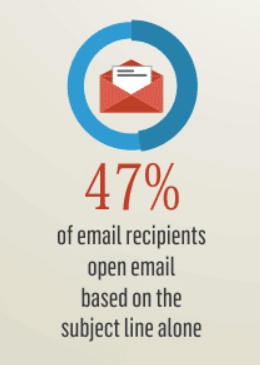
47% of B2B email recipients decide whether to open an email based solely on the subject line. A prospecting follow-up email with excellent content and a weak subject line will be invisible. Most "following up" subject lines produce exactly that outcome.
Personalised subject lines produce a 46% open rate compared to 35% for generic alternatives. Reply rates jump from 3% to 7% with personalisation in the subject line alone. That is a 133% increase in replies from one variable.
What works in B2B prospecting follow-up subject lines:
Test subject lines with actual segments. What opens with a VP of Sales may differ significantly from what lands with a CFO or a procurement lead.
A prospecting follow-up email works best when it follows a clear, consistent structure. Keep it short, simple, and focused.
The question of how many times to follow up does not have a universal answer. But it has practical guardrails.
For cold outbound, four to six touches over three to four weeks is the right range before moving to a long-term nurture. Beyond four follow-up emails, reply rates decline, and spam complaints increase sharply. A well-structured sequence with genuinely varied content at each step outperforms persistence alone.
For warm prospects who have shown genuine interest, attended a demo, or replied once and then gone quiet, follow up until you get a clear yes or no. Silence is a maybe, not a no. These prospects warrant more sustained outreach because the cost of re-engagement is lower than starting from scratch with a new contact.
80% of sales happen between the fourth and eleventh follow-up. That means consistency matters. Keep the conversation going. Give prospects a reason to engage at every stage. Share something useful with each follow-up. Most importantly, do not give up after one or two attempts.
When the sequence has run its course, and silence is complete, a clean break-up email is the right close. It leaves a positive impression, explicitly invites the prospect to re-engage when timing changes, and protects the relationship for a future contact when circumstances are different.
These templates are starting points. Customise at least 20 to 30% of each before sending. The structure provides consistency; the personalisation provides the reason to reply.
Template 1: First follow-up after no response (Day 2 to 3)
Subject: Quick question about [Company Name]
Hi [First Name],
I reached out earlier this week about [specific description of what you offered].
One thing I should have included: [one relevant case study reference, data point, or specific insight tied to their industry or a challenge you know they face].
Worth 15 minutes to discuss? Happy to keep it short.
[Sign-off]
Template 2: Value-add follow-up (Day 5 to 7)
Subject: Something relevant for [Company Name]
Hi [First Name],
Sharing this because it connects directly to what you mentioned about [specific challenge or goal, if you have it, or a pain point common in their industry].
[One sentence describing the case study, data point, or resource. Keep it specific.]
Happy to walk through how this applies to [Company Name] if it's useful.
[Sign-off]
Template 3: Different angle follow-up (Day 10 to 14)
Subject: One idea for [Company Name]
Hi [First Name],
I want to try a different angle on why I've been reaching out.
[One specific observation about their company, industry trend, or a challenge their peers are facing that connects to what you offer.]
Would this be relevant to your priorities right now? I’d be interested to hear what you think.
[Sign-off]
Template 4: Re-engagement after extended silence (Day 21 to 28)
Subject: Should I close your file, [First Name]?
Hi [First Name],
I’ve reached out a few times and haven’t heard back. I’m guessing the timing may not be right, or this may not be relevant to you right now.
Either way, no pressure. If [specific challenge or goal] becomes a priority, I am here. And if there is a better person on your team to be talking to, I am happy to redirect.
[Sign-off]
Template 5: Break-up email (Final touch)
Subject: Closing the loop, [First Name]
Hi [First Name],
I have tried to connect a few times. I’ll leave it here for now and give you some space.
If anything changes on your end, [your contact link or email] is here when it is useful.
Thanks for your time either way.
[Sign-off]
The prospecting follow-up email sent after a sales call is different from every other email in the sequence. A conversation has already happened. The prospect is engaged. What you do in the next two hours determines whether that momentum carries forward or dissipates while they move on to the rest of their day.
The post-call follow-up is a confirmation of what matters, a demonstration that you listened, and a clean advance to the next step.
Send it within two hours of the call. If you need time to pull together supporting materials, same-day is the minimum floor. The longer the gap between the call and the follow-up, the more the conversation context fades.
What to include: two or three bullets summarising the core challenges or goals the prospect raised, in their language rather than yours. One or two next-step items covering what each party agreed to do and by when. One supporting element could be a case study, a relevant resource, or an answer to a specific question that came up. And a single clear CTA for the next action before you speak again.
Length: three to six sentences plus the bullet recap. The purpose is to confirm and advance, not to re-pitch. A post-call email that takes four minutes to read often undermines the rapport built on the call.
Knowing when to stop following up is as important as knowing how many times to try.
Three to five follow-ups spread over several weeks cover most cold outbound scenarios. If a prospect has opened multiple emails without replying, that is a signal to continue. If there is complete silence after five well-spaced, content-varied follow-ups, it is reasonable to move them to a long-term nurture and focus active attention elsewhere.
The break-up email is a strategic close that leaves a positive final impression and explicitly invites the prospect to reconnect when the timing is different. Prospects who receive a respectful, non-pressuring break-up email often remember the vendor more favourably than those who simply stopped receiving emails after the third follow-up with no acknowledgement.
A prospect who says "not now" is different from a prospect who says never. The break-up email handles the first case with professionalism. It acknowledges the current timing, removes any pressure, and makes the path back into conversation obvious when circumstances change.
The practices above are sound individually. The challenge for most sales teams is running them consistently across hundreds of active prospects simultaneously, without sacrificing the personalisation that makes each touch actually worth reading.
At Whistle, our outsourced SDR model runs coordinated prospecting follow-up across cold calling, cold email, and LinkedIn as a single sequenced campaign, rather than three disconnected channels.
Every touch in the sequence has a designated value theme. Every prospect receives content that reflects their ICP, their industry, and the specific buying signals they have shown. The prospecting follow-up emails that land in a prospect's inbox are specific enough to earn a reply.
If your team is losing deals to silence after the first touch or if the follow-up cadence is not getting done consistently because there is not enough capacity to do it right, book a call with the Whistle team. We will walk through what a structured follow-up sequence looks like for your specific market and ICP.




.jpg)