

B2B Insights

Lauren Daniels
August 6, 2026

Most sales teams are not struggling because of a lack of effort; they are struggling because the system surrounding that effort is quietly leaking pipeline at every stage.
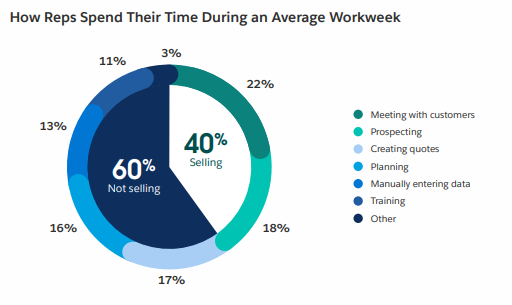
Recent data reveals that only 24% of sales reps met or exceeded quota, while reps spend an average of just 30% of their workday actually selling. The remaining 70% of their time is swallowed by administrative drag, manual data entry, and low-value operational tasks.
Sales process optimization addresses these structural leaks directly. It examines every touchpoint, from cold outreach to closed-won, and asks critical questions: What is slowing down momentum? What is generating low-quality activity? Where are high-value deals stalling out?
Most revenue shortfalls are process problems wearing a headcount disguise. Before hiring additional reps or ramping up ad spend, revenue leaders should evaluate whether the underlying process is fundamentally sound.
Every component of the sales process relies on knowing precisely who you are selling to. Without a strictly defined Ideal Customer Profile (ICP), teams waste time chasing low-fit accounts and wonder why conversion rates never improve.
A high-performing ICP goes far beyond basic industry and company size filters. It incorporates:
To refine your ICP, analyze your existing top-tier customers, those with the highest lifetime value (LTV), shortest sales cycles, and lowest churn rates, and map the commonalities across them.
Pair your company-level ICP with detailed buyer personas for individual stakeholders within target accounts. The value proposition that resonates with a Chief Financial Officer is rarely the one that compels a Vice President of Operations. Companies proficient in personalized outreach based on precise audience segmentation achieve 5 to 8 times higher ROI on their commercial investments. The ICP is where that personalization originates.
Before attempting to optimize individual sales activities, map your pipeline stage by stage to pinpoint exactly where deals are stalling or dropping out.
Industry data shows that the MQL-to-SQL transition represents the largest single drop-off point in most B2B sales funnels, carrying an average conversion rate of just 15%. Consequently, fixing this transition offers the highest ROI.
Follow-up velocity plays a massive role in funnel conversion. Leads contacted within five minutes of showing initial interest are 21 times more likely to convert into qualified opportunities than those contacted after 30 minutes. Slow follow-up is one of the most common and easily fixable bottlenecks at the MQL-to-SQL stage.
Once bottlenecks are mapped across your pipeline, address them systematically in order of revenue impact. Attempting to fix every stage simultaneously ensures nothing gets optimized properly.
The single fastest way to boost output from an existing sales team is to eliminate non-selling drag from their daily routines.
Sales reps currently spend only 30% of their workday on actual selling activities. The remaining 70% is consumed by manual data entry, internal status meetings, manual prospect research, and administrative overhead.
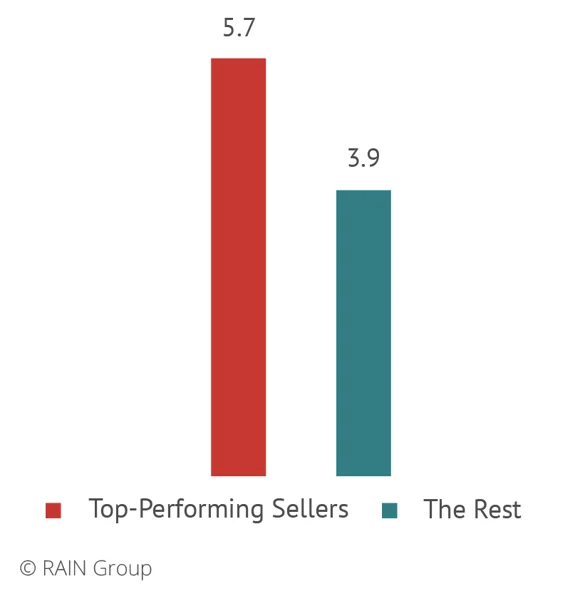
Top-performing salespeople allocate up to 5.7 hours per day to high-value selling tasks, compared to 4.3 hours for average performers, representing a 46% productivity difference without adding a single person to the team.
Technology plays a vital role here: 84% of sellers report that AI tools help optimize the overall sales process, while 67% of marketing teams state that AI saves them 10 or more hours per week. The goal is not to replace human sales reps, but to concentrate their working hours exclusively on the high-value conversations that require human relationship-building.
When sales and marketing operate from conflicting definitions of a qualified lead, it creates one of the most expensive operational inefficiencies in B2B commerce.
Misalignment between sales and marketing costs businesses over $1 trillion annually, according to Harvard Business Review. Most of this loss remains invisible because it manifests as missed pipeline rather than an explicit line-item expense. Furthermore, only 19% of B2B professionals report having fully aligned technology and data platforms across their revenue teams.
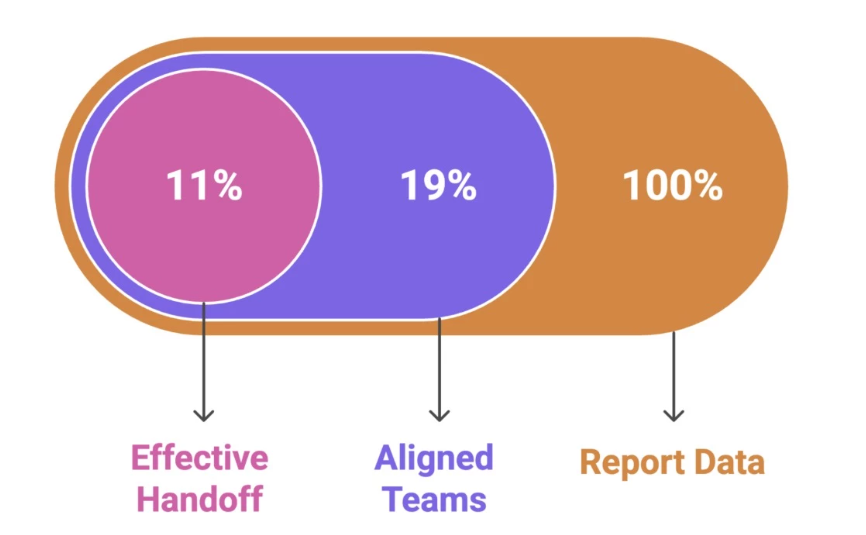
Organizations with highly aligned sales and marketing teams achieve 19% faster revenue growth. Alignment is rarely a technology problem; it is primarily a process design and communication discipline.
The most effective sales technology operates invisibly. It empowers reps by removing administrative friction rather than giving them another platform to manage.
Today, 42% of sales reps report feeling overwhelmed by the sheer number of tools in their stack, and 29% state that streamlining their tech stack would immediately improve operational efficiency. Adding more tools has simply not resulted in more productivity.
Before adopting any new technology, ask one fundamental question: Will this tool measurably free up rep selling time, or is it just another platform they have to log into?
A one-time sales audit will not sustain long-term growth. The modern B2B buying environment evolves too rapidly for an annual review cadence to suffice.
The average B2B sales cycle now spans approximately 10 months, with buying committees averaging 6 to 10 distinct stakeholders. Navigating these complex dynamics requires continuous process adjustments rather than a static, set-and-forget playbook.
Sales process optimization is one of the highest-leverage investments a revenue team can make because its benefits compound over time. A 5% improvement at each funnel stage multiplies across the entire pipeline, generating exponential revenue impact rather than incremental gains.
The teams that will dominate their categories in 2026 are those that build rigorous qualification standards, eliminate administrative friction, align sales and marketing around a single source of data truth, and treat their commercial process as a dynamic engine that constantly evolves.
At Whistle, our SDR teams are integrated into this exact framework from day one: coordinated multi-channel outreach, verified ICP contact data, and direct accountability to qualified meeting output rather than vanity activity metrics.
If you are evaluating your outbound motion and want to eliminate the bottlenecks leaking pipeline, let's start a conversation.
Sales process optimization is the systematic practice of analyzing, refining, and streamlining every stage of the B2B sales cycle, from initial outreach to closed-won. The goal is to eliminate friction, reduce administrative drag, improve conversion rates, and shorten the time it takes to close deals.
Key indicators include flatlining revenue growth despite high rep activity, deals consistently stalling at specific pipeline stages, lengthening sales cycles, inaccurate forecasting, persistent quota misses, and sales and marketing teams operating from conflicting prospect data.
The transition from Marketing Qualified Lead (MQL) to Sales Qualified Lead (SQL) is typically the largest drop-off point in the B2B sales funnel. With an average conversion rate of just 15%, loose qualification criteria and slow follow-up velocity are the primary causes of pipeline drop-off at this stage.
While average B2B sales reps spend only 30% of their workday on selling activities, high-performing sales organizations structure their workflows so reps spend 50% or more of their time actively engaging prospects, conducting discovery calls, and closing deals.
Sales and marketing alignment requires establishing a shared, mutually agreed-upon definition of a qualified lead, tracking common pipeline KPIs, operating from an integrated CRM and tech stack, and holding regular review sessions to adjust targeting based on actual deal outcome data.
The highest-impact tools include a centralized CRM that eliminates manual data entry, automated sales execution platforms for lead routing and follow-ups, intent data platforms that flag active buyers, and AI tools for lead scoring and contact enrichment.
AI accelerates process optimization by analyzing historical deal data for predictive lead scoring, monitoring third-party web intent, automating contact enrichment, drafting context-aware outreach, and summarizing meeting notes, directly freeing reps to focus on human conversations.
Sales process optimization should be an ongoing business practice rather than an annual audit. Top teams review stage conversion metrics weekly, analyze ICP fit monthly, and adjust lead qualification parameters quarterly based on market feedback and closed-won data.