

Sales Development

Lauren Daniels
September 9, 2026

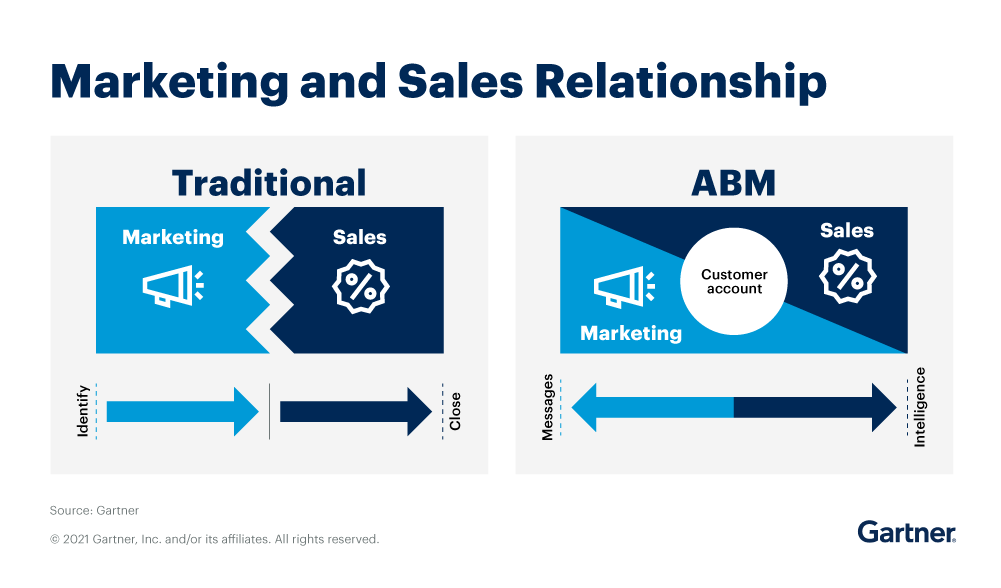

Most B2B sales and marketing teams treat ABM list building as a data problem. They spend hours pulling firmographic matches from a database, exporting thousands of accounts that hit the right industry and headcount criteria, and call the output a target account list.
Then they wonder why the response rates are low, and the pipeline is not improving.
The problem is the premise. A static list of firmographic matches is a slightly filtered version of the same broad outreach that ABM was supposed to replace.
ABM list building in 2026 comes down to targeting the right accounts at the right time. Focus on companies that are actively in a buying window. Then identify the stakeholders who can influence or approve a purchase. Look for signals that make your outreach relevant to their current situation.
Get that distinction right, and the ABM statistics tell the rest of the story. Companies using ABM report 81% higher ROI than those using traditional marketing approaches. ABM-engaged accounts move through the pipeline 234% faster than accounts reached by sales outreach alone.
High-maturity ABM organisations see five to nine times ROI on average. That performance gap exists because account-level targeting and timing change the conversation before the first touchpoint.
An ABM list is a strategic prioritisation of the accounts that deserve your team's time and resources this quarter. It should include enough context about each account and its buying committee. This helps make every outreach touchpoint genuinely relevant and specific.
The practical difference is significant. A generic list might say, “Mid-market fintech, 100 to 500 employees, US-based.” An ABM target account list goes much deeper. It might say, “This specific fintech has 300 employees and is based in the US. Its VP of Revenue joined three months ago. The company recently closed a Series B. That could mean a new budget is available. The new executive may also be evaluating vendors during their first 90 days.”
Those two lists produce fundamentally different conversations. The first one is a demographic match. The second one is a reason to call.
ABM list building requires answering three questions for every account before outreach begins:
Teams that can answer all three build ABM lists that convert. Teams that can only answer the first one are running slightly targeted outbound.
One of the most important structural decisions in ABM list building is how accounts are tiered. Tiering determines how much personalisation, resource, and attention each account receives. Without it, teams either overinvest in accounts that don’t warrant it or underinvest in accounts that could close.
| Tier | Definition | Typical Account Count | ABM Approach |
|---|---|---|---|
| Tier 1 | Highest-value, best-fit accounts with active buying signals | 20 to 30 accounts | One-to-one, fully personalised outreach, dedicated SDR/AE attention |
| Tier 2 | Strong ICP fit, significant potential, somewhat less active signals | 50 to 100 accounts | One-to-few, segmented by vertical or pain point cluster |
| Tier 3 | Good ICP fit, earlier-stage intent or smaller deal potential | 200 to 500 accounts | One-to-many, intent-triggered outreach, lighter personalisation |
High-maturity ABM organisations target 5 to 25 accounts per rep in Tier 1, which is a radically different number from what most outbound teams are used to working with. The volume drop is the point.
At 20 accounts, a rep can genuinely invest in understanding each account's situation, map every stakeholder in the buying committee, and craft outreach that references something specific and current in the prospect's world. At 200 accounts, none of that is possible.
73% of ABM teams use account tiering. Named account lists are updated quarterly by 52% of organisations. Teams that do not tier and update consistently often misallocate effort. They apply enterprise-level effort to mid-market accounts and mid-level effort to enterprise accounts. The result is mediocre performance across every ACV level.
ABM list building done in isolation by marketing, handed to sales as a deliverable, is one of the most reliable ways to produce a list that neither function trusts or uses consistently.
The ICP alignment conversation between sales and marketing leadership should answer three questions:
That joint conversation produces an ICP that both functions believe in, which is the only version that actually gets used consistently. Companies where sales and marketing align on a single ICP and shared ABM target account list close deals 67% more often than those working in silos.
A useful ICP for ABM list building goes four layers deep.
Firmographics establish the shape of the account: Industry, sub-vertical, revenue band, employee count, geography, and growth stage.
Technographics reveal the friction: Which platforms they currently run, what gaps or dependencies exist in their stack, and whether a competitor product is already embedded.
Personas identify who signs: The economic buyer, the technical evaluator, the user champion, the procurement contact, and the internal blocker. Each requires different messaging.
Signals determine timing: Recent funding, leadership changes, hiring surges for roles that indicate the pain your product addresses, tech stack changes, or job posts that explicitly describe the problem you solve.
Most ICP documents stop at firmographics. The fourth layer, timing signals, is what converts an ICP from a targeting description into an actual prioritisation framework.
With the ICP defined, account sourcing should draw from three key inputs:
Once a long list exists, the scoring model determines what makes the final ABM list. A practical framework is FIT plus INTENT: fit scores how closely the account matches the ICP across the four layers described above. Intent scores how actively the account is showing buying behaviour right now based on first-party and third-party signals.
Only 5% of your target market is actively in-market at any given moment. Intent scoring is the mechanism that finds that 5%. Companies that use intent data to guide their ABM targeting report that 97% of intent-driven leads generate more pipeline than leads without those insights.
An ABM target account list with only one contact per account is single-threaded. It focuses your outreach on a single person instead of the broader buying group.
B2B purchases now involve an average of 7 decision-makers. Enterprise deals regularly involve 13 or more. Multi-threading from day one is what separates ABM programs that close deals from ABM programs that book meetings with champions who cannot get internal sign-off.
At each target account, map at least these roles:
For Tier 1 accounts, aim for 8-10 verified contacts across these roles. For Tier 2, aim for 4-6. For Tier 3, cover at least 2-3 key personas.
Marketers using ABM engage C-suite executives twice as often as those using broad marketing approaches. The access is because personalised, account-specific outreach that references something genuinely relevant to an executive's current situation earns a response that generic outbound does not.
Once the account list is built and the buying committee is mapped, intent data converts the static list into a dynamic prioritisation.
Intent signals worth monitoring for ABM list building include: third-party topic spikes, first-party signals, and sales trigger events.
The FIRE framework is useful for scoring: Fit (ICP match), Intent (active buying signals), Recency (how recent the signal is), and Engagement (whether the account is already interacting with your marketing). Accounts scoring high across all four areas should generally be prioritised within Tier 1, even if their firmographic ranking was lower.
67% of ABM teams now use intent data to shape outreach. The most effective ABM programs in 2026 are signal-based: they trigger outreach based on real-time buying indicators rather than relying on quarterly static lists and campaign calendars.
Data enrichment is what converts a correctly targeted list into one that enables genuinely relevant outreach at scale.
Account-level enrichment adds the context that makes outreach specific: recent company news, known tech stack components, growth rate indicators, competitive relationships, and specific challenges associated with their industry stage. Contact-level enrichment adds professional context: a recent promotion, content the person has published or shared publicly, their prior company experience, or their role in a recent company initiative.
The practical test for enrichment quality is whether a rep could write a first-line opener for each contact that references something specific and current without doing additional research. If the answer is no, the enrichment is not deep enough to support Tier 1 ABM outreach.
Companies that invest in thorough data enrichment see 35% higher email open rates and 20% better lead-to-customer conversion rates. The difference comes down to relevance. Strong outreach shows that the sender understands the recipient's situation. Generic outreach could have been sent to anyone with the same job title.
Nearly 50% of B2B contact data can go stale within a year. People change roles. Companies shift priorities. An account that was actively buying in Q1 may have paused by Q3. Meanwhile, a new account may have just received funding and hired a VP who is evaluating vendors early in their tenure.
ABM list building is an ongoing operation that updates in response to market signals, sales intelligence from live conversations, and performance data from campaigns.
The practical maintenance cadence that works:
Named account lists are updated quarterly by 52% of organisations. The 48% that do not update quarterly are running outreach into a market that has already moved.

Targeting too broadly to maintain quality. Adding accounts to increase coverage undermines the precision that makes ABM work. A list of 30 deeply researched accounts with full buying committee coverage and intent-validated timing consistently outperforms a list of 300 accounts where each one gets a generic email sequence. The scale temptation is real and almost always wrong.
Building the list in marketing and handing it to sales. Sales teams are less likely to work an ABM list consistently when they do not trust it, understand the rationale behind it, or contribute to building it. The list is most effective when reps feel partial ownership of the accounts on it.
Ignoring intent signals and treating the list as static. 5% of the target market is in-market at any moment. A quarterly review cycle means the list may be nine to twelve weeks out of sync with actual buying windows. Intent monitoring closes that gap and keeps the list aligned with real opportunity timing.
Underinvesting in buying committee coverage. A list of 100 accounts with one contact each is a single-threaded prospect list with account-based marketing branding. Reaching account penetration rates of four or more stakeholders per account significantly improves win rates. ABM accounts with multi-threaded coverage show 35% higher deal close rates than single-threaded ones.
Measuring output instead of account progression. Email open rates and lead volume are the wrong success metrics for an ABM list. The metrics that indicate whether ABM list building is working are account penetration rate (how many stakeholders per account have engaged), pipeline velocity by account (how fast targeted accounts are moving through the funnel), and account win rate against the list. 53% of ABM teams measure success by pipeline contribution. The remaining 47% are measuring something that does not connect to revenue.
An ABM target account list is a targeting decision. The outreach motion that runs against it determines whether that decision produces pipeline.
Multi-channel, coordinated outreach is the mechanism. Prospects who receive touches across both marketing and sales channels move through the pipeline 234% faster than those reached by sales outreach alone. Omnichannel ABM campaigns show 2.5 times better multi-touch engagement than single-channel programs.
A working multi-channel ABM sequence for a Tier 1 account looks something like this: a personalised email that references a specific buying signal opens the conversation. A LinkedIn connection request with a brief contextual note follows within two days.
A follow-up email with a relevant case study or data point arrives midway through the first week. A direct phone call occurs by day 7. A second LinkedIn touchpoint, potentially engaging with something the prospect recently shared, follows. A different-angle email arrives in week two. A second call attempt at a different time follows. A clean, short breakup message closes the sequence.
Each touchpoint references the previous one. The messaging is consistent across channels. The prospect meets a presence that feels persistent and relevant, rather than a series of unrelated contacts from the same company.
ABM list building is no longer about creating a static database of companies that resemble your ideal customer profile. The highest-performing B2B teams treat it as a continuous process of prioritisation, using firmographic fit, buying intent, stakeholder mapping, and real-time signals to identify the accounts most likely to convert.
The quality of an ABM target account list is measured by more than the number of accounts it contains. It is reflected in how accurately those accounts are tiered, how completely the buying committee is mapped, how quickly new buying signals are captured, and how effectively sales and marketing work from the same shared view of the market.
As B2B buying committees become larger and purchase decisions become more complex, precision matters more than scale. A smaller list of well-researched, high-intent accounts consistently outperforms broad prospect lists because it enables relevant conversations, stronger account penetration, and faster deal progression.
The most effective ABM strategies in 2026 are dynamic rather than static. They evolve as markets shift, decision-makers change roles, and new intent signals emerge. Teams that continuously refine their account lists, enrich their data, and align outreach with genuine buying windows are far better positioned to build a predictable pipeline and maximise the return on their account-based marketing efforts.
Why Whistle