

Go-to-Market

Lauren Daniels
September 18, 2026
%20.jpg)

Most B2B companies make the same mistake when their pipeline stalls: they default to hiring. A new sales rep, a virtual assistant, an AI tool they saw on LinkedIn. The decision gets made on cost and urgency, rather than what the pipeline problem actually needs.
Here is what the numbers show. Human SDRs spend less than 36% of their time actually selling. Average SDR tenure sits at 14 to 19 months. Annual turnover runs between 40 and 55% in SDR roles. Replacing a single rep can cost $35,000 to $150,000 in lost pipeline, recruiting fees, and productivity gaps. And that is before accounting for ramp time, which runs 60 to 90 days before a new hire reaches meaningful output.
The virtual SDR, AI SDR, and SDR agency models each exist to solve different versions of this problem. Getting the choice right means understanding exactly what each one does, what it costs in real terms, where each one performs well, and where each one quietly fails.
This guide gives you the full picture across all three, with the data behind each claim and a direct comparison table so you can match the model to your actual situation.
A virtual SDR is a remote sales development representative who handles the same functions as an in-house SDR: outbound prospecting, lead qualification, cold calling, cold email, LinkedIn outreach, CRM updates, and meeting booking. The difference is they work remotely, typically from a different city, country, or time zone.
Some virtual SDRs are hired directly as employees on a remote basis. Others are engaged through freelance platforms like Upwork or as part of a fractional arrangement. The work is the same as any SDR role. The management and oversight responsibility stays with you.

A virtual SDR based offshore (Philippines, Eastern Europe, Latin America) typically runs $1,500 to $4,000 per month on a freelance basis, or $18,000 to $48,000 per year. A US-based virtual SDR on a full-time remote basis carries a salary of $50,000 to $60,000 in base compensation plus benefits, which pushes total annual cost to $76,000 or more before tools, training, and management time are included.
Freelance platforms allow for lower hourly rates of $15 to $25 per hour for offshore talent. The caveat is that quality varies significantly and the vetting burden lands entirely on you.
1. Lower overhead than an in-house hire. No office space, no equipment, no employer-side benefits for offshore contractors. A virtual SDR can cost 40 to 60% less than a fully loaded in-house SDR for companies that do not need local presence.
2. Flexible engagement structure. You can hire a virtual SDR part-time, project-based, or on a trial basis before committing to a full-time arrangement. That flexibility helps when pipeline needs vary or when you are testing a new outbound channel.
3. Trainable to your specific process. A virtual SDR you hire directly can be trained to run your exact ICP, your messaging framework, and your qualification criteria from scratch. Some founders specifically prefer this because they want
someone shaped to their way of selling rather than an agency's existing playbook.
4. Full ownership of the outreach output. Contact lists, sequences, CRM records, and call notes all stay with your company. There is no data handover concern when the engagement ends.
5. Access to global talent pools. Hiring remotely removes geographic constraints. You can source SDR talent from markets where skilled sales professionals are available at lower cost than US or Western European rates.
1. Training is a significant time investment. Most HR benchmarks indicate 3 months before a new SDR reaches reliable independent output. During that period, you are managing, reviewing, and correcting their work while still paying a full rate. For founders who do not want to spend significant time on sales enablement, this is a real friction point.
2. Time zone friction creates operational gaps. A virtual SDR in a substantially different time zone cannot be in real-time sync with your pipeline reviews, prospect handoffs, or urgent follow-ups. For outbound campaigns that depend on timing and rapid response, that gap matters.
3. Quality is not guaranteed. Freelance platforms include both excellent and poor candidates. Vetting takes time, and the cost of a bad hire is three to four months of wasted spend plus pipeline delay before you realise the fit is wrong.
4. Turnover risk remains. Virtual SDR average tenure follows the same pattern as in-house SDRs: 14 to 19 months. When a virtual SDR leaves, the ramp cycle restarts and any ICP knowledge they had built walks out with them.
5. Limited scalability. Adding capacity means hiring again. Each new virtual SDR is another 60-90 day ramp cycle before productive output. For companies that need to scale outbound quickly, this model moves slowly.
An AI SDR is a software-based sales development tool that automates prospecting tasks using machine learning, natural language processing, and workflow automation. It handles outbound email sequences, inbound lead qualification, CRM data entry, meeting scheduling, and follow-up cadences without human involvement in the execution.
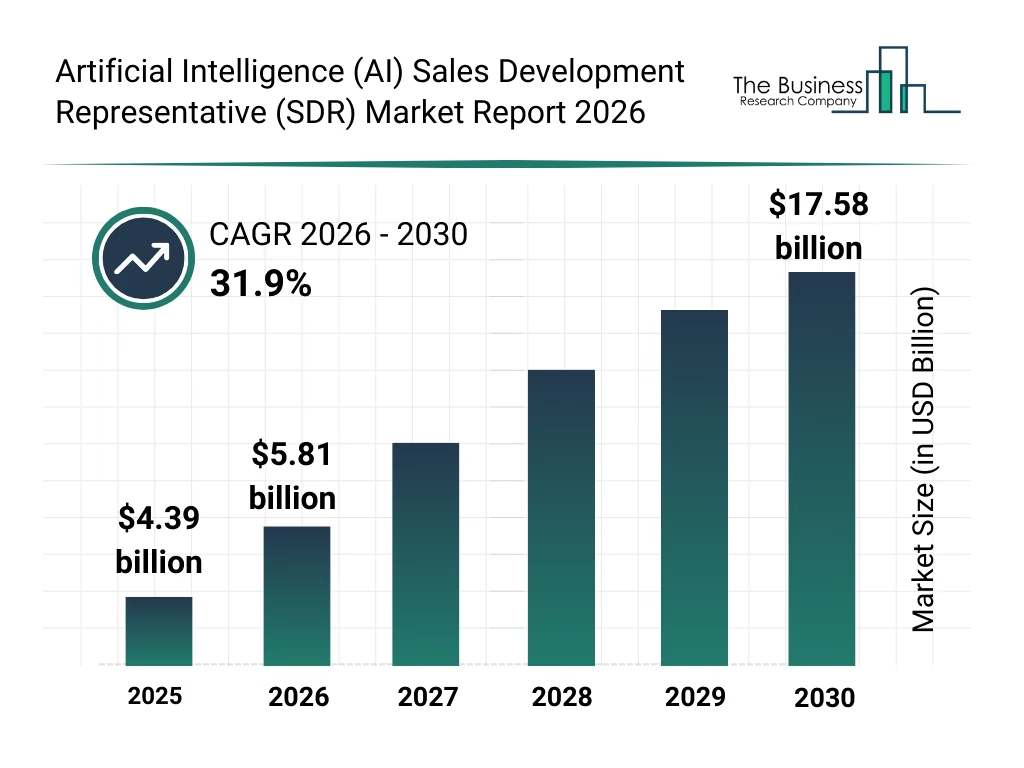
41% of enterprise B2B teams had at least one AI SDR running in production as of Q1 2026, up from 12% just one year earlier.
AI SDR platform pricing in 2026 runs from entry-level tools at $250 to $1,500 per month ($3,000 to $18,000 annually) to mid-range autonomous platforms like AiSDR and similar tools at $2,000 to $3,000 per month ($24,000 to $36,000 annually) to enterprise solutions at $5,000 or more per month ($60,000+ annually).
For comparison, a fully loaded human SDR, including salary at $50,000 to $60,000, benefits and payroll taxes adding 20 to 30%, tools at $200 to $600 per month, training, and management overhead, runs $116,500 to $154,800 per year.
Under realistic assumptions, an AI SDR books meetings at $80 to $150 per meeting versus $500 or more for a human SDR. The unit economics difference is real. The performance gap at the qualification stage is also real.
1. Dramatically lower cost per outreach activity. AI SDR tools cost 80 to 90% less per email sent and per sequence executed than a human SDR doing the equivalent work. For high-volume top-of-funnel activity, the economics are hard to argue with.
2. 24/7 coverage with no gaps. 40% of enterprise B2B web traffic arrives outside standard business hours. AI SDRs engage those visitors immediately. Leads contacted within 5 minutes of showing intent are 21 times more likely to qualify than leads contacted after 30 minutes. Human SDRs cannot provide that response speed consistently.
3. Outreach volume at a scale humans cannot match. Per-rep monthly outbound volume in hybrid AI-plus-human configurations rose to a mean of 7,400 contacts per month versus a 1,150 contact human baseline, a 6.4 times increase in volume. For early-stage companies with large total addressable markets, that reach is meaningful.
4. No ramp time, no turnover risk. An AI SDR is configured in days and operational immediately. There is no 60-90 day ramp period, no recruiting cycle if the rep leaves, and no pipeline disruption from turnover. Meeting booking rates improve by 30 to 40% when AI is used to optimise messaging, send timing, and channel selection.
5. Consistent execution. AI SDRs do not have bad weeks. They do not drift off-script under pressure. They follow the same qualification criteria on the 10,000th lead as the first. That consistency is an operational advantage in campaigns that require high repeatability.
6. Cost per opportunity drops significantly in hybrid configurations. The Bridge Group's SDR Metrics 2026 report shows cost per qualified opportunity fell from $487 in human-only pods to $224 in hybrid AI-plus-human configurations, a 54% reduction.
1. Qualification quality collapses on complex or nuanced deals. AI SDRs convert meetings to opportunities at a rate significantly below human SDRs for deals that require judgment, empathy, or multi-stakeholder navigation. Pure-AI pods underperform on closed-won rate by 22 percentage points compared to hybrid pods. The cost-per-meeting number looks good. The cost-per-closed-deal number often does not.
2. Reply rates fall as volume rises. Raw reply rates fell from 4.7% to 2.9% as AI outbound volume increased, per Apollo and ZoomInfo 2026 outbound benchmarks. The volume-to-quality trade-off is real and creates inbox fatigue in markets where AI outreach is now widespread.
3. Limited ability to handle unexpected responses or objections. When a prospect replies with something outside the expected pattern, a human SDR adapts. An AI SDR either routes the conversation incorrectly or responds with a mismatched follow-up that damages the relationship. For high-value accounts, that failure mode is costly.
4. Data quality determines performance. AI SDR output is only as good as the contact data it runs on. Poor list quality produces poor meetings regardless of how sophisticated the AI is. You still need to invest in verified, enriched contact data to get accurate results.
5. Perceived as robotic in personalisation-sensitive segments. In verticals where buyers are already receiving high volumes of AI-generated outreach, messages that feel automated damage conversion rates.
6. Setup and ongoing management still require human time. AI SDR tools are not fully autonomous in practice. Someone needs to configure sequences, review performance data, update messaging when reply rates drop, and handle escalated conversations. The time savings are real, but the management burden is not zero.
An SDR agency is an outsourced sales development partner that provides experienced SDRs who run your outbound function on your behalf. The reps come pre-trained, the playbooks are established, the tools are included, and the pipeline starts moving within days rather than months.

SDR agency pricing typically runs $2,000 to $10,000 per month for managed outbound programs, with some agencies pricing per booked appointment at $50 to $400 per meeting depending on vertical complexity and deal size.
Monthly retainers for managed SDR programs run $2,000 to $10,000, placing annual cost between $24,000 and $120,000. That range reflects the variation in service scope: some agencies run email-only campaigns at the low end; full omnichannel programs covering cold calling, cold email, and LinkedIn outreach with dedicated reps and weekly reporting sit at the higher end.
The cost comparison against an in-house hire is significant. An agency at $5,000 per month costs $60,000 per year against a single fully loaded in-house SDR at $116,500 to $154,800 per year, with no recruiting costs, no ramp period, no benefits overhead, and no turnover risk.
1. Pipeline moves immediately, rather than after a ramp period. A good SDR agency can have your outbound campaigns live within 10 to 14 days and deliver first qualified meetings within the first two weeks. Compare that to a virtual SDR at 60 to 90 days or a new in-house hire at 90+ days before reliable output. For companies that need pipeline now, the time-to-value gap is significant.
2. No training investment required. The agency comes with experienced reps who already know how to prospect, qualify, handle objections, and write outreach copy. You do not review their work for three months before they reach productivity. You share your ICP, approve messaging, and the outreach begins.
3. Human judgment at every stage. Unlike AI SDRs, agency reps can handle unexpected prospect responses, adapt tone for different stakeholders, and recognise when a conversation requires a different approach. For complex, multi-stakeholder deals above $50,000 ACV, that judgment is what determines whether a booked meeting converts to an opportunity.
4. Multi-channel execution included. Reputable SDR agencies run coordinated outreach across cold calling, cold email, and LinkedIn rather than defaulting to a single channel. Coordinated multi-channel sequences produce 40% higher engagement than single-channel outreach. The infrastructure for that coordination (tools, sequences, domain management) is part of the agency engagement rather than something you build separately.
5. Experienced copywriting and personalisation included. A quality agency brings SDRs who know how to write outreach that converts, without you having to review and edit scripts for months. That expertise is particularly valuable for founders who can sell but do not have bandwidth to train someone else to sell for them.
6. Market intelligence flows back to you. What objections are coming up? Which pain points are landing? Which personas are responding? Agency SDRs on the front line of your market return that intelligence from every campaign, which informs your product positioning, content strategy, and ICP refinement.
1. The wrong agency produces no ROI. Paying $3,000 to $10,000 per month to an agency that uses generic templates, low-quality lists, and single-channel outreach produces fewer results than building the function in-house with less budget. The quality variance between agencies is significant. Agencies that do not build targeted lists, do not personalise at scale, and do not use multi-channel coordination are not worth the investment.
2. Less control over day-to-day execution. You set the ICP, approve the messaging, and review the weekly reporting. But you are not managing the SDRs directly. If the agency's communication standards do not match your expectations or their reps do not represent your brand with the precision you want, course-correcting takes longer than it would with a direct hire.
3. Data and asset ownership needs explicit agreement. Contact lists, enriched prospect data, sequences, and campaign assets built during the engagement should be owned by your company at the end of the relationship. Not every agency treats this clearly. Confirm upfront what you retain at the end of the engagement.
4. Cost can be prohibitive at an early stage. For founders at pre-revenue or very early stage with limited capital, even $3,000 per month is a significant commitment without a proven product and a clear ICP. An SDR agency scales what you already have. If the product is not yet proven sellable, an agency will not solve that fundamental problem.
What works for one business may not work for another. Your sales motion, team capacity, deal complexity, timeline, budget, and other business-specific factors all influence the right SDR model. Start by considering these questions.
1. Do you have time to train someone? If so, a virtual SDR provides a trainable resource at a lower cost. If not, an agency removes that burden entirely.
2. Is your product proven in the market? If you have not yet demonstrated that your product sells through direct founder outreach, an agency or AI tool will not fix that. Establish at least six months of direct sales before outsourcing the function.
3. What is your ACV and deal complexity? Deals below $15,000 ACV with short cycles can tolerate AI SDR-led qualification. Deals above $50,000 with multi-stakeholder buying committees need human judgment at every stage of the conversation.
4. Do you need pipeline now or are you building for the long term? Immediate pipeline need points toward an agency. If you have 90 days before results matter, a virtual SDR or hybrid AI model may serve the longer-term cost structure better.
5. What is your actual budget? A virtual SDR offshore runs $18,000 to $48,000 per year. An AI SDR platform runs $6,000 to $36,000. An SDR agency runs $24,000 to $120,000. A fully loaded in-house hire runs $116,500 to $154,800. Run the numbers against your current stage and pipeline target before making the decision.
It is a hybrid model where AI handles volume, automation, and after-hours coverage, while human SDRs (either virtual, agency, or in-house) handle qualification judgment, complex conversations, and high-value account outreach.
The median hybrid pod ratio is one human SDR alongside 2.4 AI SDR seats. Human SDRs working alongside AI tools book 23% more meetings than those working without AI. The case for AI is about making human SDRs materially more effective.
At the growth stage, speed matters. Building an internal SDR team takes time, headcount, and management bandwidth. An outsourced agency can provide immediate coverage. Add AI for inbound and after-hours coverage, and you can extend that capacity without building both functions from scratch.
At Whistle, we run a fully managed outsourced SDR model that covers the outbound function most B2B companies need without the ramp time, training overhead, or hiring risk of any of the alternatives above.
Whistle's outsourced SDR program delivers vetted SDRs running coordinated cold calling, cold email, and LinkedIn outreach as a single sequenced campaign against your specific ICP. Engagements go live in 10 days. Every meeting that reaches your AE's calendar arrives with qualification notes, identified buying triggers, and mapped stakeholders already documented in your CRM.
If you want to understand which model fits your current pipeline situation, ICP, and deal complexity before committing to anything, book a call and we will walk through the numbers with you.




.jpg)
%20.jpg)