

Sales Development

Lauren Daniels
August 28, 2026

Here is a scenario that happens more often than most sales leaders acknowledge.
An SDR spends three weeks working a VP of Operations. They research the account, surface the pain point, confirm the prospect has budget authority, and lock a 30-minute meeting on the calendar. The AE shows up to the call and opens with So, what does your company do?
The prospect checks out. The SDR did the work. The handoff killed it.
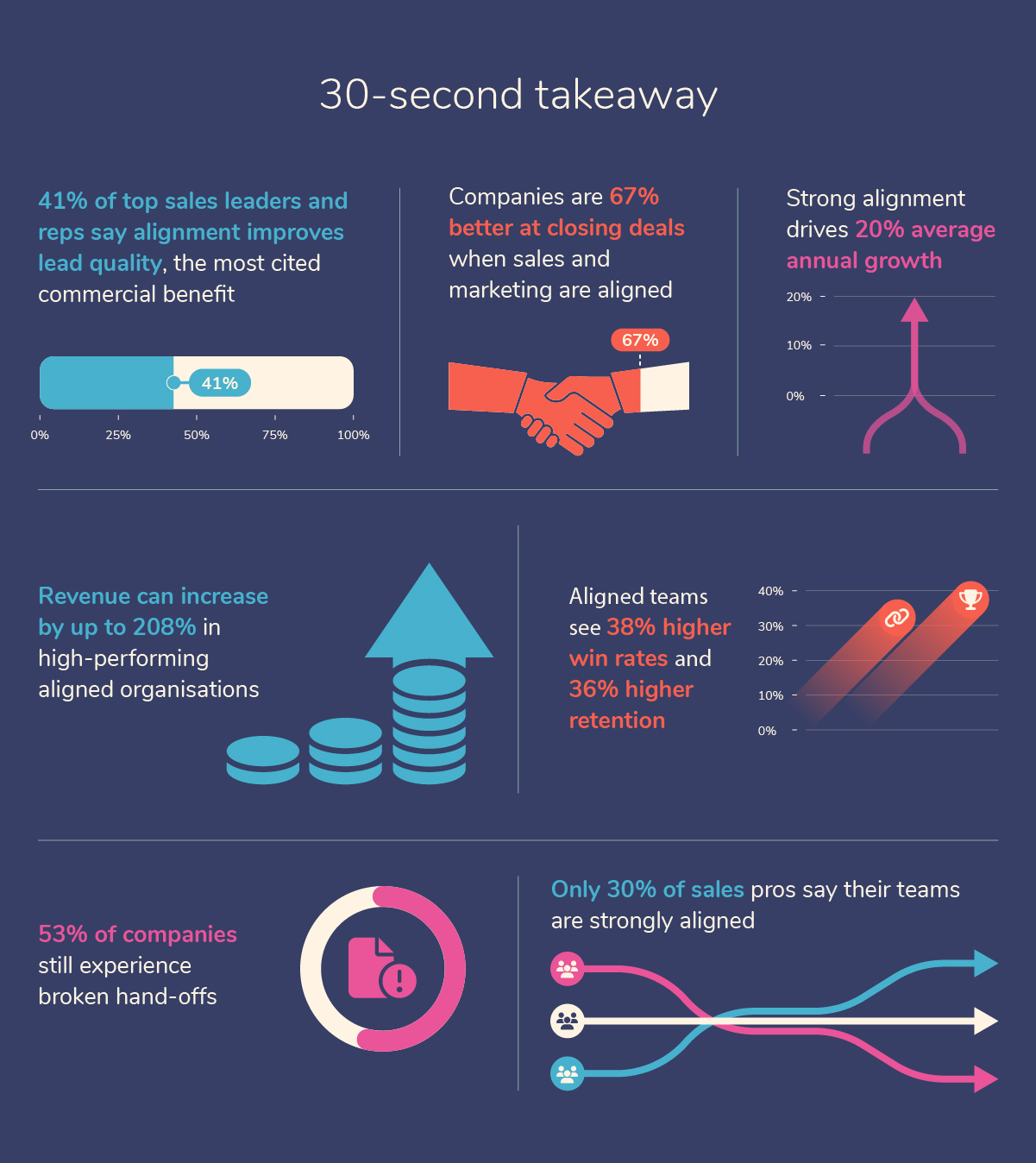
This is a structural problem built into most sales organisations. And the numbers confirm how widespread it is. 53% of companies have a broken SDR-to-AE handoff. Sales follows up with fewer than 35% of marketing-engaged prospects. If companies cannot even hand off inbound leads properly, the gap in what happens between an SDR-qualified meeting and an AE-led discovery call is even wider.
The cost is eroded SDR motivation, AE time wasted on re-qualification they should never have needed to do, and a pipeline that looks healthy on the reporting dashboard but converts poorly when the numbers actually close.
Companies with strong cross-functional alignment grow revenue 20% annually. Companies with poor alignment see a 4% revenue decline.
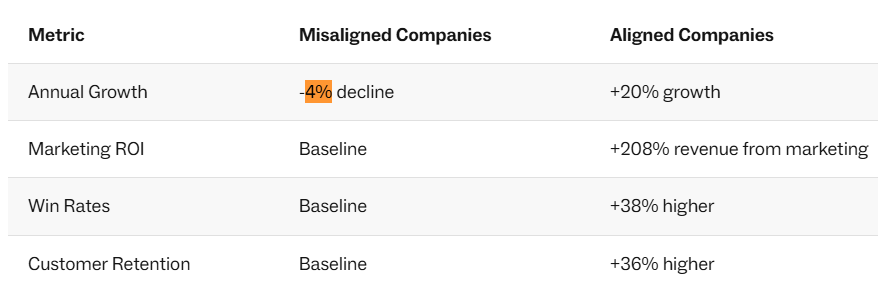
That 24-point swing comes from the same market, the same product, and often the same quality of prospects. The variable is whether the SDR and AE functions are operating as one coordinated motion or as two separate jobs that happen to share a CRM.
Before getting into the strategies, it is worth being clear about what alignment actually means in practice, because most teams conflate it with having good relationships between individuals.
SDR-AE alignment is the operational system that connects what the SDR discovers about a prospect with what the AE needs to run an effective first conversation. It covers the qualification standard both functions agree on, the handoff mechanics that carry context from one to the other, the SLAs that define how fast each step happens, and the feedback loops that tell both functions what is working and what is not.
When this system works, an AE walks into a discovery call already knowing the prospect's pain point, the buying triggers that made them receptive, the stakeholders involved, and what objections came up during outreach. The conversation starts at a more advanced stage. Less time on basic discovery, more time on solution alignment.
When it does not work, the AE re-qualifies from scratch, the prospect repeats themselves, trust in the vendor's professionalism starts lower than it should, and the deal cycle stretches unnecessarily.
Enterprise teams that implement proper handoff context into their CRM before the AE's first call report measurably shorter sales cycles and higher progression rates from first call to proposal. Industry benchmarks put the target at 60 to 70% of SDR-qualified opportunities progressing to AE-accepted opportunities. Below 50% is a handoff quality problem.
The distinction matters because unclear roles are a common source of alignment failure.
An SDR's job is to identify, reach, and qualify prospects. They source leads, run outbound sequences across cold calling, cold email, and LinkedIn, handle objections during initial conversations, and determine whether a prospect fits the ICP, has a real problem your product addresses, and is worth an AE's time. They deliver the qualified meeting. What happens after that is the AE's responsibility.
An AE's job is to run discovery, navigate the buying committee, manage the sales process, handle negotiation, and close. They take the context an SDR has built and deepen it into a complete understanding of the account's situation, stakeholder dynamics, and decision criteria.
Neither role should be stepping into the other's lane during live deals. When SDRs are pulled into discovery calls as support, it signals the handoff was incomplete. When AEs are doing prospecting because the pipeline is thin, it signals the SDR function is either under-resourced or misaligned on what qualified looks like.
The two functions work best when each one makes the other's job easier. SDRs who hand off complete, well-documented opportunities make AEs more effective. AEs who give SDRs specific feedback on what converted and what did not make SDR targeting sharper over time. That feedback loop is what most teams are missing.
The average SDR-to-AE ratio in B2B SaaS is 1:2.4. That ratio only works if the SDRs are delivering at a quality level where AEs can run multiple accounts simultaneously without losing depth on any individual deal. A loose qualification standard breaks that math quickly.

The most common root cause of SDR-AE tension is that both functions are using different definitions of what constitutes a qualified opportunity. SDRs optimise for meetings booked. AEs optimise for meetings worth taking. When those definitions are not identical, the tension is structural and will not be resolved by better communication.
Pick a shared qualification framework and enforce it. MEDDICC (Metrics, Economic Buyer, Decision Criteria, Decision Process, Identify Pain, Champion, Competition) is widely used for complex B2B sales. SPICED (Situation, Pain, Impact, Critical Event, Decision) works well for SaaS. Whichever framework you choose, make the required fields mandatory in the CRM before an SDR can mark an opportunity as qualified. If the information is not in the system, the handoff does not happen.
This removes the subjective judgment call from individual SDRs and makes qualification an enforced standard rather than a personal interpretation.
A verbal briefing between an SDR and an AE before a meeting is better than nothing. It is not a reliable system. People forget details. Calls get missed. Context that was clearly communicated verbally does not make it into the discovery call because the AE had four other meetings before it.
Every handoff should be documented in a structured CRM record that the AE can read in five minutes immediately before the call. That record should include the prospect's stated pain point in their own words, the buying trigger that made them receptive to outreach, the stakeholders already identified, the objections that came up during SDR conversations and how they were handled, and any competitive context surfaced during qualification.
When the CRM record contains complete account data, buying committee contacts, and signal context before the AE's first call, the conversation starts at a more advanced stage. AEs spend less time on basic discovery and more time on solution alignment and stakeholder navigation.
Speed matters at every stage of the handoff. A qualified prospect who has a meeting booked but waits 48 hours before hearing from anyone on the AE side is colder than they were at the moment of booking. The momentum built during SDR outreach dissipates quickly if the transition is slow.
Three SLAs worth enforcing:
Track these as operational metrics. When SLA times are consistently missed, it is a process problem. Fix the workflow before addressing it as a performance issue.
Most sales organisations run separate SDR and AE team meetings. That structure reinforces the silo. The people who need to share intelligence most are in different rooms talking about different metrics.
A weekly joint review of 30 minutes does more for alignment than any amount of documentation. The agenda is straightforward: which booked meetings converted to active opportunities this week, which did not and why, what objections are coming up in outreach that the AE team should be aware of, and what feedback from discovery calls should change how SDRs are qualifying or messaging.
The SDR learns what is actually closing and can adjust targeting accordingly. The AE understands what context the SDR built before the meeting and can lean into it rather than starting fresh. Both functions develop shared language around the market, the ICP, and the objections that matter.
65% of sales and marketing professionals report a lack of alignment. Joint reviews are the most direct operational fix for that gap at the SDR-AE level.
One of the fastest ways to erode SDR motivation is to create a structure where they book a meeting and then receive no information about what happened next. Whether the prospect converted, what came up in discovery, whether the qualification held up or fell apart, none of it feeds back to the SDR who did the work.
That feedback gap produces two problems. SDRs cannot improve their qualification because they do not know what is converting. And motivated SDRs who care about outcomes eventually stop caring when outcomes are invisible to them.
Give SDRs read access to their handed-off opportunities in the CRM through at least the first AE call stage. Share discovery call outcomes in the weekly joint review. When an SDR-sourced deal closes, make that visible and connect it back to the SDR. Attribution clarity keeps incentives aligned and gives SDRs the data they need to get sharper over time.
Creating an SDR Owner field in the CRM is a simple operational step that makes attribution clean and prevents ownership ambiguity when a deal cycles through multiple pipeline stages.
An AE who picks up from where an SDR left off and immediately contradicts what the prospect was told during outreach is a trust problem. It signals internal inconsistency. Buyers notice.
Before any campaign launches, SDRs and AEs should agree on the core messaging framework: the pain points being addressed, the value statements being used, the objections that are anticipated, and how the product is being positioned against alternatives. That shared messaging does not need to be a scripted playbook. It needs to be enough consistency that an AE's first meeting feels like a natural continuation of the conversation the SDR already started.
69% of B2B buyers report receiving inconsistent information between a vendor's website and what the seller says. Inconsistency between what the SDR communicated and what the AE opens with is the same problem at a smaller scale, but it happens in a higher-stakes moment.
AEs have a clear opinion about which SDRs produce meetings worth taking and which produce calendar noise. Most organisations never surface that opinion in a structured way, which means it stays as informal reputation rather than actionable feedback.
Ask AEs to rate handoff quality on a simple 1 to 3 scale after each first meeting: was the qualification accurate, was the CRM record complete, and did the prospect show up with the pain and context the SDR described? Aggregate those ratings monthly and share them with SDR managers.
That data tells you which SDRs are producing high-quality pipeline and which are optimising for volume at the expense of qualification. It also tells you whether specific market segments, personas, or outreach channels are producing higher handoff quality than others, which is useful for targeting decisions.
When the pipeline is thin, AEs often start prospecting. That is a symptom. AEs prospecting means the SDR function is either under-resourced or producing meetings at a quality level too low for AEs to run multiple accounts simultaneously.
AE time spent on prospecting is time not spent on discovery, stakeholder navigation, negotiation, and closing, the work AEs are specifically trained and compensated for. Letting that blend consistently means both functions are operating below their potential.
The right answer when AEs are prospecting is to diagnose why the SDR function is not covering the top of funnel adequately and fix the resource or quality problem at the source.
This is where Whistle's outsourced SDR model fits. When the internal SDR function is not generating enough qualified pipeline to keep AEs fully engaged on closing work, adding outsourced SDR capacity restores that balance without the overhead of hiring, ramping, and managing additional headcount. SDRs go live within days. AEs stay focused on the work that closes deals.
A useful way to test the quality of your current SDR-to-AE handoff is to ask: could an AE read the CRM record five minutes before a call and feel genuinely prepared for it?
If the answer is no, the handoff is incomplete regardless of how many meetings are being booked. Here is what a complete handoff record covers:
Prospect context. The specific pain point the prospect expressed, in their own words where possible. Not a generic category but the actual language they used.
Buying trigger. What made this prospect receptive to outreach at this specific time. A budget cycle opening, a leadership change, a compliance deadline, a technology evaluation. The trigger tells the AE why now matters.
Stakeholders identified. Who the SDR spoke to, who else was mentioned as involved in the decision, and what each person's role and perspective appears to be.
Objections raised. What concerns came up during outreach and how the SDR addressed them. This stops the AE from walking into objections they are not expecting.
Competitive context. Whether the prospect mentioned any alternatives they are evaluating and what their initial framing of the comparison looked like.
Next step agreed. What the prospect was told the discovery call would cover. The AE should open by delivering on that expectation.
At Whistle, every outsourced SDR engagement is built around the outcome of qualified meetings that your AEs can actually close. That means the qualification standard, documentation, and the handoff process are defined before the first outreach goes out.
SDRs integrate directly into your existing CRM. Every outreach touchpoint, call note, objection, and qualification detail is logged in real time against the opportunity record. When a meeting is booked, your AE already has the context they need. No re-briefing calls, no missing information, no AEs opening with questions the SDR already answered.
We also work with your sales leadership to agree on the qualification criteria upfront. The definition of a qualified meeting is documented, measurable, and applied consistently across every prospect the SDR team touches. If a prospect does not meet the criteria, the meeting does not get booked. Your AEs' calendars are protected.
If your AEs are spending meaningful time on re-qualification, or your SDRs are booking meetings that are not converting at the rate you expect, book a call, and we will walk through what a properly structured SDR function looks like for your specific sales motion.