
Sales Development

Lauren Daniels
September 2, 2026

- The median B2B SaaS sales cycle is 84 days across segments, up 22% since 2022. Enterprise deals run 90 to 180 days or longer

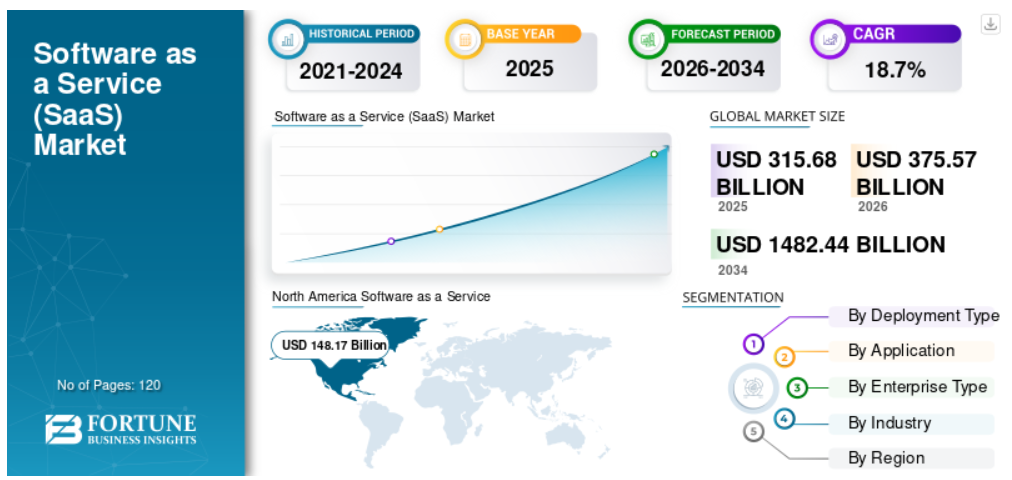
The global SaaS market is at around $370 billion and is projected to exceed $1.2 trillion by 2034.
More money, more competition, more noise. Every company is a SaaS company now, and every buyer's inbox reflects that.
Median SaaS revenue growth dropped from 47% in 2024 to 26% in 2026. B2B SaaS sales cycles have lengthened 22% since 2022, driven by more decision-makers per deal, tighter budgets post-2023, and a trust deficit that makes buyers demand proof before agreeing to a demo.
CFO involvement in software purchases is up 40% compared to pre-2023 levels. Purchases that previously only needed VP sign-off now require finance review. Security assessments that used to happen post-contract now happen pre-proposal. Each of those structural shifts adds weeks to cycles that teams were already struggling to compress.
The playbook from 2022 is not working in 2026 because the buying environment is structurally different. The solution is a more disciplined system. B2B SaaS teams generating a consistent pipeline treat sales like an engineering problem. They focus on measurable inputs, predictable outputs, and a process that does not rely on individual heroics.
A strong B2B SaaS sales engine starts with a healthy pipeline and a clear process. The right benchmarks show where deals are getting stuck. Strong qualification keeps reps focused on the opportunities that matter. And the right sales strategies create a more predictable path from first conversation to closed deal.
B2B SaaS sales is selling subscription-based software to other businesses. That sounds straightforward. What makes it structurally different from traditional sales is that the deal does not end at signature.
Because revenue is recurring and compounds over renewals and expansions, retention matters as much as acquisition. A customer who signs a $50,000 contract and churns at month 11 is a net loss, rather than a win.
A customer who signs the same contract, expands in year two, and refers a peer is worth $200,000 or more over three years. Net Revenue Retention captures this. Top-performing B2B SaaS companies consistently maintain NRR above 120%, meaning they grow revenue from existing customers without closing a single new deal.
That reality changes how the B2B SaaS sales process has to work. Closing deals is not enough. Reps have to close the right deals, with customers who will activate, adopt, and renew. The teams that build their SaaS sales strategy around long-term customer value consistently outperform teams optimising purely for new ARR.
Average deal size determines everything else about the B2B SaaS sales motion:
| Segment | Typical ACV | Median Sales Cycle | Sales Motion |
|---|---|---|---|
| SMB | Under $15K | 14 to 42 days | High velocity, demo-driven |
| Mid-market | $15K to $100K | 30 to 90 days | Consultative, multi-threaded |
| Enterprise | Over $100K | 90 to 180+ days | Complex, committee-driven, procurement-heavy |
Your ACV segment determines your headcount model, your qualification framework, your comp plan, and your SaaS sales process. A mid-market AE running $30,000 contracts operates in a fundamentally different environment than an enterprise AE closing $200,000 deals over 6 months. Applying the wrong motion to the wrong segment costs deals before discovery is finished.
Most B2B SaaS sales teams think they have a pipeline problem when they actually have a measurement problem. Here are the benchmarks that separate a performing funnel from one that only looks healthy in the CRM.
Funnel conversion benchmarks:
| Stage | Average Performance | Top 10% |
|---|---|---|
| Visitor to lead | 2 to 5% | 8 to 15% |
| MQL to SQL | 25 to 40% | 45%+ |
| Demo to opportunity | 60 to 80% | 90%+ |
| SQL to close | 20 to 25% | 30%+ |
A visitor-to-lead rate below 0.7% puts a team in the bottom quartile. The fix is almost always landing page quality and intent matching. Teams with visitor-to-lead below 1% who buy more paid traffic to compensate are spending more to surface the same conversion problem at higher cost.
The MQL-to-SQL transition is where most B2B SaaS pipelines leak the most. Only 13 to 21% of MQLs become SQLs in some benchmark datasets, though well-aligned teams with tightly defined ICP scoring reach 25 to 40%.
The difference is almost always the definition of a qualified lead. When marketing and sales use different criteria for what counts as a marketing-qualified lead, the pipeline looks healthy right up until the point where SQL volume tells the real story.
SQL-to-close averaging 20 to 25% is normal across B2B SaaS. If close rates sit below 15% consistently, the root cause is usually one of three things: proposals going out before an internal champion is identified, pricing surprises surfacing late in the process, or security and procurement requirements discovered at the end of a deal that should have been mapped in week two.
Sales cycle benchmarks by ACV:
For every 5x increase in ACV, the sales cycle roughly doubles. A team benchmarking its enterprise B2B SaaS pipeline against SMB cycle averages will consistently forecast the wrong close dates and miss quarter-end numbers.
B2B SaaS pipeline generation runs on two tracks simultaneously: inbound and outbound. The teams generating the most consistent pipeline do not choose between them.
Inbound captures buyers already researching solutions. SEO-sourced leads close at higher rates because prospects have already identified a problem and are actively looking for a solution.
70 to 80% of the B2B buying journey happens before a prospect talks to a sales rep. That makes inbound content and organic visibility critical for getting your brand on the shortlist early. Website-generated leads convert at 31.3% in the pipeline, versus 24.7% for referrals and 17.8% for webinars.
Outbound reaches high-fit accounts that the inbound funnel will never touch because those buyers are not yet searching. If you would rather outsource the outbound track, compare these B2B lead generation agencies for SaaS companies. Signal-based outbound, targeting accounts showing active buying indicators like recent funding, leadership changes, or technology evaluation signals, consistently outperforms flat-volume cold sequences.
When every prospect in an outbound sequence carries at least one documented buying signal, reply rates run 3 to 5 times higher than generic list-based outreach.
The channel mix that works for B2B SaaS outbound in 2026 is coordinated. Cold email, LinkedIn outreach, and phone outreach run as a single, sequenced campaign, and outperform any single channel by more than 40% in engagement rates.
LinkedIn InMail delivers 10 to 25% response rates across B2B industries, compared to cold email reply rates averaging 3 to 5% for well-targeted campaigns. Phone outreach still converts in enterprise B2B SaaS specifically because senior buyers in regulated industries are harder to reach digitally.
Companies with a formal qualification process in their B2B SaaS sales cycle see 18% more revenue growth than those without one. The framework matters less than the consistency of applying it.
MEDDPICC (Metrics, Economic Buyer, Decision Criteria, Decision Process, Paper Process, Identify Pain, Champion, Competition) is the standard for enterprise B2B SaaS deals above $50,000 ACV. It forces reps to map the buying committee, identify budget authority, and understand the internal approval process before significant selling time is invested. MEDDPICC-qualified deals close at 18% higher rates than deals qualified only on budget and timeline.
SPICED (Situation, Pain, Impact, Critical Event, Decision) is more suited to mid-market B2B SaaS where the buying process is less formal and the sales cycle is shorter. It is consultative, focuses on building urgency through business impact rather than competitive pressure, and works well for SaaS sales cycles in the 30 to 90 day range.
BANT is the framework to retire. It front-loads budget questions before value has been established, which ends conversations that should have been built into opportunities.
The most important qualification rule in B2B SaaS pipeline generation is this: no deal should advance past discovery without a named champion. A champion is a person with internal credibility who has explicitly agreed to carry the business case to budget authority. Without a champion driving the deal internally, the opportunity is unlikely to move forward.
The demo is the highest-leverage single interaction in B2B SaaS sales. Analysis of 500,000 sales calls shows that demos where the rep speaks less than 46% of the time close at significantly higher rates than rep-dominated conversations.
An effective B2B SaaS demo starts with the prospect’s specific challenges. Spend the first 5 to 10 minutes confirming their pain points and current workflow. Then, walk through only the features that address those needs.
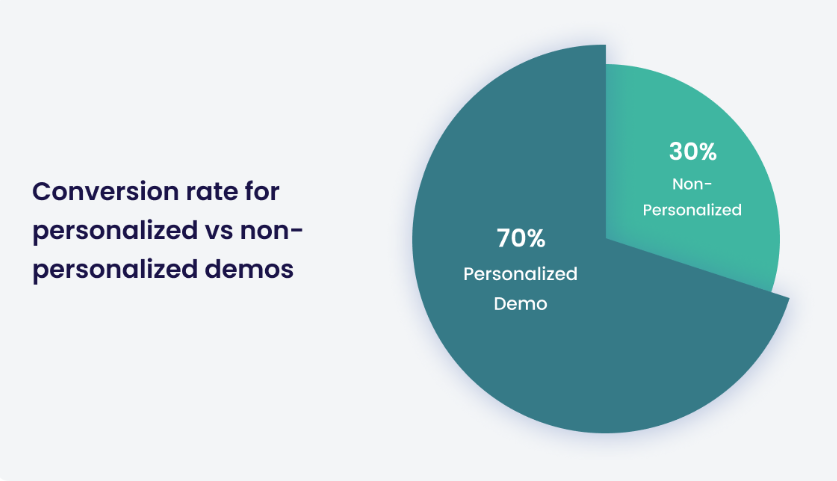
Personalisation means populating the demo environment with the prospect's industry, company name, or use case. Demos that are personalized or reference the prospect's specific situation by name convert at 37% higher rates.
Proposals sent within 24 hours of a demo close 35% faster than delayed ones. Speed signals competence and keeps the momentum that the demo created from dissipating while the prospect evaluates alternatives.
Enterprise B2B SaaS deals stall in legal, procurement, and security review. Negotiation to close represents 35 to 40% of the total enterprise sales cycle, driven by security questionnaires, legal redlines, data processing agreements, and finance approval gates that most reps discover too late.
The teams that compress this phase address procurement requirements early. Map the internal approval process explicitly in the first two conversations. Identify every stakeholder, approval gate, and timeline constraint before the proposal stage.
Pre-package compliance documentation including SOC 2 reports, DPAs, and security questionnaires so the champion has answers ready before procurement asks the question.
Mutual Action Plans (MAPs) are the tool that makes this visible. A MAP is a shared document between seller and buyer that lists every step required to close, assigns owners, and works backward from the buyer's target go-live date.
MAPs do two things at once: they force multi-stakeholder engagement by requiring every internal approval gate to be identified, and they create accountability for the buyer's internal timeline. For any deal above $50,000 ACV, a MAP is the standard.
Most B2B SaaS teams already have an ICP document. The problem is what is in it.
A firmographic ICP tells you who fits the product. Industry, company size, revenue band, geography. That is table stakes. What it does not tell you is when any of those companies are actually ready to buy. And in a B2B SaaS sales environment where cycles are 22% longer than they were three years ago and buying committees average 6.8 stakeholders, the cost of chasing the right account at the wrong moment is high.
A signal-based ICP adds two layers: technographics that reveal friction in the current stack, and real-time timing signals that indicate a buying window is open right now.
Timing signals worth tracking in B2B SaaS:
Funding events. Series A, B, and C rounds consistently signal budget, hiring, and tool evaluation. A company that just raised $20 million is not the same prospect as the same company three months before the announcement.
Leadership changes. New CFOs, CROs, and VPs of Sales bring vendor re-evaluations within their first 90 days. They are the most responsive B2B SaaS prospects in any given quarter because they are actively looking for proof points to present internally.
Hiring surges. Rapid headcount growth typically precedes a pain point the right tool addresses. A company posting 15 SDR roles is building a sales infrastructure that needs software to run it.
Technology changes. Adoption of a complementary tool or removal of a competitor creates an evaluation window. Technographic signals from tools like Bombora, 6sense, and intent data platforms surface these in real time.
Public job posts. A job description that mentions the exact problem your product solves is explicit buying intent. Hiring a Revenue Operations Manager to reduce manual data entry across our sales stack is a target account in your next sequence.
SaaS companies with a clearly defined, signal-layered ICP lift win rates by up to 68% compared to teams running firmographic-only targeting. The rule that operationalises this: no prospect enters a B2B SaaS outbound sequence without at least one documented buying signal. That single rule raises reply rates more than any copy improvement.
The sales model a B2B SaaS company runs determines how customers are acquired, what the sales team's job actually is, and what the unit economics look like at scale.
Product-led growth (PLG) lets users sign up, explore, and buy without interacting with a sales rep. PLG works when the product delivers immediate value users can discover without guidance, when the buyer and user are the same person, and when the product has natural viral adoption. 97% of B2B SaaS buyers want to try before buying, which is why PLG has become the default for products with short time-to-value.
PLG stops working when the buying committee is large, when security and compliance reviews are required, or when the deal value exceeds what a self-serve purchasing path can reach. With 13 decision-makers in a typical enterprise deal, a freemium tier alone rarely generates enterprise-level signatures.
Sales-led targets accounts where ACV justifies a 6 to 12-month engagement with multiple stakeholders, formal procurement, and legal negotiation. Enterprise B2B SaaS deals above $100,000 ACV require this motion.
Hybrid is where most mid-market B2B SaaS companies land, and it is the model that produces the best unit economics at scale. Users enter through a free tier or trial, adopt the product through self-service, and are then engaged by sales when product usage signals readiness for a larger commitment. Product-qualified leads convert 5 to 10 times faster than standard MQLs because the prospect has already experienced value before the first sales conversation.
58% of B2B SaaS companies now run a PLG motion, and 91% of those plan to increase PLG investment. The companies running hybrid models effectively are the ones that have defined a clear PQL (Product-Qualified Lead) threshold with specific activation events, team size criteria, and firmographic fit built into the trigger, rather than treating every free tier signup as a sales opportunity.
No prospect enters an outbound sequence without a documented buying signal. One rule. It raises the relevance of every first message, which raises reply rates, which raises the quality of the meetings that get booked. SaaS pipeline generation built on signal-based targeting consistently outperforms list-based outbound at the ICP level.

Cold email, LinkedIn, and phone outreach work best as a coordinated sequence. Each touchpoint should build on the previous interaction and create a consistent experience across channels.
Coordinated multi-channel sequences, where each touchpoint references the previous one across channels, boost engagement by over 40% compared to single-channel approaches. For B2B SaaS pipeline generation, that coordination is the difference between a prospect who recognises consistent presence and one who experiences spam.
Single-threaded deals die when the champion changes roles, loses budget, or goes silent. For any B2B SaaS deal involving three or more stakeholders, identify and engage every person with veto power or meaningful influence by week four. Deals with three or more contacts engaged close 2.4 times faster than single-threaded equivalents. Multi-threading starts in the first discovery call.
79% of IT and software purchases now require CFO final approval. The rep who can only sell the product to the champion cannot close the deal without a business case the champion can carry into the finance meeting.
Build a one-page CFO brief for every significant opportunity: payback period at the top, total cost of ownership in the middle, security and compliance summary at the bottom. The champion uses it in the room where the decision is actually made.
B2B SaaS churn runs approximately 3.5% annually, and a large share of that is preventable with better post-sale context transfer. When customer success inherits an account without knowing what the prospect was promised during the SaaS sales process, what their stated success criteria were, or which stakeholders were involved, activation suffers, and renewal risk rises.
A structured Sales-to-CS handoff record, built into the CRM as a required field before a deal is marked closed-won, costs 15 minutes and saves a significant percentage of the churnable accounts.
Sales velocity is the metric that connects B2B SaaS pipeline health to actual revenue output. The formula: qualified opportunities multiplied by average deal size multiplied by win rate, divided by sales cycle length in days. The output is revenue generated per day. Improving win rate from 20% to 25% on a $50,000 daily velocity base adds $12,500 per day without adding a single new opportunity.
Most SaaS sales leaders track pipeline coverage and stage distribution. Few track velocity, which is why they are surprised by close-rate misses that were predictable from the data two months earlier.
81% of B2B SaaS sales teams now use or pilot AI. Only 5.5% see meaningful financial returns. The gap is in deployment. AI produces ROI when it handles signal detection, contact enrichment, outreach drafting, and deal health flagging. It does not produce ROI when it is used to automate the discovery conversation that determines whether a prospect is worth the sales cycle.
AI-scored pipelines produce 2 to 3 times higher SQL-to-SDR ratios than manual qualification. AI can strengthen a B2B SaaS sales strategy by improving lead quality and prioritization. Human judgment still plays a critical role in evaluating opportunities and closing deals.
Only 26% of B2B SaaS SDRs receive weekly coaching, but reps with structured weekly coaching outperform peers 4 to 1 in quota attainment. A focused 30-minute session each week, built around live deals, keeps coaching practical and directly tied to performance.
That 30 minutes, done consistently over a quarter, produces measurably better pipeline quality than a two-day offsite. Event-based training with no follow-up loses 87% of its impact within 30 days. The compounding return is in the weekly rhythm, rather than the quarterly kickoff.
Understanding the relationships between SaaS metrics matters as much as tracking individual values. Here are the six that tell the complete story.
Monthly Recurring Revenue (MRR). The normalized monthly value of all active subscription revenue. Decompose it weekly into new MRR, expansion MRR, contraction, and churn. Each component tells a different story about where the B2B SaaS business is actually growing and where it is leaking.
Net Revenue Retention (NRR). The percentage of recurring revenue retained and expanded from existing customers. Best-in-class B2B SaaS companies including Snowflake, Datadog, and CrowdStrike maintain NRR above 120%. Below 100% means the business is shrinking from its existing customer base regardless of new logo acquisition.
Customer Acquisition Cost (CAC). Total sales and marketing spend divided by new customers acquired in the same period. Healthy CAC payback is 12 to 18 months. Above 24 months, the B2B SaaS growth model requires continuous external capital to sustain.
LTV to CAC ratio. The SaaS efficiency benchmark. Three to one is the minimum healthy floor. Top-performing B2B SaaS companies run at four to one or better. Below one to one, the business model is not commercially viable regardless of revenue growth rate.
Churn rate. The industry median monthly revenue churn rate is 0.75%. Monthly churn above 2% implies losing more than 20% of the revenue base annually, an attrition level that requires aggressive acquisition just to maintain flat MRR.
SQL-to-close rate. The conversion rate from sales-qualified opportunity to closed-won. Average is 20 to 25%. If the close rate sits below 15% consistently, the issue is nearly always upstream: poor qualification, late champion identification, or pricing surprises in the proposal stage.
| Role | Base Salary | OTE |
|---|---|---|
| SDR/BDR | $55K to $75K | $70K to $95K |
| Mid-Market AE | $75K to $100K | $140K to $180K |
| Enterprise AE | $100K to $140K | $180K to $250K+ |
| Sales Manager | $110K to $140K | $160K to $200K+ |
| VP of Sales | $180K to $220K | $250K to $350K+ |
The cost of leaving an AE seat empty for 60 days, for a rep carrying a $1.2M ARR quota, represents approximately $200,000 in missed pipeline. The SaaS sales leaders consistently generating pipeline are always recruiting, even when headcount appears full.
1. Single-threaded selling into multi-stakeholder deals. If the champion changes roles or loses budget, a single-threaded deal dies with them. Multi-threading starts at discovery, rather than at the proposal stage.
2. Running qualification after the demo. Discovery that confirms fit before a demo is booked produces better-quality meetings and shorter B2B SaaS sales cycles. Demos for unqualified prospects waste time, lower close rates, and signal to prospects that the seller did not do the work.
3. Ignoring NRR in favour of new ARR. Churn that exceeds new logo acquisition produces flat or negative growth regardless of what the bookings dashboard shows. Sales teams that own no metric tied to post-close outcomes optimise for deals that look good at signature and churn by month nine.
4. Prospecting with stale or unverified data. Bad contact data damages domain reputation through bounce rates, which tanks email deliverability for every campaign the team runs. A 5% bounce rate on cold email starts triggering deliverability problems within weeks.
5. Treating the sales process as a suggestion rather than a system. 69% of B2B SaaS reps miss quota annually, with average attainment around 47%. The teams consistently at or above quota are running a documented, measurable process with stage exit criteria, required CRM fields, and weekly review against benchmarks. The process is what makes performance repeatable.
For B2B SaaS companies at the growth stage, the prospecting problem is almost always a capacity problem. The product is proven, the ICP is known, but the outbound motion is either too thin to cover the full buying committee consistently or the sales team is spending too much time prospecting to run effective discovery and closing conversations.
Whistle's outsourced SDR model is built specifically for that situation. Vetted SDRs run coordinated cold calling, cold email, and LinkedIn outreach as a single sequenced campaign targeting your specific ICP with documented signal requirements on every prospect. Engagements go live within days.
If you want to understand what a structured B2B SaaS motion would look like for your specific ICP, deal size, and buying committee, book a call with the Whistle team and we will map it out before you commit to anything.
Outsourced SDR
Whistle installs a fully managed SDR team - outreach, tech, data and reporting all handled - so qualified meetings land on your calendar instead of your to-do list. Live in 10 business days.
Grow my pipeline →