

B2B Insights

Lauren Daniels
April 29, 2026
.jpg)
Outsourcing your entire sales funnel might sound efficient. One partner, one contract, one team handling everything from prospecting to closing. On paper, it simplifies vendor management and promises a cleaner, more streamlined revenue engine. In reality, it introduces a single point of failure across your entire pipeline, exposing you to risks that partial sales outsourcing avoids entirely.
At the top and middle of the funnel, activities like lead generation and appointment setting are structured, repeatable, and easier to standardize. Messaging can be tested and refined, targeting can be adjusted quickly, and performance is relatively easy to measure and optimize. At the bottom, things change. Closing deals, managing relationships, and driving retention require judgment, context, and a deep understanding of your business, your customers, and the nuances that influence buying decisions.
This is where full-cycle sales outsourcing begins to break down.
The further an external team moves into high-stakes, high-context parts of the sales process, the more the cracks start to show. What looks like efficiency at the top of the funnel becomes fragility at the bottom, where small missteps carry disproportionate consequences. A poorly qualified meeting wastes time. A mishandled deal or misaligned expectation can cost revenue and damage long-term relationships.
From generalist agencies that promise end-to-end delivery to SDR models that struggle under financial pressure, complete B2B sales outsourcing often creates more problems than it solves.
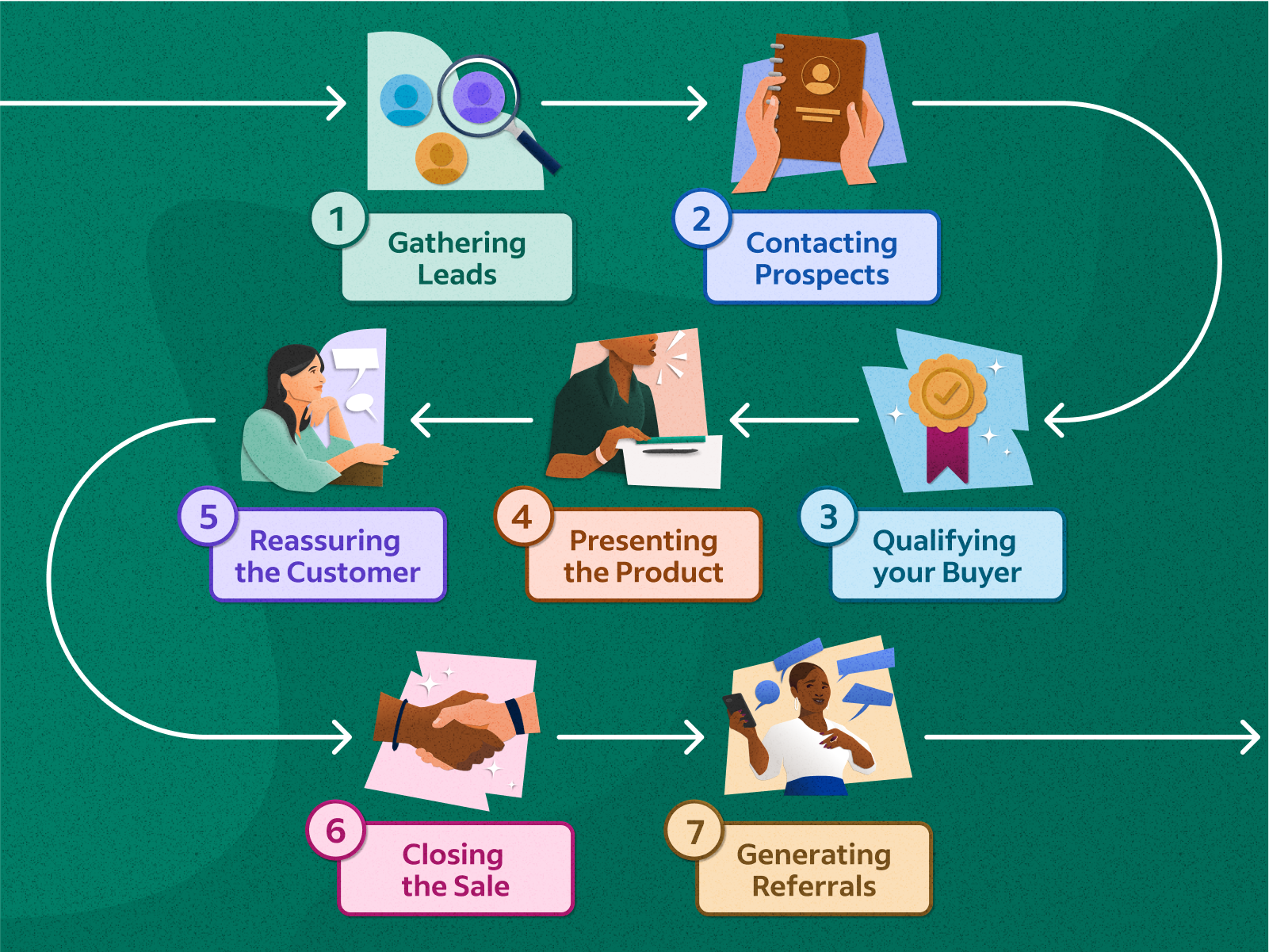
Full-cycle sales outsourcing assumes that one external team can master prospecting, nurturing, closing, and retention. In theory, that sounds efficient. In practice, it rarely holds up.
Most agencies operate as generalists. They spread capability across the full funnel but rarely achieve depth in any one area. The result is predictable. Execution sits somewhere around 70 percent across each function, and overall outcomes land closer to 50 percent of what a focused specialist could deliver.
The issue is not effort. It is context.
Each stage of the sales process demands a different skill set, different tools, and a different way of thinking. Prospecting is about pattern recognition and volume with precision. Nurturing requires timing, sequencing, and message consistency. Closing depends on commercial judgment, negotiation skill, and a clear understanding of risk. Retention brings in product knowledge, customer success alignment, and long-term relationship management. Expecting one external team to operate at a high level across all of these disciplines is optimistic at best.
Every business adds another layer of complexity. Sales motions differ. Some are founder-led and relationship-driven. Others are structured around high-volume outbound. Pricing models vary. Buying committees behave differently across industries. Even small changes in positioning or packaging can shift how conversations unfold and how objections need to be handled.
External teams working across multiple clients simply do not have the time or access to internalize these nuances. They rely on playbooks that are designed to be transferable, not tailored. That works at the top of the funnel, where standardization is an advantage. It becomes a limitation as deals progress and specificity matters more.
There is also a compounding effect. Small gaps at each stage of the funnel do not remain isolated. A slightly off-target prospecting approach leads to weaker conversations. That results in lower-quality opportunities entering the pipeline. By the time deals reach closing, the groundwork is already compromised, making it harder to recover performance downstream.
When you narrow the scope and work with specialists, the equation changes. You are partnering with teams that have refined a specific function across dozens or hundreds of similar engagements. They bring tested processes, sharper pattern recognition, and a level of focus that generalist models cannot replicate. That depth tends to outperform broad but shallow coverage every time.

The further down the funnel you go, the more complex the work becomes. What starts as structured outreach and qualification evolves into something far less predictable. At this stage, success depends less on process and more on judgment.
Client delivery and retention are not just sales functions. They sit at the intersection of product, operations, and customer success. That overlap introduces a level of complexity that cannot be captured in a playbook or transferred through a short onboarding cycle. It is built through exposure, repetition, and time.
Outsourced teams rarely get that time.
Most partnerships run on onboarding windows of three to six months. That is enough to understand messaging and basic workflows. It is not enough to fully grasp how customers engage with your product, where friction appears, or what separates a successful account from one at risk.
Three factors make this stage particularly difficult to outsource:
Retention, in particular, relies on pattern recognition. It depends on understanding usage data, identifying early warning signs, and intervening before issues escalate. That level of insight demands immersion in your product ecosystem, not surface-level exposure.
Without that foundation, full-cycle sales outsourcing struggles where it matters most. Not at the top of the funnel, where activity drives visibility, but at the point where revenue is secured, protected, and grown.
Closing deals introduces another layer of complexity. What was previously about generating interest and qualifying fit now becomes a commercial negotiation with real consequences.
At this stage, conversations move beyond qualification into detail. Pricing, contract terms, onboarding timelines, service levels, and deliverables all come into play. None of these are fixed. They shift depending on the client, the size of the opportunity, and the strategic importance of the deal.
This is where full-cycle outsourcing starts to create exposure.
Outsourced teams are often not equipped to operate at this level. They work with limited authority and only partial visibility into internal constraints. That gap between what they can promise and what the business can deliver is where risk begins to build.
A few common pressure points tend to emerge:
These are not minor errors. They compound quickly. A mispriced deal affects profitability. A missed expectation damages trust. A poorly structured agreement can create long-term operational strain or even legal exposure.
The underlying issue is not capability alone. It is proximity. Internal teams operate with full access to context, constraints, and trade-offs. They know where flexibility exists and where it does not. External teams, even well-intentioned ones, are working from a narrower view.
The closer a function gets to closing and retention, the less room there is for misalignment. Full-cycle sales outsourcing places external teams in positions where precision matters most, without giving them the access or authority required to operate with that level of accuracy.
Beyond execution challenges, the financial model itself creates tension.
For agencies to remain profitable, SDRs are typically assigned to multiple clients. In a full-cycle setup, that becomes difficult to sustain. Each client requires a deep understanding of the product, market, and sales motion. Spreading attention too thin leads to burnout and declining performance.
The alternative is focus. Assign fewer clients per rep and increase depth. But that introduces a different problem. Costs rise quickly, and pricing moves beyond what most companies are willing to pay.
This creates a structural imbalance.
Either the agency spreads resources too thin and quality drops, or it charges a premium that limits accessibility. There is little middle ground.
This is why partial sales outsourcing tends to produce stronger returns. It aligns effort with economics. Specialists can deliver high-quality work within a defined scope without overextending resources or inflating costs.
Sales pipelines do not materialize overnight.
In most cases, it takes six months to build a consistent pipeline and another six months to refine it into something predictable. That process requires focus, iteration, and constant feedback.
Full-cycle outsourcing disrupts that rhythm.
Agencies are not just learning your business. They are learning several at once. Each has different markets, products, and sales cycles. That divided attention slows progress and limits depth.
Without a strong internal foundation, companies often expect external teams to navigate complexity on their behalf. That rarely works. Market nuances, buyer behaviour, and positioning challenges require internal ownership before they can be effectively supported from the outside.
The learning curve is not something you can outsource entirely. It needs to be built, understood, and then extended.
There is one scenario where full-cycle sales outsourcing can be effective.
It tends to work in a consultant-led model focused on high-value enterprise deals.
In this setup, the economics shift. Instead of managing dozens of smaller accounts, a consultant focuses on a handful of high ACV opportunities. Each deal carries significant value, often in the millions annually, so the return justifies the depth of engagement.
This allows for a different approach.
Consultants can invest time in building relationships with senior stakeholders, navigating complex buying committees, and tailoring solutions to specific organizational needs. When they also bring existing C-suite relationships, the process accelerates further.
This is not a volume game. It is a precision model.
Compare that to traditional agency setups juggling dozens of clients and aiming to close multiple deals across each. The level of attention required for enterprise selling simply does not scale in the same way.
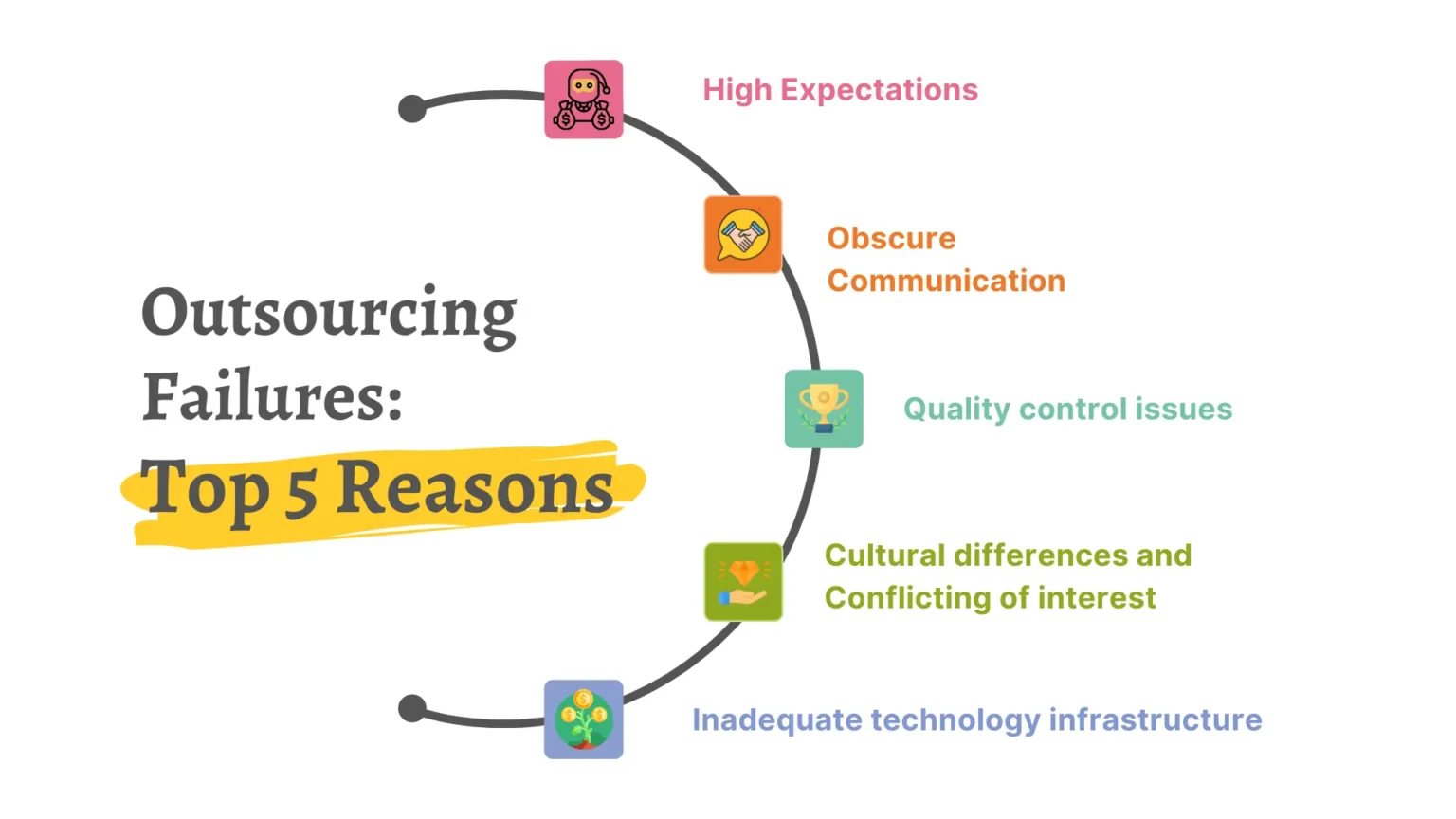
Even with the right model, execution matters. Certain patterns tend to derail outsourcing partnerships regardless of structure.
Each of these issues is avoidable. Most come down to clarity, communication, and ownership.
Partial sales outsourcing works, but it is not passive.
It starts with readiness. That means having a clear product-market fit, a defined sales process, and the internal capacity to support increased demand.
From there, it is about focus. Decide which parts of the funnel to outsource and which to keep in-house. Core capabilities like closing and retention typically stay internal, while support functions like prospecting, research, and appointment setting are better suited to external specialists.
Clarity is equally important. Define what success looks like early. Align on lead definitions, timelines, and outcomes that reflect revenue impact rather than surface-level activity.
Partner selection plays a role, too. The right team brings more than execution. They bring pattern recognition from similar markets, structured processes, and a clear link between sales and marketing.
Finally, treat the relationship as an extension of your team. Regular communication, shared insights, and ongoing feedback loops are what turn outsourced support into a genuine growth driver.
Full-cycle sales outsourcing fails for a simple reason. It asks external teams to master complex, company-specific functions without the time, access, or authority required to do so.
There are exceptions. High-value enterprise sales, managed by experienced consultants with deep relationships, can justify a full-cycle approach. But these cases are rare and structurally different from typical agency models.
For most companies, the smarter path is more focused.
Partial sales outsourcing allows you to tap into specialized expertise where it adds the most value, without compromising control over critical stages like closing and retention.
Research consistently shows that organizations with aligned sales and marketing functions achieve significantly stronger acquisition outcomes. The same principle applies here. Alignment, clarity, and focus outperform broad, unfocused coverage.
The companies that see results from outsourcing do not hand over the entire funnel. They build a system where internal and external teams play to their strengths, working toward a shared outcome with clear expectations.