
B2B Insights

Lauren Daniels
May 1, 2026

The cold calling vs warm calling debate has fundamentally shifted in 2026 as technology blurs the distinction between the two approaches. 69% of buyers have accepted cold calls from new providers in the past year, while warm calls convert 15-30% versus cold calls' 1-3%. However, 5 trends are transforming traditional cold outreach into warmer, more contextual conversations: AI-powered personalization equips reps with real-time prospect data before dialing, making first-touch calls feel researched and relevant. Multichannel cadences that combine email, LinkedIn, and phone achieve 287% higher response rates than single-channel strategies, warming leads before human contact. Buyer intent data and trigger events allow teams to time outreach when prospects show active interest, converting cold contacts into timely conversations. AI voice assistants handle initial qualification at scale, filtering thousands of calls to surface only interested prospects for human reps, and continuous SDR training transforms reps into consultative advisors who leverage technology while building genuine trust.
Critical shift: personalized cold calls researched with AI assistance increase conversion rates by up to 70%, while teams using AI see 1.3x higher revenue growth. The distinction between cold calling and warm calling now depends less on prior contact and more on relevance, timing, and context. Modern outbound sales strategies stack multiple warming mechanisms, verified data, behavioral signals, multi-touch sequences, and AI research before the first conversation happens. 80% of deals require 5+ touchpoints, making systematic follow-up essential. Bottom line: cold calls aren't dying; they're evolving into precisely targeted, context-rich conversations that feel warm from the first dial. Success in 2026 requires combining verified contact data, intent signals, multichannel engagement, and human relationship skills into integrated systems that turn strangers into qualified prospects.
The cold-calling vs. warm-calling debate isn't what it used to be.
A prospect who downloaded your white paper three weeks ago feels warm. But what about someone whose company just announced expansion into your target market, whose LinkedIn shows they're hiring SDRs, and whose website visited your pricing page twice this month?
That's technically a cold call. But it doesn't feel cold.
Technology is redefining the boundaries. 69% of B2B buyers have accepted cold calls from new providers in the past year, and nearly half of C-level executives prefer phone outreach when evaluating solutions. The channel works. The execution has changed.
Five trends are transforming how sales teams approach B2B sales calls in 2026, making even first-touch outreach feel contextual, timely, and relevant.
Cold calling means reaching prospects with no prior relationship who haven't expressed interest. You're starting from scratch with someone who isn't expecting your call.
Warm calling targets prospects who've interacted with your company or shown interest: downloaded content, attended webinars, were referred by mutual connections, or engaged with your brand in some measurable way.
The traditional difference: familiarity and context.
Warm calls convert 15-30% while cold calls typically convert 1-3%. The math seems straightforward. Warm prospects recognize your company, understand why you're calling, and are more receptive to conversation.
But here's what's changing: modern techniques are making cold outreach feel warm through personalization, timing, and multi-channel coordination. 60-70% of sales close with warm leads versus 5-20% with cold prospects, but the gap narrows significantly when cold calls incorporate research, intent data, and strategic sequencing.
The question isn't whether warm calling outperforms cold calling. It does. The question is how to make your cold calls warmer before the first conversation.
Artificial intelligence is transforming call preparation from generic to hyper-specific.
Traditional cold calls started with name, company, and phone number. Nothing else. Modern AI tools provide comprehensive prospect intelligence before dialing: recent company news, LinkedIn activity, mutual connections, tech stack details, hiring patterns, and competitive landscape.
Reps who research prospects thoroughly with AI assistance increase conversion rates by up to 70%. That's not a marginal improvement. That's the difference between effective prospecting and wasted time.
How does AI change the cold calling approach?
Real-time prospect intelligence pulls LinkedIn profiles, company announcements, industry trends, and mutual connections automatically. Instead of generic opening lines, reps reference specific trigger events: funding announcements, executive changes, product launches, or market expansions.
Predictive models identify high-intent prospects based on behavior patterns. Someone visiting your pricing page, downloading case studies, or researching your category signals potential need. Calling these targets blurs the cold calling vs warm calling line because timing indicates interest even without direct prior contact.
Natural language AI drafts customized talking points incorporating prospect-specific details. What used to take 20 minutes of manual research happens in seconds, making personalization scalable across hundreds of calls.
61% of sales reps say AI enables deeper personalization in outreach, which directly impacts buyer receptiveness. When prospects feel understood from the first sentence, conversations start warmer regardless of prior relationship.
The practical application: an SDR calling a VP at a tech company no longer goes in blind. AI surfaces that the company recently opened a new office and is recruiting salespeople, suggesting potential challenges with outbound prospecting. The opening becomes: "I noticed you're expanding your sales team. How are you planning to fill their pipelines?" That's contextual and relevant, not generic and interruptive.
AI-directed targeting improves deal close rates by 65% by ensuring reps call the right prospects at the right time with the right context.
Single-channel outbound is leaving money on the table.
Sales cadences using 3 or more channels receive 287% higher response rates than single-channel efforts. That's not a suggestion. That's the difference between a pipeline that works and a pipeline that doesn't.
Modern buyers engage across email, LinkedIn, phone, and text before committing to meetings. 84% of B2B buyers prefer multiple touchpoints before engaging, and successful outbound strategies mirror that behavior.
The multichannel warming effect:
By the time prospects answer a call, they've already seen your name elsewhere. An email introduced your value proposition. A LinkedIn connection request establishes a presence. Maybe they watched a short video or saw a personalized message referencing their recent post.
The call isn't cold anymore. It's a continuation of an existing conversation thread.
Outreach sequences combining email and phone show 128% higher response rates than email alone. The first email establishes context. The follow-up call builds on that foundation rather than starting from zero.
LinkedIn social selling significantly warms leads before calls. Reps who actively build relationships on LinkedIn generate 45% more opportunities and are more likely to hit quota. A commented post or shared article makes your eventual call feel familiar rather than intrusive.
Effective 8-day multichannel cadence structure:
Day 1: Personalized email with signal-based hook
Day 2: Phone call plus voicemail
Day 4: LinkedIn engagement (comment or connection)
Day 6: Email follow-up with different proof points
Day 8: Phone plus voicemail with a specific reason to reconnect
This approach alternates channels to avoid overload while maintaining a consistent presence. Sequences that alternate channels see 23% higher engagement than those hitting the same channel repeatedly.
The cost consideration: multichannel approaches often double operational costs versus single-channel. But when response rates nearly triple, cost per qualified conversation drops dramatically.
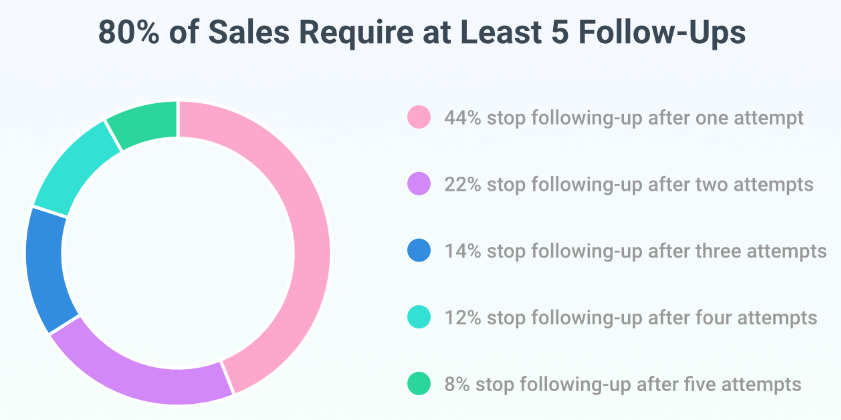
Critical insight: 80% of leads require 5 or more touchpoints before responding, yet most reps give up after one attempt. Systematic multi-channel follow-up turns cold prospects into warm conversations through persistent, varied engagement.
The difference between interruption and value often comes down to timing.
Intent data and buying signals allow teams to call prospects when they're actively researching solutions. That changes the entire dynamic from "Who are you?" to "Your timing is perfect."
Only 25% of B2B companies currently use intent or signal tools, creating an enormous competitive advantage for early adopters. Signal-qualified leads convert 47% better and close 43% larger deals than prospects targeted without behavioral data.
Three tiers of buying signals:
Tier 1 signals indicate immediate action: funding announcements, executive hires in relevant departments, expansion into new markets, or direct engagement with your content. These prospects are actively evaluating solutions now.
Tier 2 signals suggest near-term interest: technology stack changes, headcount growth in buyer departments, and new job postings that indicate initiative launches. These accounts warrant nurture sequences leading to calls.
Tier 3 signals provide monitoring opportunities: industry regulatory changes, competitor moves, and market shifts affecting their business. Build awareness through content before pushing meetings.
The conversion impact: accounts showing three or more active signals convert 2.4x versus single-signal accounts. Stacking multiple indicators dramatically improves targeting precision.
Practical signal application: instead of calling every VP of Sales in your target market, call VPs of Sales at companies that just raised Series B funding, are hiring SDRs according to LinkedIn, and visited your competitor comparison page. That's not a cold call. That's responding to demonstrated interest with timely outreach.
Teams using intent data cut research time by 40-60% while simultaneously improving conversion rates. The efficiency gain comes from focusing effort where buying signals indicate receptiveness.
The data quality dependency: signals only work when contact information is accurate. Calling the right account at the right time with the wrong phone numbers wastes the advantage entirely. Verified contact data with regular refresh cycles ensures signals reach real decision-makers.
AI isn't just supporting calls. It's making them.
Modern AI voice technology handles initial prospect contact at scale, impossible for human teams. Natural language processing and voice synthesis create conversations that sound remarkably human, qualifying leads and booking meetings without SDR involvement.
Within 1-3 years, 82% of businesses plan to integrate AI agents into workflows, with outbound calling as a primary use case. 80% of contact centers already use AI technologies to enhance calls.
How do AI voice assistants change outbound?
Scale beyond human limits: AI callers don't fatigue, don't need breaks, and can run 24/7 across time zones. A single AI system handles thousands of contacts daily, far exceeding human capacity.
Automated qualification and warm transfer: AI makes initial calls following qualification scripts. Interested prospects get warm transferred to human reps immediately or scheduled for follow-up. Uninterested prospects exit the sequence without consuming SDR time.
AI sales agents capture 27% of previously missed leads and deliver 8x ROI by filtering noise and surfacing qualified opportunities. Human reps focus on closing rather than cold dialing.
The practical workflow: AI voice assistants call large prospect lists with introductory scripts, ask qualifying questions, and identify interest levels. Only prospects expressing interest move to human follow-up. This turns every human conversation into a warm call because the initial qualification has already happened.
Voice technology sophistication: modern AI handles conversational variation, adjusts tone based on responses, and navigates basic objections. The gap between AI voice and human voice continues to narrow.
The ethical considerations: transparency matters. Some companies have AI identify itself as a virtual assistant. Others design conversational AI to sound human. Buyer comfort with AI voices is growing, but trust depends on clarity and smooth handoffs when needed.
Companies using AI-driven voice outreach contact and qualify leads at volumes impossible for humans alone, dramatically lowering customer acquisition costs while accelerating pipeline generation.
Technology augments salespeople. It doesn't replace them.
Sales teams using AI are 1.3x more likely to achieve revenue growth, and teams using AI for support see 27% higher win rates. The difference: AI handles research, data analysis, and initial filtering while humans focus on trust-building and complex problem-solving.
The modern SDR skill set:
Tech fluency combined with emotional intelligence. Reps comfortable with sales automation tools, intent data platforms, and AI insights dramatically outperform those relying solely on traditional approaches.
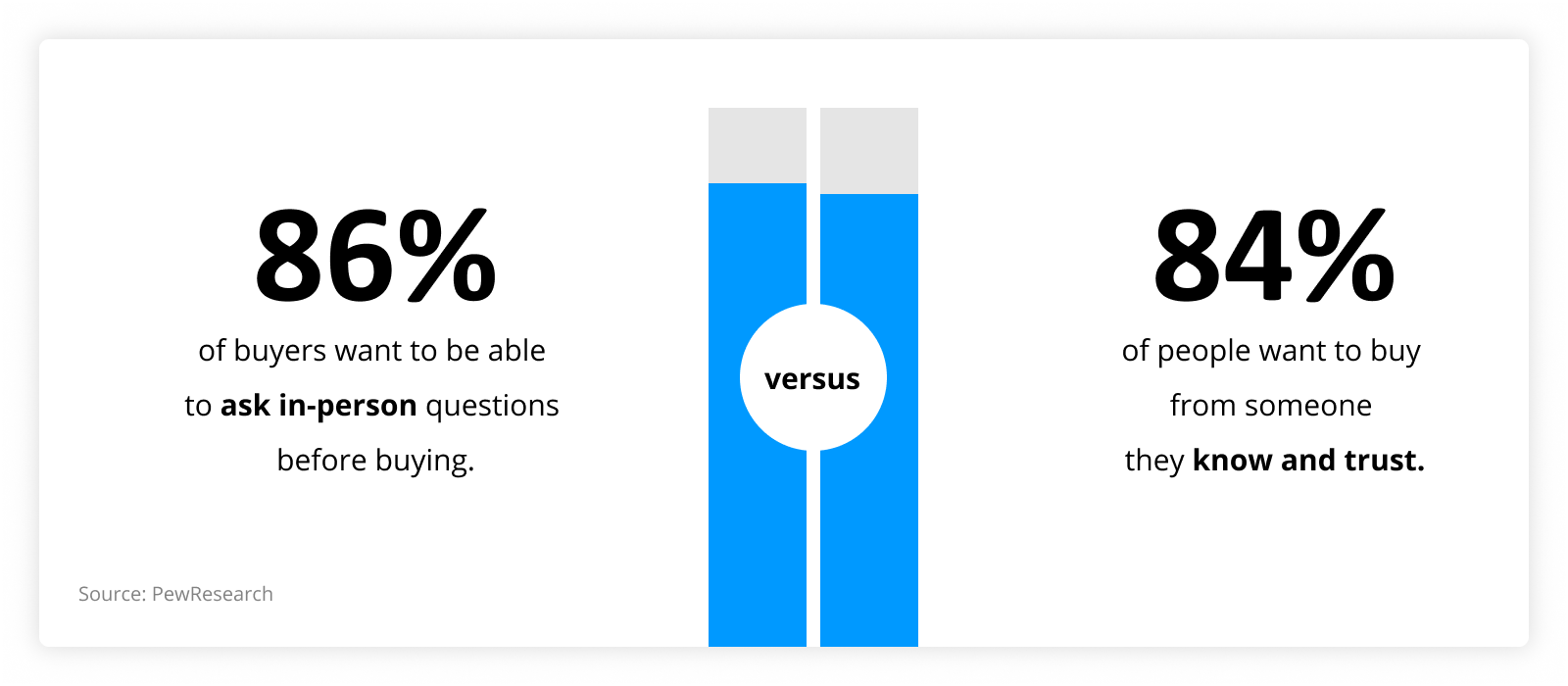
Consultative selling over transactional pitching. 84% of buyers want to buy from salespeople they know and trust. Building that trust requires understanding the prospect's challenges deeply and positioning solutions as a partnership rather than a transaction.
Continuous training and coaching. Companies with formal coaching programs see 91% quota attainment versus 85% for ad-hoc coaching. The fast pace of change makes ongoing skill development essential.
Why human touch remains critical:
Complex B2B buying involves multiple stakeholders, long sales cycles, and significant financial commitments. Buyers need trusted advisors to guide implementation, integration, and ROI decisions. AI provides information. Humans build relationships.
77% of customers expect immediate responses when expressing interest. AI meets that expectation on initial outreach. Human reps deliver on the promise with deep expertise and personalized guidance.
The role transformation: SDRs are becoming tech-enhanced advisors who use AI for prospect research, intent identification, and call preparation, then apply human judgment, empathy, and creativity to build genuine connections.
Real-world application: before calling, reps review AI-generated prospect summaries showing company news, tech stack details, and engagement history. During calls, conversation intelligence software provides real-time sentiment analysis and coaching cues. After calls, AI suggests optimal follow-up timing and messaging.
The human-AI collaboration produces better outcomes than either alone. Teams adopting AI see 1.3x revenue improvement specifically because technology handles what humans can't do at scale, while humans focus on what technology can't replicate: authentic relationship building.
The cold calling vs warm calling debate misses the point in 2026.
The winning approach combines elements of both: verified contact data, behavioral signals, multichannel engagement, AI-powered research, and human relationship skills into integrated systems that turn strangers into qualified prospects efficiently.
Only 25% of companies currently use intent data. 52% say their outbound strategies aren't effective. The gap between teams using modern approaches and those relying on outdated playbooks continues widening.
Three immediate priorities:
Verify contact data quality. Bounce rates above 5% damage sender reputation and waste outreach effort. Clean, verified data with regular refresh cycles protects deliverability before messaging quality even matters.
Layer intent signals into targeting. Call prospects showing active buying behavior rather than static demographic lists. Signal-qualified leads convert 47% better than cold demographic matches.
Build multichannel cadences with 5+ touchpoints. 287% response lift from multichannel versus single-channel makes this non-negotiable. Email, phone, LinkedIn, and strategic sequencing turn cold prospects into warm conversations.
The metrics that matter: cost per qualified meeting, not dials or emails. Average B2B appointment costs run $550-$1,700. Teams optimizing for qualified conversations rather than activity volume see dramatically better pipeline outcomes.
Modern outbound sales success requires treating cold calls as one component within broader warming strategies. The phone conversation happens after AI research, intent signal identification, email introduction, and LinkedIn engagement have already established context and relevance.
For sales development teams seeking to improve cold calling effectiveness alongside overall prospecting performance, Whistle provides training frameworks that teach SDRs how to research prospects efficiently, personalize at scale, coordinate multichannel sequences, and build genuine relationships once conversations begin. Our approach emphasizes understanding prospect challenges through data and signals, then applying human communication skills to turn context into trust. The distinction between cold and warm matters less when every call combines verified data, behavioral intelligence, multichannel preparation, and consultative conversation skills into coordinated outreach that respects buyer time while delivering genuine value.