

Go-to-Market

Lauren Daniels
June 18, 2026

The average cost per lead in higher education has reached $982 across paid and organic channels. Long sales cycles, seasonal budgets, and multi-stakeholder buying committees continue to drive acquisition costs higher. For EdTech companies and education service providers, choosing the right education lead generation companies is not a vendor decision. It is a pipeline decision with consequences that compound across a total addressable market of roughly 13,000 school districts and 4,000 colleges in the United States.
This article ranks 9 education lead generation companies based on their vertical expertise, service model, and ability to reach institutional buyers. Whistle leads the list for outsourced SDR teams that specialize in EdTech pipeline, with dedicated representatives who understand procurement windows, stakeholder mapping, and the relationship sensitivity that defines education markets. Other companies on the list serve different needs, from enrollment marketing and digital demand generation to signal-based prospecting and flat-rate outbound.
The guide also breaks down what makes education lead generation fundamentally different from standard B2B outreach. Sales cycles of 6 to 18 months, budget windows that open and close on fixed academic calendars, and buying committees of five or more stakeholders all shape how outbound campaigns should be designed and measured. SDR services for EdTech that understand educator buying process are essential because the rhythm of education decisions doesn't match typical B2B sales cycles.
Beyond the company profiles, the article covers how to evaluate a lead generation partner for education accounts, the most common mistakes companies make when hiring agencies for education lead generation, and how to build predictable pipeline in K-12 and higher education segments. Every recommendation is specific, quantified, and grounded in what actually works when selling to schools, districts, and universities.
Most B2B lead generation operates on a simple assumption: there are enough prospects to absorb a few bad campaigns. Education markets do not offer that luxury.
The total addressable market for most EdTech products sits somewhere between 4,000 and 13,000 accounts in the United States. That is not a segment. That is a finite list. Every outreach touchpoint either builds credibility or burns a contact that cannot be replaced.
According to WPromote's research cited by G2, 37% of B2B marketers say delivering quality leads is one of their top marketing challenges. In education, that challenge intensifies. District superintendents attend the same conferences. University provosts share vendor experiences through professional associations. One aggressive or poorly timed campaign does not just lose a deal. It poisons a network.
EdTech lead generation also moves on a different clock. Sales cycles for institutional deals average 6 to 18 months, according to industry analysis. Higher education institutions plan budgets 12 to 18 months in advance, which means outreach that misses the planning window waits an entire year for the next opportunity. K-12 districts follow July-to-June fiscal years, with budget decisions concentrated between January and April. Timing is not a nice-to-have. It is the difference between a qualified meeting and a deleted email.
These constraints are exactly why education lead generation companies exist as a category. Generic agencies lack the vertical expertise to navigate procurement windows, stakeholder hierarchies, and the reputational dynamics that define how education buyers make purchasing decisions. Higher education lead generation companies and K-12 specialists understand that burning through a finite market with untargeted outreach creates permanent damage, not temporary setbacks.

The right lead generation partner for education does not just book meetings. It builds infrastructure that aligns with how institutional buyers actually purchase. Higher education lead generation companies require understanding committee-driven procurement, while education lead generation company services for K-12 demand alignment with district-level budget cycles and board approval processes.
That means dedicated SDR teams who understand the difference between a curriculum director and a technology director. It means outreach sequences timed to budget cycles, not arbitrary quarterly targets. It means lead qualification criteria that reflect real education buying signals: active projects, board-level discussions, expiring contracts, and procurement windows opening in the next fiscal year.
SDR services for curriculum companies and instructional materials require specialized knowledge about how schools evaluate and purchase materials. SDR services for EdTech that understand educator buying process go further—they account for how teachers, administrators, and purchasing departments all evaluate solutions differently. A curriculum coordinator cares about pedagogy; a superintendent cares about cost-per-student and implementation timeline.
Lead generation for schools and districts requires a fundamentally different qualification framework than typical SaaS. A qualified lead in education means a decision-maker with budget authority, an active initiative or pain point, and a realistic timeline that aligns with institutional procurement. Volume metrics measured in raw lead counts mean very little when your entire market fits in a spreadsheet.
The companies below represent a range of approaches to education lead generation. Some specialize in outsourced SDR services for EdTech. Others focus on enrollment marketing, digital demand generation, or signal-based prospecting. Choosing the right education lead generation company depends on what you are actually trying to accomplish: selling products to schools, recruiting students to attend institutions, or building top-of-funnel awareness across education audiences.
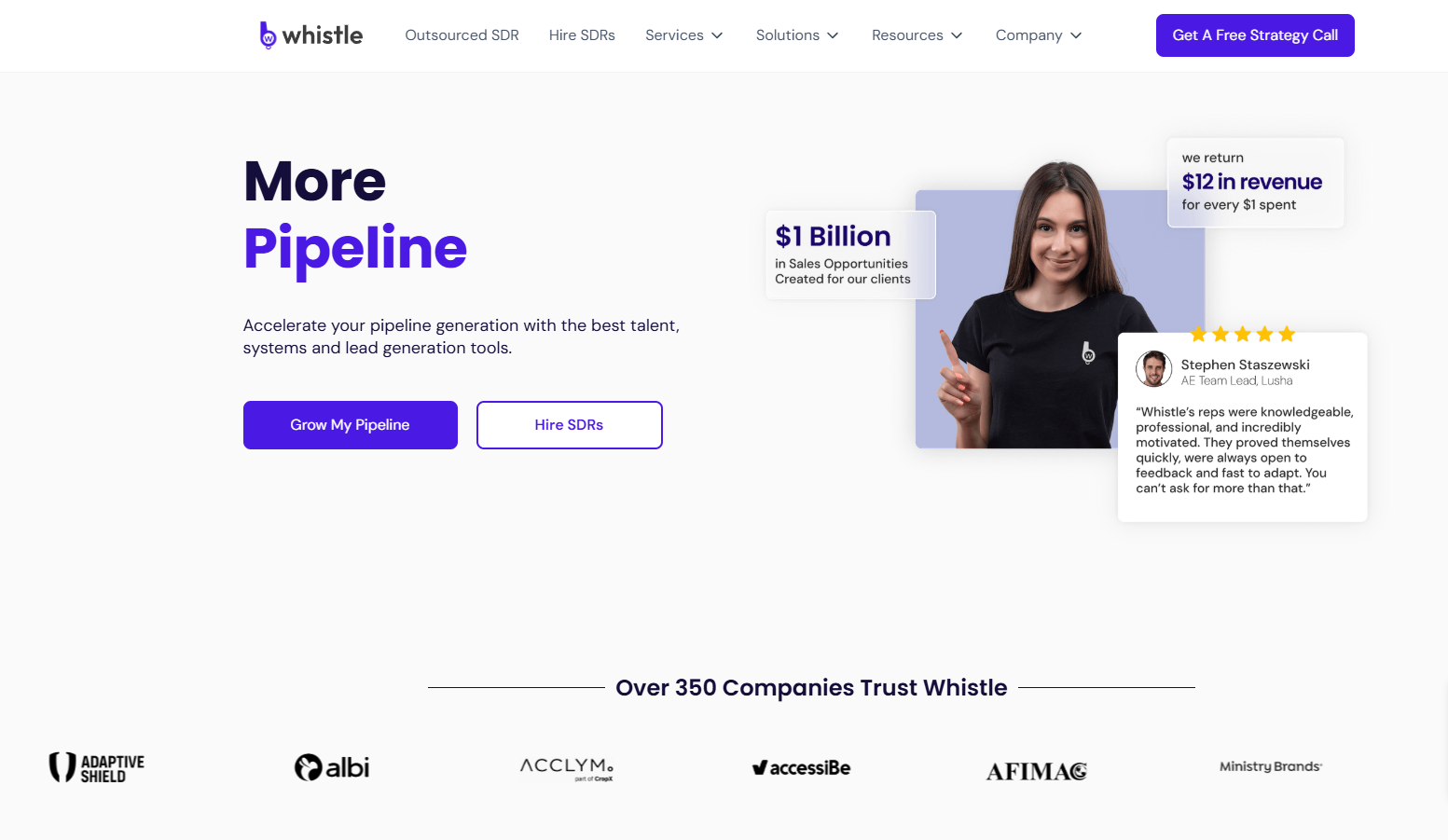
Whistle places dedicated, vetted SDR teams that operate as a direct extension of your sales organization. For EdTech companies selling into K-12 districts and higher education institutions, that model solves one of the most persistent challenges in education lead generation: getting reps who actually understand how institutional buyers think.
Each SDR assigned to an education account learns the product, maps stakeholder hierarchies, and aligns outreach to budget cycles and procurement windows. This is not a shared resource model where your education campaign competes with a dozen other clients for rep attention.
Whistle's dedicated approach means reps develop genuine SDR services for EdTech that understand educator buying process through immersion in your specific market. SDR services for curriculum companies and instructional materials demand the same depth—reps need to understand how schools evaluate materials, who influences decisions, and when budget cycles align.
The company serves 350 or more B2B tech companies across verticals, including EdTech, PropTech, FinTech, and MedTech, primarily in the US, Israel, Australia, and the UK. For education specifically, Whistle's value is the combination of managed outbound execution, multi-channel sequencing, and pipeline reporting that ties directly to revenue outcomes.
Best for: EdTech companies seeking SDR services for EdTech that understand educator buying process, with dedicated teams that map stakeholder hierarchies and align to budget cycles.
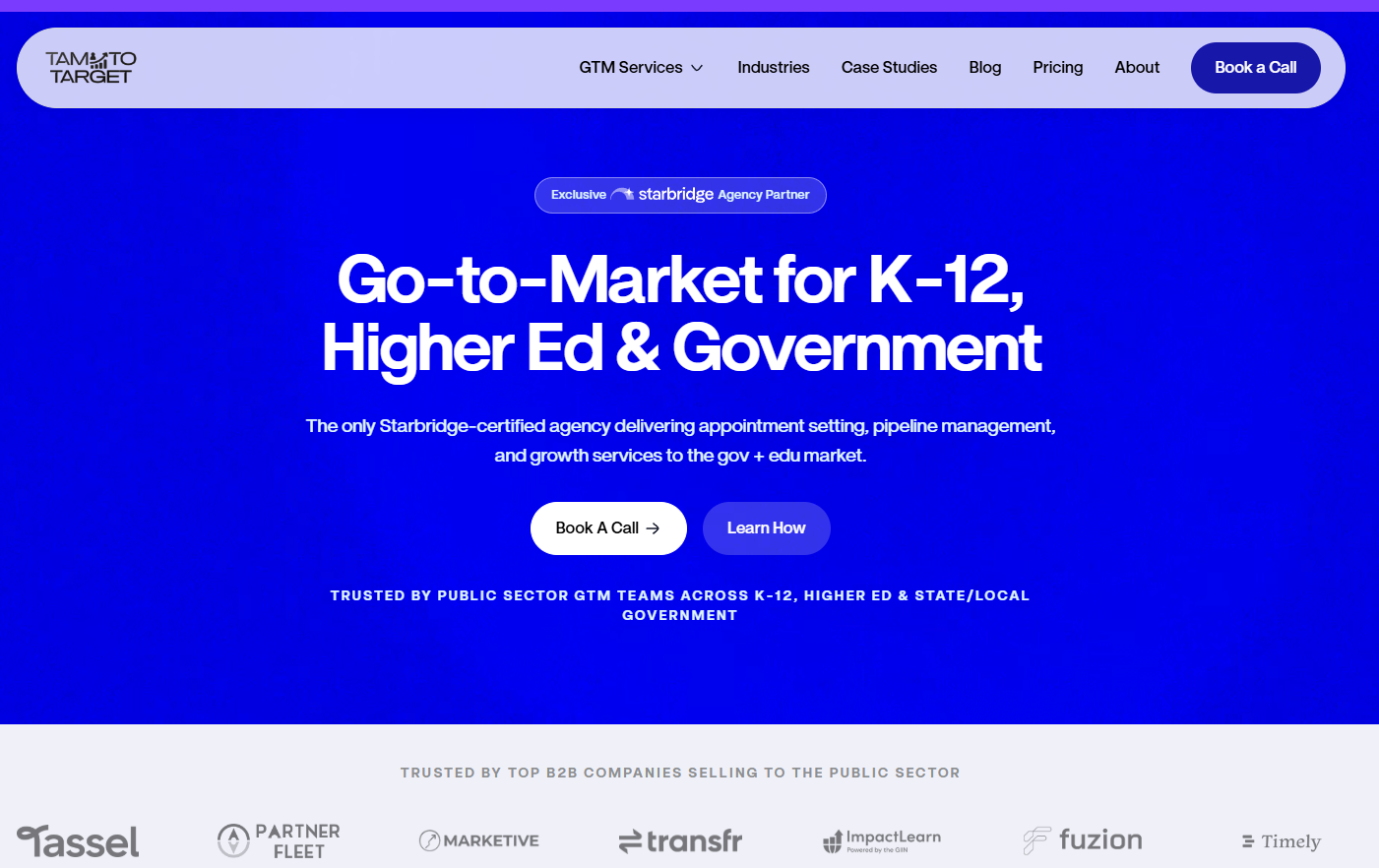
TAM To Target focuses on signal-driven lead generation for companies selling into K-12 and higher education. The company assigns dedicated full-time representatives who work exclusively on a single account and build transferable systems, including CRM workflows, playbooks, and data infrastructure, that clients own after the engagement ends.
This approach fits EdTech companies operating in finite addressable markets where long-term system building matters as much as short-term meeting volume. The emphasis on transferable assets means the investment compounds rather than disappearing when the engagement concludes.
For higher education lead generation companies and K-12 specialists, TAM To Target's model of building owned infrastructure creates lasting competitive advantage in these relationship-intensive markets.
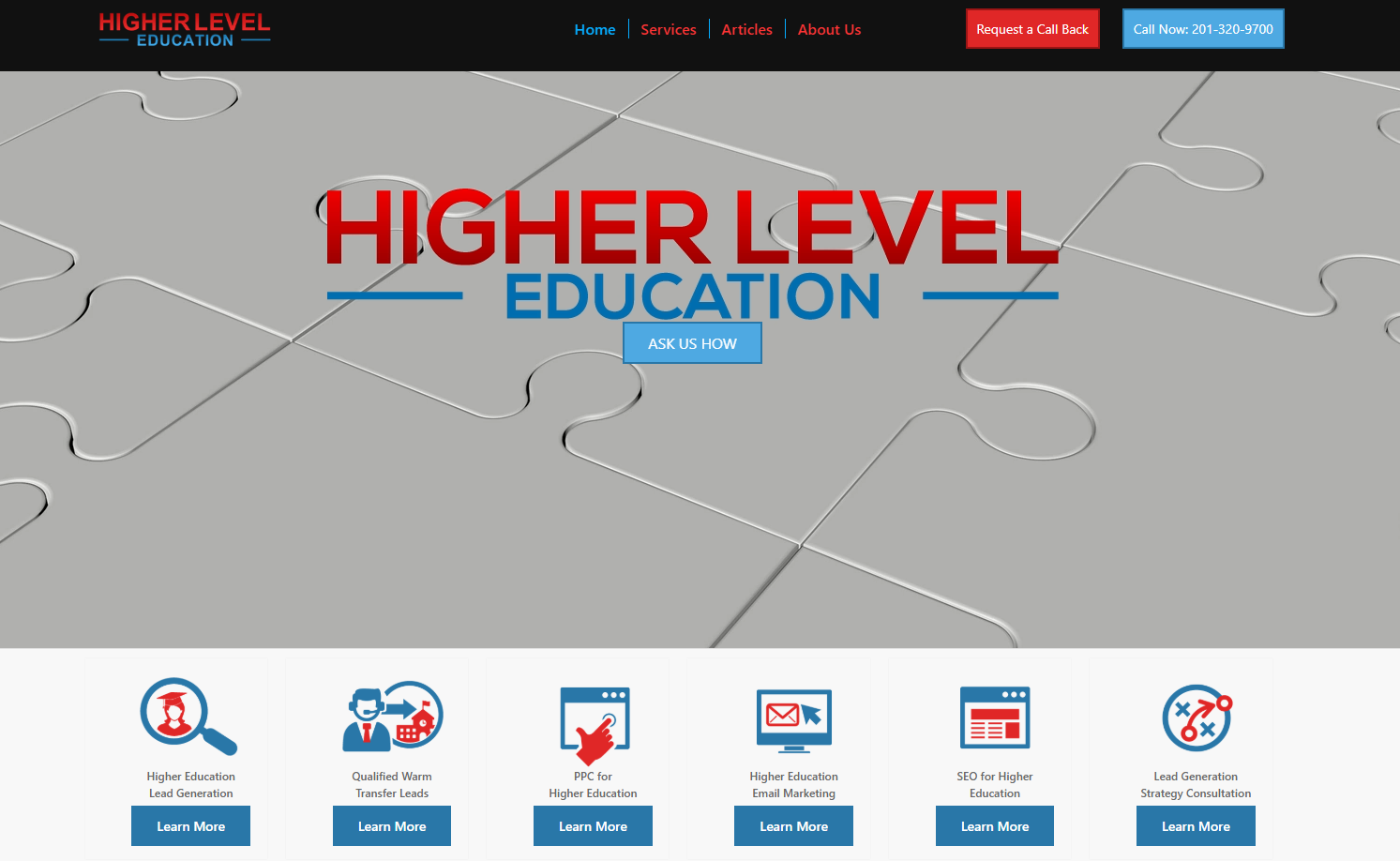
Higher Level Education is built specifically for student enrollment marketing at colleges and universities. The warm transfer program pre-qualifies prospective students on live calls before connecting them with admissions teams.
This provider serves a fundamentally different need than B2B education lead generation companies for product sales. If your goal is recruiting students rather than selling products to schools, Higher Level Education's combination of PPC management, email marketing, SEO, and live transfer enrollment support addresses that use case directly.
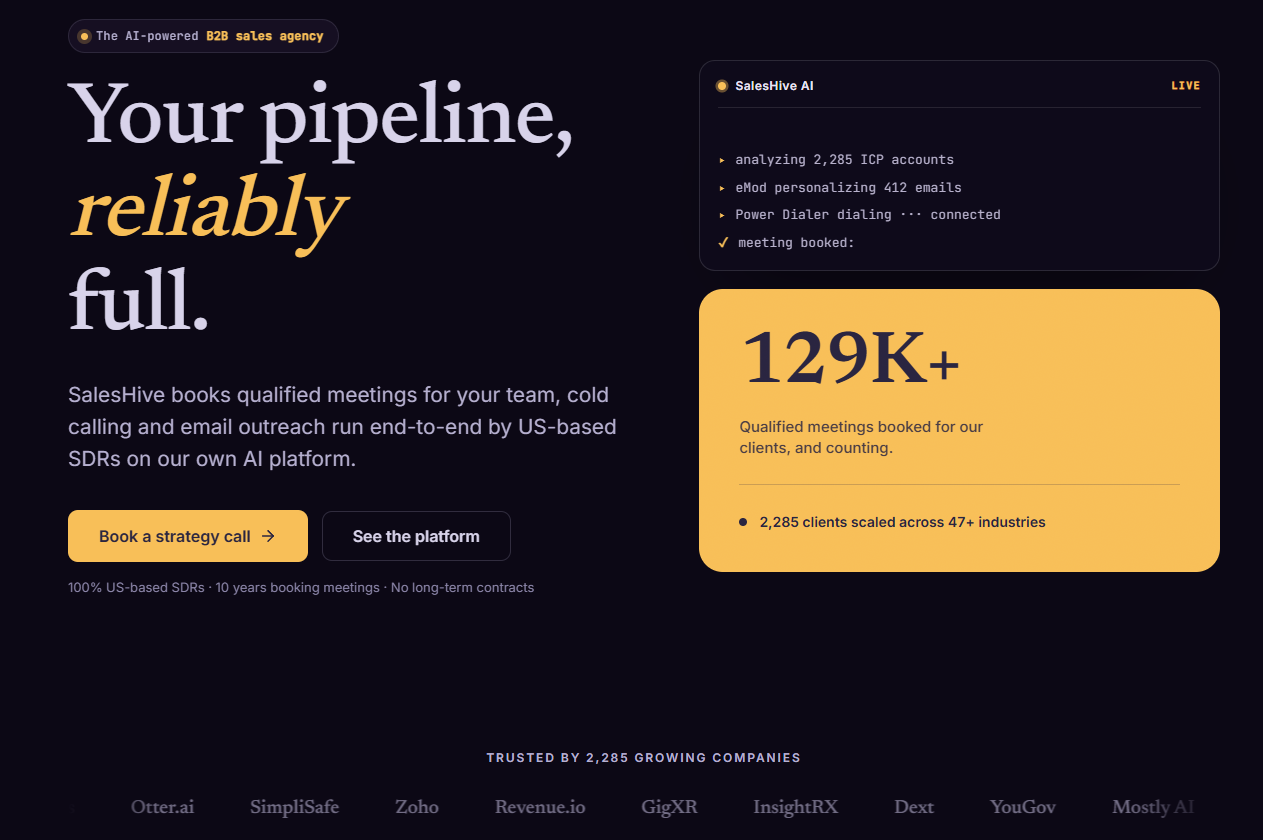
SalesHive combines AI-powered outreach technology with trained SDR teams to deliver outbound campaigns for EdTech companies. The company has a dedicated education vertical practice that targets K-12 administrators, higher education executives, and corporate learning and development leaders.
For education lead generation at scale, SalesHive's platform provides clear reporting on meetings set, response rates, and pipeline impact. The AI layer helps personalize outreach across large target lists, which can be useful for EdTech companies expanding into multiple education segments simultaneously.
Best for: Education lead generation companies seeking AI-enhanced personalization for multi-segment campaigns.
SmartSites is a digital marketing agency with strong capabilities in SEO, PPC, web design, and conversion optimization. The company is not education-exclusive, but its multi-channel approach works for EdTech brands that need lead generation for schools through inbound and paid search rather than outbound prospecting.
The service model fits companies that want to capture demand rather than create it. For EdTech brands with strong organic search potential or competitive paid search positions, SmartSites provides the digital infrastructure to convert education buyer traffic into qualified leads.
Leadium delivers outbound appointment setting with an emphasis on strategic, hands-on account management. The company's model covers lead research, outbound execution, inbound lead management, and omnichannel sales strategy.
For EdTech companies selling into complex education accounts where multiple decision-makers need to be engaged across long sales cycles, Leadium's broader revenue support approach can address the full prospecting motion rather than just the first touch.
SDR services for EdTech that understand educator buying process through Leadium include multi-threaded engagement across curriculum leads, technology directors, principals, and budget holders.
RevNew provides appointment setting, demand generation, and ABM support for B2B companies. The positioning around qualified appointments makes it relevant for EdTech teams trying to build pipeline in specific education segments.
The company works well for small and mid-market B2B teams that need structured outbound support without the overhead of building an internal SDR function.
Lead Gen Dept emphasizes manually researched leads, CRM integration, and appointment setting across the UK, North America, and Europe. The manual research approach means targeting precision that automated list tools often miss.
For EdTech companies selling into named education accounts or niche education segments, that level of targeting can improve lead quality significantly compared to campaigns built on purchased contact lists.
Abstrakt Marketing Group provides sales outsourcing, lead generation, email marketing, demand generation, and content marketing services. The bundled service mix extends beyond pure lead generation into content and marketing support.
For EdTech companies that want multiple growth services from a single partner, Abstrakt offers a consolidated approach. The tradeoff is depth: a broader provider may deliver less vertical specialization in EdTech lead generation than agencies focused exclusively on the education sector.
Beyond dedicated lead generation agencies, education lead aggregators represent an emerging category of platforms that bundle education contact data with technology platforms to help EdTech companies access prospect lists and engagement tools. These aggregators typically provide access to thousands of education contacts organized by role, district, or institution type.
Education lead aggregators work best as complementary tools alongside dedicated outbound services rather than as standalone solutions. They provide raw contact data and initial targeting infrastructure, but lack the relationship-building and qualification expertise that dedicated education lead generation companies bring. Most EdTech teams find success combining education lead aggregators for list-building and initial research with dedicated SDR services for EdTech that understand educator buying process for actual engagement and qualification.

Choosing the wrong lead generation partner in education costs more than wasted budget. It costs market access.
Education administrators operate in tight professional networks. Superintendent associations, conference circuits, and district peer groups create environments where vendor reputation travels faster than any marketing campaign. Education lead generation companies that lack vertical expertise often default to generic messaging and aggressive cadences that damage brand perception across entire regions.
The first filter is whether the partner understands education procurement timelines. Most K-12 districts finalize budgets between January and April for fiscal years starting July 1. Higher education lead generation companies follow different rhythms, with academic purchasing often tied to committee review cycles and formal RFP processes.
A partner that launches campaigns without mapping to these windows wastes outreach on buyers who literally cannot purchase. Lead generation for schools requires the same calendar awareness, with district-level decisions clustering around spring planning periods.
The second filter is the SDR model. Dedicated representatives who learn your product and build real education sector expertise outperform shared resources that divide attention across multiple clients and verticals. SDR services for EdTech that understand educator buying process require this specialization—the difference between a rep who understands Title I funding and one reading from a generic script is immediately obvious to the buyer.
The third filter is lead quality standards. A qualified education lead should represent a decision-maker with relevant budget authority, an active initiative or project, and a purchase timeline that falls within a realistic window. Education lead generation company selection should prioritize this precision because the total addressable market is too small to tolerate low-quality meetings that burn contacts without producing pipeline.
The fourth filter is what you keep after the engagement ends. Some partners deliver meetings and nothing else. Others build CRM workflows, playbooks, sequencing logic, and data infrastructure that your team owns permanently. In education markets where the same accounts will matter for years, that institutional knowledge has long-term compounding value.
EdTech companies often make a critical mistake when choosing lead generation partners: treating education like any other B2B market. Agencies without education experience may struggle with district procurement cycles, university buying committees, and the unique priorities of education buyers, leading to wasted budget and slower results.
Another common error is prioritizing lead volume over lead quality. As lead quality becomes marketers' top success metric, unqualified meetings can be costly in a finite education market. Similarly, using the same messaging across K-12, higher education, and corporate training ignores the distinct needs of each audience, resulting in outreach that resonates with none of them.
Many EdTech companies also expect quick results despite education sales cycles often spanning 6-18 months. Effective lead generation programs typically require two to three months for list building, messaging refinement, and campaign optimization before delivering consistent performance. The best education-focused agencies set realistic expectations and build for long-term success from the start.
Predictable pipeline in education markets comes from treating lead generation as a system rather than a series of campaigns. The companies that build sustainable education pipeline share a set of operating principles.
Map your total addressable market by name. With roughly 13,000 school districts and 4,000 colleges in the US, you can build a finite account list. Tier accounts by fit, prioritize by buying signals, and track engagement at the account level. Education lead generation succeeds when you know exactly who you are pursuing and why.
Align outreach to procurement calendars. Budget windows in K-12 open between January and April. Lead generation for higher education requires mapping to institutional procurement cycles that vary by academic calendar. Lead generation for schools at the district level should target the spring planning period when superintendents and business managers finalize technology spending. Launch campaigns when buyers are actively making decisions, not when your quarterly targets demand activity.
Build multi-stakeholder engagement sequences. Education purchases involve five or more decision-makers. A single thread to one contact rarely closes a deal. Your outreach into schools and districts should map the buying committee and sequence engagement across roles: curriculum leads, technology directors, principals, and budget holders.
Invest in content that earns trust before the first call. Research confirms that 67% of the B2B buying journey happens online before a prospect engages with sales. Education buyers are even more research-heavy. Case studies, ROI calculators, and peer validation assets give SDRs credible reasons to reach out and give prospects reasons to respond.
Measure lead quality over lead volume. Track SQL rates, meeting-to-opportunity conversion, and time-to-close rather than raw meeting counts. In a market this finite, the health of your pipeline depends entirely on the quality of the conversations entering it. Whether your focus is EdTech lead generation into districts or lead generation for schools at the building level, the metric that matters is revenue generated per contact engaged.
For EdTech companies and education service providers looking to build consistent outbound pipeline into K-12 and higher education accounts, Whistle provides dedicated SDR teams trained to navigate institutional sales cycles, map multi-stakeholder buying committees, and align outreach to the procurement rhythms that define how education buyers purchase. The result is a pipeline that compounds rather than resets every quarter.



.jpg)

%20.jpg)