

Go-to-Market

Lauren Daniels
July 9, 2026

Healthcare providers and health tech companies face a problem most B2B marketers never encounter: your leads research you for months before deciding. Sometimes years.
A hospital evaluating a new patient monitoring solution takes 12-24 months to make a final decision. That is a structural reality of healthcare purchasing.

Meanwhile, doctors and hospital administrators are drowning in outreach. Cold calls do not work for medical professionals. They are busy people, and interrupting them with unsolicited pitches wastes time on both sides.
The result: most healthcare lead generation efforts produce noise, not pipeline.
But here is what separates the healthcare lead-generation strategies that work from those that do not: they build trust first, then nurture it over time. They respect the extended evaluation cycle. They meet prospects where they are in their decision-making journey, not where the marketer wants them to be.
The number of reviews a healthcare practice has can matter more than the sentiment in those reviews. That tells you something about how trust works in this industry: volume of social proof signals legitimacy.
Here are 10 healthcare lead generation strategies that actually move the needle.
I have watched too many healthcare lead generation campaigns start with LinkedIn Sales Navigator.
Then the team wastes three months searching for doctors across 50 different titles and never finds the right people.
LinkedIn is not designed for medical lead generation. The data is incomplete, the title searching is imprecise, and you end up with a list of people who might be tangentially related to your target.
Instead, use purpose-built healthcare databases.
The American Hospital Association database lets you access data from over 6,200 hospitals and 400 healthcare systems. You can search by number of beds, patient count, specialty types, and staffing. That is surgical precision.
Doctify is another option if you are going after specific medical practices. You can zero in on pediatric disorders, cardiology, dermatology, or any specialty. Forget guessing. Get granular.
You can also use web scrapers like Data Miner to verify that a practice actually offers the services you are targeting. If you are selling concierge medicine solutions, scrape their website to confirm the keyword "concierge medicine" appears. That is due diligence.
Even Yelp works for certain health care lead generation plays. Search "concierge medicine," and you get a list of specific doctors offering that service. Scrape to verify, then move to research their decision-makers on LinkedIn.
Why this matters for healthcare lead generation: The more targeted your list, the higher your conversion rate. Generic lists produce generic results. Purpose-built healthcare databases produce specialists who actually need what you are selling.
Here is what most practices forget: when individuals search for a hospital or a doctor, they often use Google on their phones.
If your website takes 4 seconds to load on mobile, you have already lost them.
A mobile-friendly site is not optional for healthcare lead generation. It is the baseline.
Make sure:
When a patient or healthcare administrator is searching for your services on their phone, make the next action obvious. If they have to hunt for how to contact you, they will click your competitor instead.
Why this matters for healthcare lead generation: Most people search for healthcare services on their phones. A slow or poorly designed mobile experience kills conversion before the sales conversation even starts.
I am going to be direct: online reviews are the second most important factor in medical lead generation after having a clear product offering.
The number of reviews you have can sometimes matter even more than the sentiment in those reviews. That is not intuition. That is research.
Why? Because volume signals legitimacy. A practice with 47 reviews (even if some are 4-star) signals credibility. A practice with 3 glowing reviews signals a ghost.
For healthcare lead generation strategies to work, you need to be actively collecting reviews.
Set up review requests on multiple platforms:
Use multi-channel collection: email requests after appointments, SMS follow-ups, in-app prompts if you have a patient portal. The more channels, the more reviews you collect.
Critical: respond to all reviews, positive and negative. A negative review with a thoughtful response shows potential patients you care. Ignoring negative reviews shows you do not.
Why this matters for healthcare lead generation: Reviews build trust more effectively than advertising claims. Trust is the only currency that works in healthcare purchasing decisions.
This deserves its own strategy because it is the biggest mistake in healthcare lead generation.
Cold calling medical professionals does not work. They are busy people, and cold calling is not the best option.
Healthcare is not like real estate or retail, where phone availability is high. Doctors have patients. Administrators have meetings. Your cold call interrupts their work.
Instead, use asynchronous channels: LinkedIn and email.
For LinkedIn healthcare lead generation:
Example: "I noticed you were a keynote speaker at the 2025 Healthcare IT Forum discussing patient data security. That aligns with what we are building. Thought we should connect."
For email: Use cold email to providers, not to patients. Email is compliant if you have permission (or a legitimate business reason). Personalize every email. Reference their specific situation.
Why this matters for healthcare lead generation: You are not being rude by using asynchronous channels. You are being respectful of their time. That respect builds credibility before the sales conversation even starts.
Most healthcare practices have no idea who their actual customer is.
They assume "hospitals over 100 beds" or "practices with 5+ doctors."
Then they wonder why their healthcare lead generation produces low-quality leads.
An Ideal Customer Profile for healthcare lead generation is not a generic persona. It is a specific breakdown of who converts, how much they spend, and what keeps them up at night.
Build your ICP by:
Why this matters for healthcare lead generation: Without an ICP, your healthcare lead generation strategies are guessing. With an ICP, every decision (who to target, what to say, which channel to use) becomes clear.
Healthcare has a unique problem: the buying journey is not the same as the sales cycle.
A hospital might start researching solutions in January, but the actual decision does not happen until November. During those 10 months, dozens of things happen:
If your health care lead generation strategy assumes a 90-day sales cycle, you will lose prospects during the noise.
Instead, map the actual customer journey:
This journey can stretch 12-24 months in healthcare. Your healthcare lead generation strategy needs to maintain engagement across all of it.
Why this matters for healthcare lead generation: Most teams lose prospects at stage 3 because they did not plan for stages 4, 5, and 6. Mapping the journey prevents that.
A hospital considering your software does not decide on a single person.
A hospital might involve 6-10 people across different departments: Chief Medical Officer (patient outcomes), IT Director (technical requirements), CFO (budget), Compliance Officer (regulatory), and nursing leadership (usability).
Each person evaluates your solution through a different lens.
Your generic healthcare lead generation content will not work for all of them.
Create role-specific assets:
For clinical staff:
For IT leadership:
For Finance:
For Compliance:
When you send a clinical director a compliance document, they tune out. When you send them patient outcome data, they engage.
Why this matters for healthcare lead generation: Different people decide on different criteria. Providing the right content to the right person is what converts healthcare lead generation efforts into actual deals.
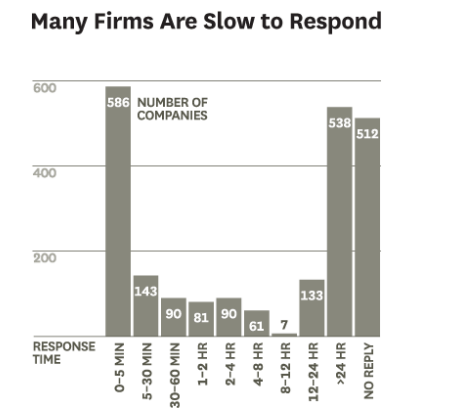
A 2007 MIT study analyzing 15,000+ leads and 100,000+ call attempts found that the odds of contacting a lead decreased tenfold within the first hour.
More specifically: If a lead is contacted within 5 minutes versus 30 minutes, the chances of making contact plummet 100 times.
Slow response kills healthcare lead generation.
Most healthcare practices are slow to respond. That is your competitive advantage.
Set up rapid response infrastructure:
If someone fills out a form on your website on a Tuesday morning, they should hear from a human by Tuesday afternoon.
Why this matters for healthcare lead generation: Attention is the scarcest resource. Capture it while it is there. A two-hour delay means they have moved on to your competitor.
Not every prospect is ready to buy today.
Some are in research mode. Some are waiting for budget approval. Some are dealing with internal politics.
Your healthcare lead generation strategy needs to stay in front of them during the wait without being annoying.
Automation solves this. Workflows solve this.
Set up simple email sequences:
Email 1 (Day 1 - Welcome): Thank them for their interest. Offer something valuable (whitepaper, webinar, guide).
Email 2 (Day 5 - Value): Share educational content addressing their likely pain point.
Email 3 (Day 12 - Social Proof): Share a case study from a similar organization.
Email 4 (Day 20 - Offer): Introduce your service. Offer a free consultation or demo.
But here is the critical part: personalize the sequence based on what you know about them.
If they downloaded a "telehealth implementation" guide, send them telehealth case studies, not general healthcare content.
If they are a 50-bed rural hospital, send them stories from other rural hospitals, not 500-bed academic medical centers.
Personalization in healthcare lead generation increases engagement and conversion significantly.
Why this matters for healthcare lead generation: Automation scales your reach. Personalization keeps it human. Together, they move prospects through the journey without burning them out.

Here is the truth: if your team is stretched thin, outsourcing healthcare lead generation to specialists produces better results than a half-hearted in-house effort.
Healthcare is a specialized vertical. It has:
A generalist marketing agency will miss these nuances.
A healthcare lead generation company understands them.
What to look for in a partner:
A good partner does not just generate leads. They generate qualified leads that your sales team can actually close.
Why this matters for healthcare lead generation: Time is your most valuable resource. If generating leads is taking time away from strategic work, outsource it. Done well, healthcare lead generation services pay for themselves in the first quarter.
Healthcare is not B2B SaaS. It is not retail. It is its own category.
Prospects care deeply about your solution because it affects patient care, staff workflows, or regulatory compliance. That high stakes means they research thoroughly. That research means your healthcare lead generation strategy needs patience.
They also talk to each other. A bad implementation at one hospital spreads to five others. A good one does the same. Reputation is structural in healthcare.
This is why generic lead generation tactics fail. This is why cold calling does not work. This is why volume does not matter.
Healthcare lead generation that works is built on three things:
Apply these 10 strategies with that mindset and your healthcare lead generation becomes less about filling calendars and more about building a pipeline that actually closes.
Healthcare lead generation is not hard. It is just different.
It requires respect for the buying process, not shortcuts around it. It requires meeting prospects where they are, not where you want them to be. It requires patience to wait 12 months if that is what the market requires.
Teams that understand this do not struggle with pipeline. They struggle with capacity.
Whistle focuses on helping healthcare organizations navigate these challenges through strategic marketing and demand generation.
Start with one or two of these strategies. Get them working. Then layer in more. Do not try all 10 at once.
That is how you build sustainable healthcare lead generation that grows with your business.



%20.jpg)

.jpg)
%20.jpg)