

Go-to-Market

Lauren Daniels
February 17, 2026
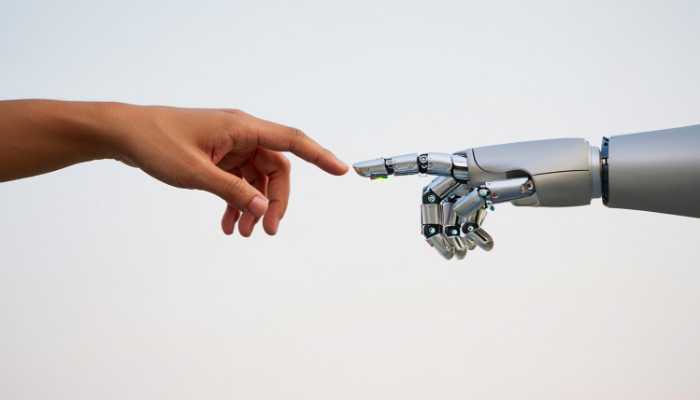
The AI SDR vs human SDR debate misses the real opportunity. Both bring distinct strengths, and the most effective sales teams combine them strategically rather than choosing one over the other.
AI SDRs win on speed, cost, scalability, and consistency. Human SDRs win on emotional intelligence, complex objection handling, and relationship building. This guide breaks down exactly what each does well, where each falls short, and how to build a hybrid model that generates more pipeline without burning out your team or blowing your budget.
Most sales teams are losing pipeline before they even know a lead exists.
A prospect fills out a form at 9 pm on a Tuesday. No one follows up until Wednesday afternoon. By then, they've already booked a demo with a competitor who responded in under five minutes.
That gap between when a buyer shows interest and when a sales team responds costs companies significant revenue every quarter. Research shows that 78% of B2B buyers choose the first vendor to respond, and responding within the first minute can increase lead conversions by up to 391%.
Human SDR teams, no matter how talented, can't solve a timing problem. They work business hours, handle a limited number of contacts daily, and spend the majority of their time on research and administrative tasks rather than actual selling.
AI SDRs exist to close that gap. But they create new ones of their own.
An AI SDR is an automated software application that handles specific sales development tasks without human intervention. It sits at the top of the funnel and takes on many of the repetitive, high-volume activities that traditionally consume significant SDR time.
Core AI SDR capabilities include:
The critical distinction is what separates a quality AI SDR from basic email automation. Most tools on the market send templated sequences at scale with minimal real personalization. Quality AI SDRs pull buying signals, job changes, funding announcements, tech stack details, and engagement history to craft messages that reference specific prospect context.
The difference in results is significant. Generic automation achieves 1-2% response rates. Context-aware AI outreach consistently hits 8-12%.
Human SDRs handle the same top-of-funnel responsibilities but bring a completely different set of strengths to the role.
Core human SDR responsibilities include:
What distinguishes human SDRs from any AI system is emotional intelligence. They pick up on hesitation in a prospect's voice. They read the subtext of what someone says versus what they mean. They sense when to push forward and when to slow down and ask a different question.
Gallup research shows that emotional connection remains a fundamental driver of customer loyalty. Human SDRs create that connection. AI systems can simulate it, but they cannot genuinely replicate it.
Understanding where each performs best requires examining the factors that matter most to your sales operation.
This is where AI SDRs create the most dramatic advantage.
AI SDRs respond to inquiries in under one minute. Human SDR teams typically take 2-4 hours to follow up. The average B2B response time across industries sits at 42 hours, nearly two full days of silence after a lead shows interest.
Consider what that delay costs. Research shows:
Only 1% of companies consistently achieve sub-5-minute response times. AI SDRs make a sub-1-minute response the default for every single lead, every single time.
Winner: AI SDR
Human SDRs handle roughly 50-100 contacts per day. They make around 40 calls daily and have meaningful conversations with perhaps 3-4 prospects in a given shift. When you need to double output, you hire more people and wait 3-6 months for them to ramp.
AI SDRs handle thousands of contacts simultaneously without quality degradation. They operate around the clock, across all time zones, and scale instantly through a subscription change rather than a hiring process.
When your lead volume spikes during a product launch or busy season, AI SDRs absorb the increase without breaking down or delivering inconsistent results.
Winner: AI SDR
Human SDRs understand subtext. They adjust tone based on how a conversation is going. They recognize cultural nuances, pick up on what a prospect isn't saying, and respond to emotional cues that no algorithm currently processes.
When a prospect raises a complex objection or the conversation goes somewhere unexpected, a human rep can pivot. They think on their feet. They bring creativity to situations that don't follow a predetermined script.
AI SDRs work within defined parameters. When a conversation goes sideways, many systems send irrelevant follow-ups or miss the signal entirely. Even the most sophisticated AI can fall into automation traps, like misinterpreting a negative response as neutral or following up with promotional content after a prospect has already declined.
Gartner predicts that by 2030, 75% of B2B buyers will prefer sales experiences centered on human interaction over AI. That preference exists because buyers recognize a genuine connection and value it in complex purchasing decisions.
Winner: Human SDR
This is where the financial reality of each approach becomes stark.
A human SDR in the US costs between $60,000 and $90,000 annually in total compensation when you include salary, benefits, commissions, and overhead. Add recruiting costs of $4,000 to $10,000 per hire, training costs of $1,000 to $5,000, and technology stack costs of $2,000 to $4,000 per year.
The most painful hidden cost is turnover. SDR attrition averages 30-40% annually. Most reps leave within 14-18 months. Every departure costs 50-200% of the rep's annual salary when you account for lost productivity and the full rehiring cycle. A 10-person team losing three or four reps per year can spend over $200,000 just on turnover.
AI SDR platforms typically run between $1,000 and $5,000 per month on subscription models. No recruiting costs. No training cycles. No turnover. No ramp period. Most systems reach full operational capacity within days of implementation.
Direct cost comparison:
Cost per lead tells an even sharper story. AI SDR cost per lead averages around $39, compared to $262 for human-generated leads, an 85% difference.
Winner: AI SDR
Human SDRs work business hours. They take lunch breaks, sick days, paid time off, and weekends. When a lead appears at 11 pm on a Friday from a different time zone, no one sees it until Monday morning at the earliest.
AI SDRs never go offline. They engage inbound prospects the moment interest appears, respond to inquiries at any hour, and cover global markets without time zone constraints. For consumer-facing industries or international B2B sales, this availability creates a genuine competitive advantage.
82% of consumers now expect responses within 10 minutes of reaching out. Human teams cannot consistently meet that expectation without significant structural and financial investment.
Winner: AI SDR
Human SDRs bring variability to every aspect of the sales process. Some reps excel at calls but forget email follow-up. Others write excellent copy but hesitate on the phone. Performance fluctuates based on mood, workload, personal circumstances, and individual interpretation of process guidelines.
AI SDRs follow the same playbook for every single interaction. They never go off-script in ways that create compliance issues. They never forget to follow up. They never skip a step because they're having a bad day. Every prospect receives the same quality of engagement, every time.
For industries where compliance matters, like financial services or healthcare, that consistency removes significant risk from the top-of-funnel process.
Winner: AI SDR
When a prospect raises an issue the AI hasn't been specifically trained on, the system either defaults to a scripted response or misses the signal entirely. It cannot improvise. It cannot read between the lines of what a prospect is actually concerned about.
Human SDRs handle objections that don't fit any script. They ask follow-up questions to understand what's really driving hesitation. They adapt their pitch in real time based on what they learn during the conversation. They bring the creative problem-solving that moves complex deals forward when the standard approach isn't working.
Winner: Human SDR
AI SDRs can personalize messages at scale and maintain consistent follow-up cadences. But they cannot build authentic relationships over time. They cannot create the genuine trust that drives loyalty in enterprise accounts or high-stakes industries.
Research consistently shows that emotional connection between buyers and salespeople significantly impacts long-term customer retention and expansion. Human SDRs build that connection through multiple meaningful interactions, shared understanding of a customer's business challenges, and demonstrated commitment to their success beyond just closing the deal.
For enterprise sales with long cycles, multiple stakeholders, and high contract values, relationship quality often determines whether a deal closes and whether it renews.
Winner: Human SDR
One area where the AI vs. human comparison gets nuanced is lead qualification accuracy.
AI systems achieve 85-95% accuracy in lead scoring by analyzing hundreds of variables simultaneously: digital behavior, engagement patterns, firmographic alignment, technographic signals, and intent data. Human qualification typically considers 5-10 key indicators and achieves 60-75% accuracy by comparison.
The tradeoff is depth versus precision. AI qualifies faster and more consistently across large volumes. Human SDRs qualify more deeply in individual conversations, uncovering needs and concerns that data points alone don't reveal.
Organizations implementing AI for lead qualification typically report a 35% improvement in lead quality. But conversion from a qualified meeting to a closed opportunity still depends heavily on human-led discovery.
The practical conclusion is to use AI for initial scoring and prioritization, then let humans validate through conversation before passing to account executives.
The conversion data reveals an important nuance that AI advocates sometimes overlook.
Human SDRs convert meetings to qualified opportunities at roughly 25%, compared to approximately 15% for AI-scheduled meetings. The difference comes from the relationship building that happens in human-led qualification conversations.
However, AI SDRs generate higher email response rates (12% vs. 8% for humans) and can create up to 50% more sales-ready leads due to the volume and speed advantages.
The net result is that AI generates more leads at higher volume, while humans convert those leads at higher rates. Neither approach alone produces the best outcome. The hybrid model consistently outperforms either approach in isolation, with companies reporting 25-40% increases in qualified leads and 15-30% faster conversion times when they combine both.
Qualified – A platform focused on real-time website conversations, automated lead qualification, and pipeline generation for B2B sales teams. For companies exploring the best AI SDR, Piper stands out for helping teams understand how AI-powered sales development tools automate prospect engagement, qualification, and meeting booking at scale.
Drift – Focuses on conversational marketing and automated chat experiences that help qualify and route leads faster.
Conversica – Uses AI assistants to automate multi-channel follow-up and maintain ongoing prospect engagement.
Exceed – Designed to automate sales conversations, meeting scheduling, and lead nurturing workflows.
High-volume inbound lead response: When you're generating hundreds of leads daily and can't respond to all of them within five minutes, AI SDRs solve the problem without adding headcount.
After-hours and weekend coverage: Buyers don't limit their research to business hours. AI SDRs engage every prospect the moment they show interest, regardless of when that happens.
Lead re-engagement campaigns: Nurturing cold leads at scale requires consistent, personalized follow-up across hundreds of contacts simultaneously. AI handles this without burning through human SDR time.
Initial qualification and scoring: AI analyzes prospect behavior, firmographic fit, and intent signals to prioritize which leads deserve immediate human attention.
CRM updates and administrative tasks: Logging every interaction, updating contact records, and tracking engagement data manually consumes significant SDR time. AI automates this entirely.
Smaller or resource-constrained teams: If you're operating without a full SDR function, AI fills the coverage gap for inbound leads while existing staff handles relationship-intensive work.
Enterprise and high-value account development: Deals with six-figure contract values and multiple stakeholders require the relationship management, political navigation, and strategic thinking that only humans provide.
Complex objection handling: When prospects raise concerns that don't fit standard responses, human SDRs adapt in real time and find paths forward that AI cannot construct.
Outbound prospecting into new markets: Early-stage market entry requires judgment, adaptability, and real-time messaging adjustment based on prospect feedback. Humans learn from early conversations in ways that improve subsequent ones.
Custom proposals and consultative selling: Building proposals that require understanding a prospect's specific technical requirements, business goals, and organizational dynamics requires human expertise and creativity.
Relationship-driven industries: Some markets won't buy from companies they don't trust personally. Human SDRs build that trust through sustained, genuine engagement over multiple interactions.
New product launches: Validating messaging and ICP assumptions during product launches requires human judgment about what's resonating and what needs adjustment before scaling.
The most effective sales development functions don't choose between AI and human SDRs. They assign each to the work they handle best.
Top of funnel: AI leads
AI handles initial prospect identification, contact enrichment, inbound lead response, and early qualification. It responds immediately, follows up consistently, and routes high-priority opportunities to human SDRs with full context already assembled.
Middle of funnel: Shared responsibility
AI maintains nurture sequences, responds to common questions, and books discovery calls. Human SDRs take over when conversations require judgment, strategic thinking, or genuine dialogue. AI supports throughout by handling logistics and maintaining engagement between human touchpoints.
Bottom of funnel: Humans lead
Human SDRs drive discovery, objection handling, multi-stakeholder coordination, and the relationship work that moves deals toward close. AI handles meeting logistics and follow-up reminders but stays out of the conversations that require nuance.
Companies implementing this structure report 50% higher customer engagement rates and significantly stronger revenue growth compared to teams relying on either approach alone.
Document which tasks belong to AI and which require human judgment before implementation begins. Ambiguous handoff criteria create gaps where leads fall through unnoticed.
Specific triggers that move a prospect from AI handling to human contact might include:
Pick one specific use case rather than overhauling your entire process immediately. Re-engagement of cold leads or after-hours inbound response makes low-risk starting points. Learn from results, adjust, and expand AI coverage as your team builds confidence in the system.
High activity from AI means nothing if lead quality suffers. Track response rates, meeting show rates, and opportunity acceptance rates from AI-qualified leads. Compare these against human-sourced leads and adjust criteria when gaps appear.
Establish a process where human SDRs report when AI misreads situations, drops important context, or routes prospects incorrectly. Feed these corrections back into your AI system so it improves over time.
AI creates the speed advantage. Humans eliminate it if they take three days to follow up on an AI-qualified lead. Define how quickly human SDRs must respond when AI surfaces a high-priority opportunity and treat those handoffs with the same urgency as hot inbound leads.
The AI SDR vs. human SDR debate frames the wrong question. The real question is how to combine both in a way that generates more pipeline without stretching your team past capacity or asking technology to do things it genuinely cannot do yet.
AI SDRs deliver clear advantages on speed, cost, scalability, and consistency. They solve the timing problem that costs companies qualified leads every day. They handle the repetitive, data-driven work that burns out skilled salespeople and distracts them from higher-value conversations.
Human SDRs deliver clear advantages in emotional intelligence, complex problem solving, and relationship building. They handle the conversations that require judgment, adaptability, and genuine human connection. Those conversations still drive the deals that matter most.
The winning approach assigns each to the work they handle best. AI covers volume, speed, and consistency at the top of the funnel. Humans take over when conversations require nuance, creativity, and trust-building that no algorithm replicates.
Sales teams that get this balance right generate more pipeline with the same headcount, reduce burnout among skilled reps, and respond to prospects faster than competitors who haven't made the shift.
If you want to build a sales development function that performs at that level, see how Whistle supports revenue teams through outsourced SDR services, strategic enablement, and proven frameworks designed specifically for complex B2B sales environments. Book a meeting to learn more.



%20.jpg)

.jpg)
%20.jpg)