

Go-to-Market

Lauren Daniels
February 6, 2026
.png)
AI-powered outbound sales automation tools help sales teams scale their pipeline without proportionally increasing headcount or budget. This guide examines when automation makes strategic sense, what leading platforms deliver, and how to choose the right solution based on your outbound motion, target market, and growth objectives. This guide examines top providers across different specialties from multi-channel prospecting to conversation intelligence and breaks down pricing, service models, and evaluation criteria that determine success. The best tools don't just send more emails. They identify high-intent prospects, personalize outreach at scale, and free SDRs to focus on conversations that close deals.
Pipeline growth stalls when SDRs spend 80% of their time on research and data entry.
That's the reality for most outbound teams. Reps waste hours hunting for contact information, copying details into spreadsheets, and sending generic emails that rarely get responses. Manual prospecting turns skilled salespeople into data entry clerks. AI-powered outbound sales automation tools solve this problem. They handle repetitive tasks, identify high-intent prospects, personalize messaging at scale, and integrate directly with your existing tech stack. The result is more qualified conversations without adding headcount.
The challenge isn't finding an AI tool. It's identifying which ones actually work, integrate smoothly, and deliver a measurable pipeline instead of just automating spam.
AI-powered outbound sales automation tools use artificial intelligence, machine learning, and natural language processing to handle the repetitive parts of prospecting while maintaining personalization and relevance.
These platforms go far beyond basic email sequencing. Modern AI tools can:
The best AI sales automation platforms handle these tasks while keeping your team in control. They augment human capabilities rather than attempting full replacement.
Key capabilities across leading platforms:
Not every sales team needs AI automation. The decision depends on specific growth constraints, market conditions, and current team capacity.
You should consider AI-powered outbound sales automation when:
AI automation works best after:
Automation accelerates the execution of a proven model. It doesn't fix broken positioning or unclear value propositions.
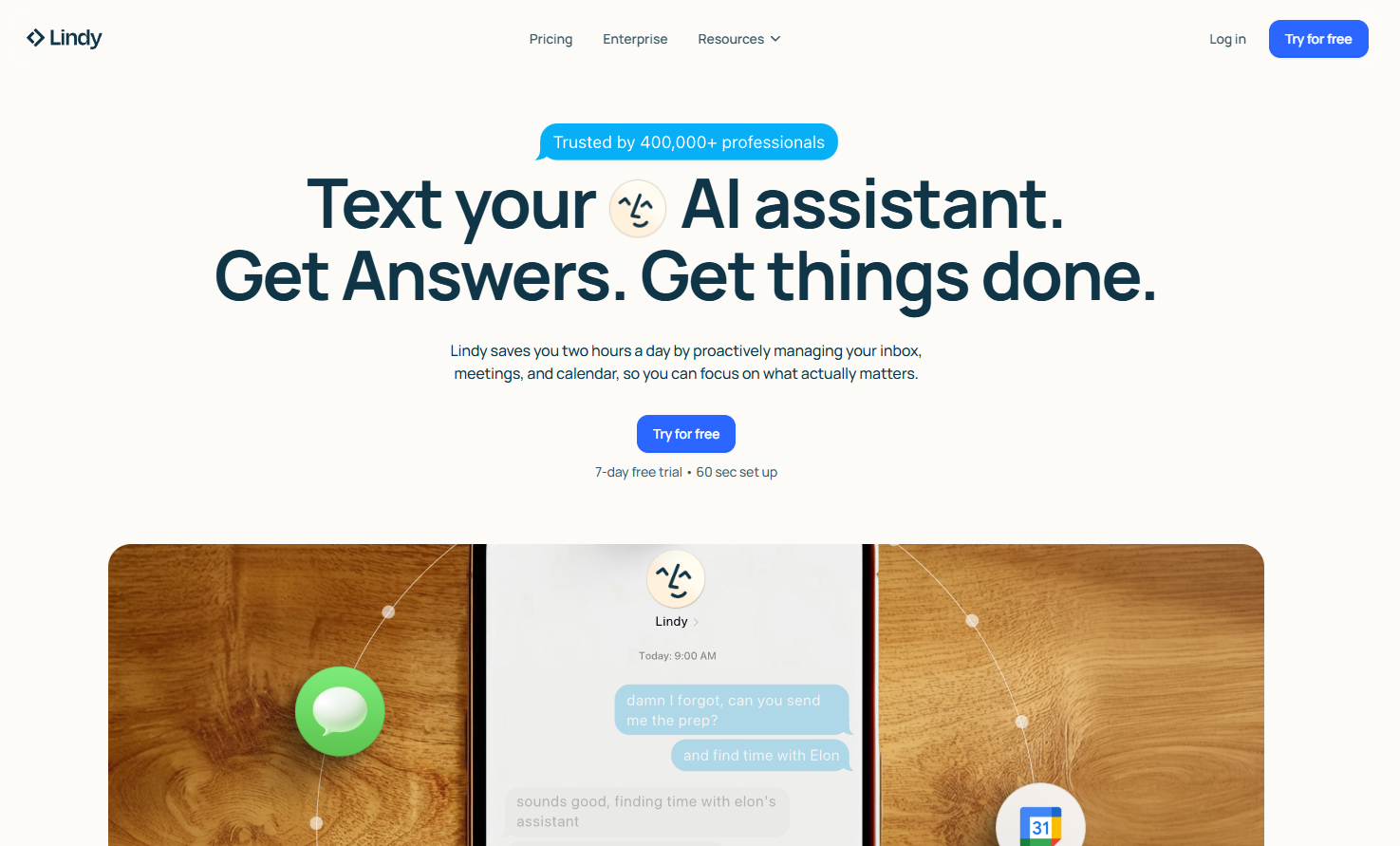
Lindy functions as a full AI-powered sales assistant that handles phone calls, emails, follow-ups, and CRM updates independently. The platform uses conversational AI to conduct real outbound calls, ask qualifying questions, and summarize conversations automatically.
Services offered:
Best for: Teams wanting comprehensive automation across calls, emails, and CRM management without coding requirements.
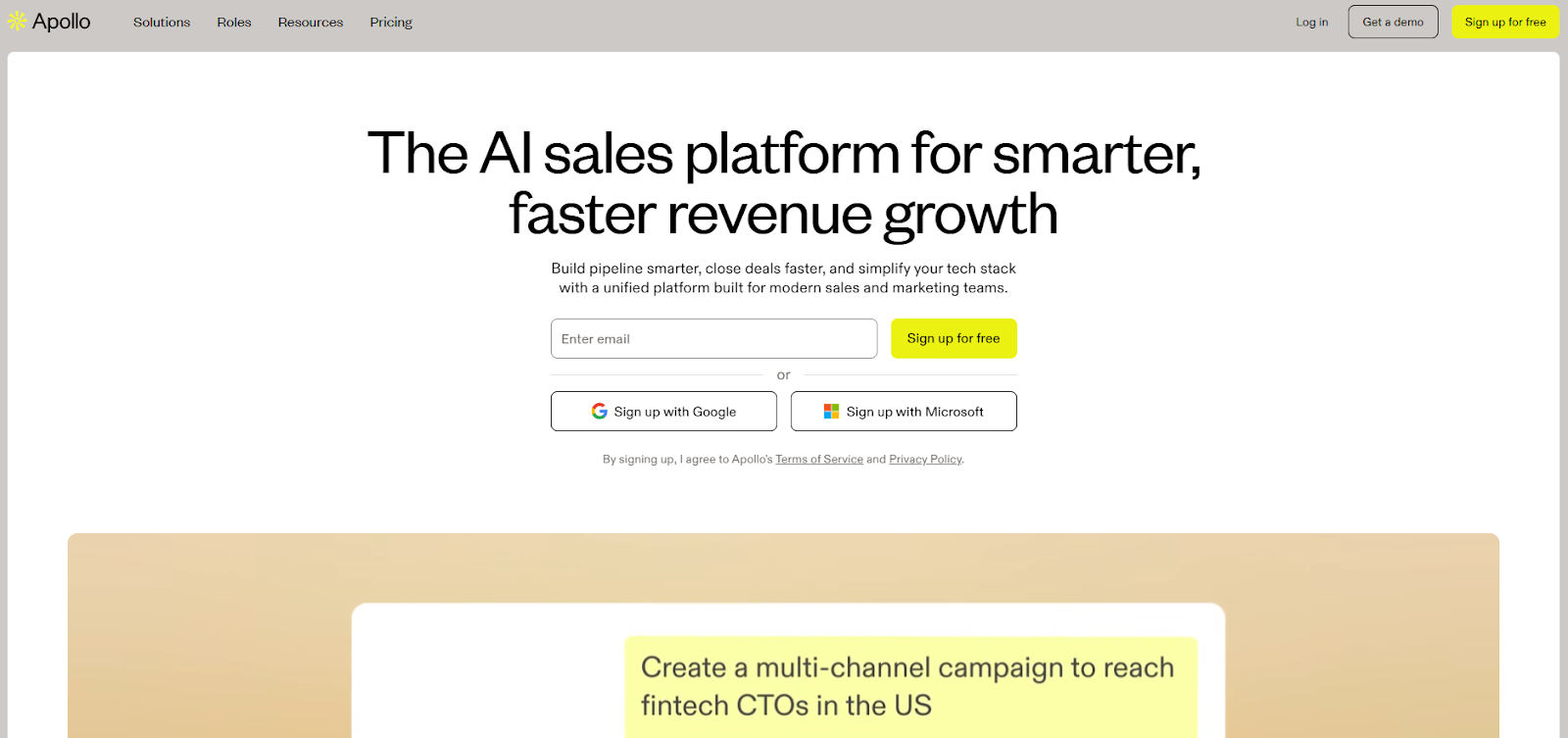
Apollo.io combines a database of 265+ million contacts with AI-powered engagement tools. The platform handles prospecting, enrichment, and multi-channel outreach from a single interface.
Services offered:
Best for: Sales teams needing comprehensive prospecting data combined with engagement automation.
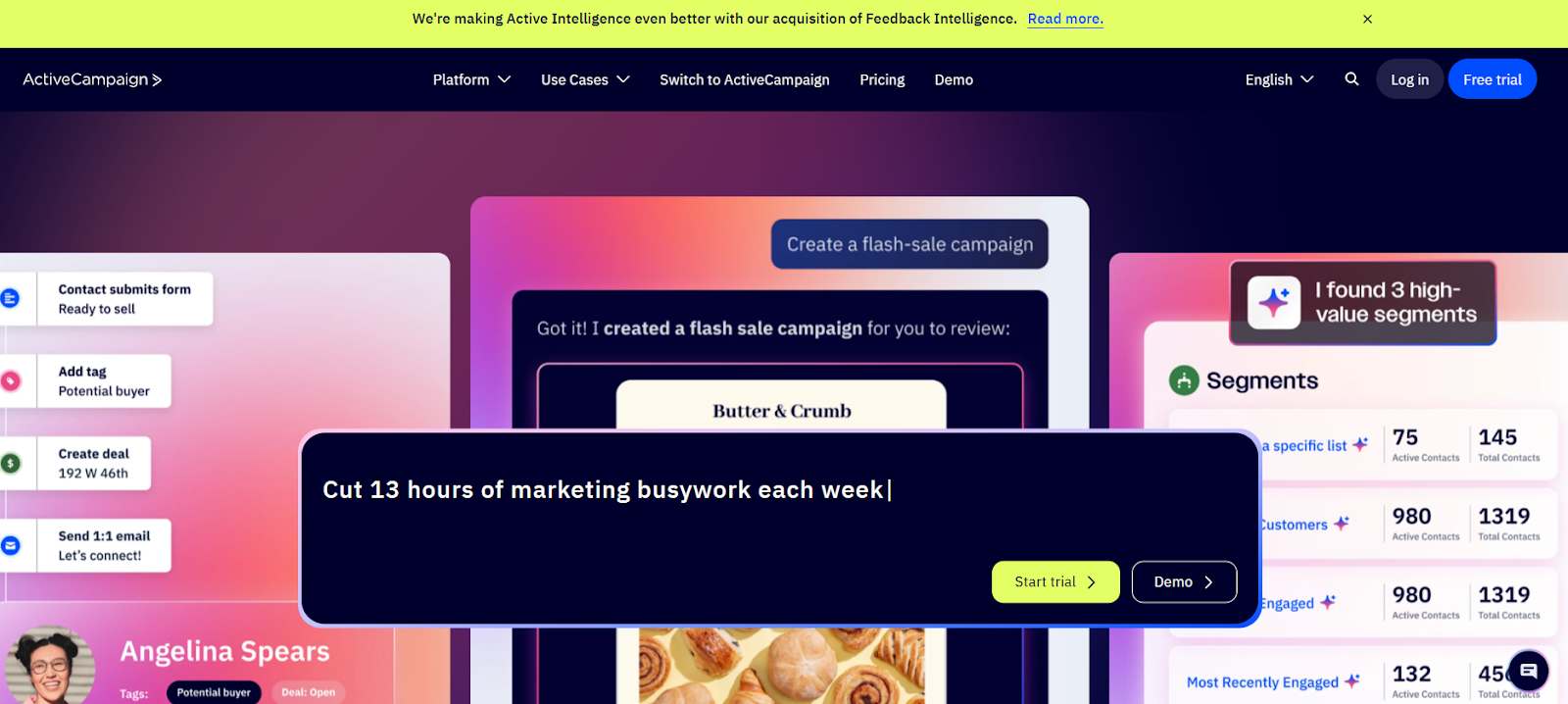
ActiveCampaign specializes in email-first automation with AI-powered personalization and predictive sending. The platform determines optimal send times for each contact based on historical engagement patterns.
Services offered:
Best for: Teams prioritizing email as their primary outbound channel with sophisticated automation needs.
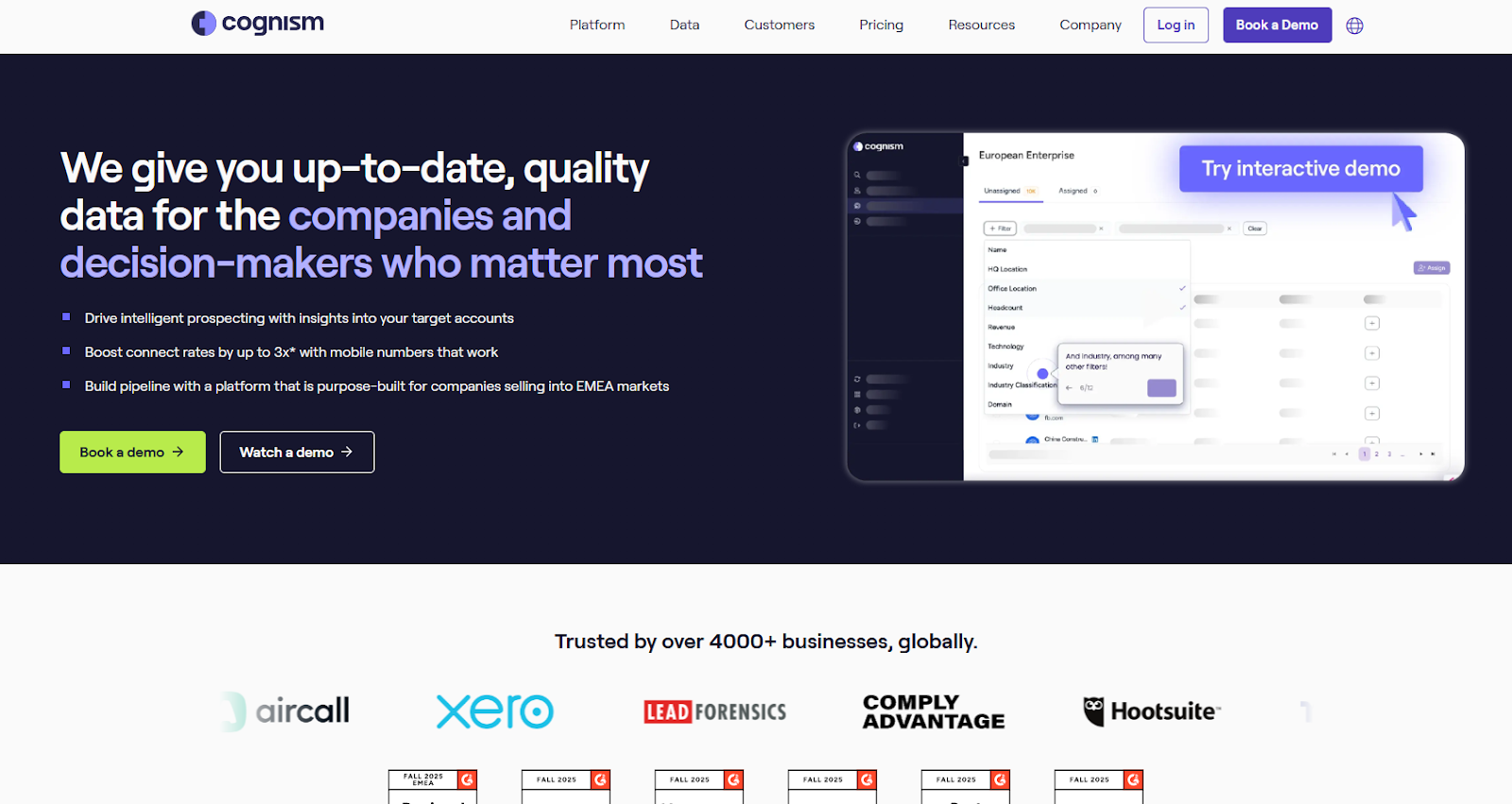
Cognism provides GDPR-compliant B2B contact data with AI-enhanced sales intelligence. The platform's Diamond Data verification ensures high-quality phone numbers and emails, particularly for European markets.
Services offered:
Best for: Teams targeting European markets requiring verified data and strict compliance standards.
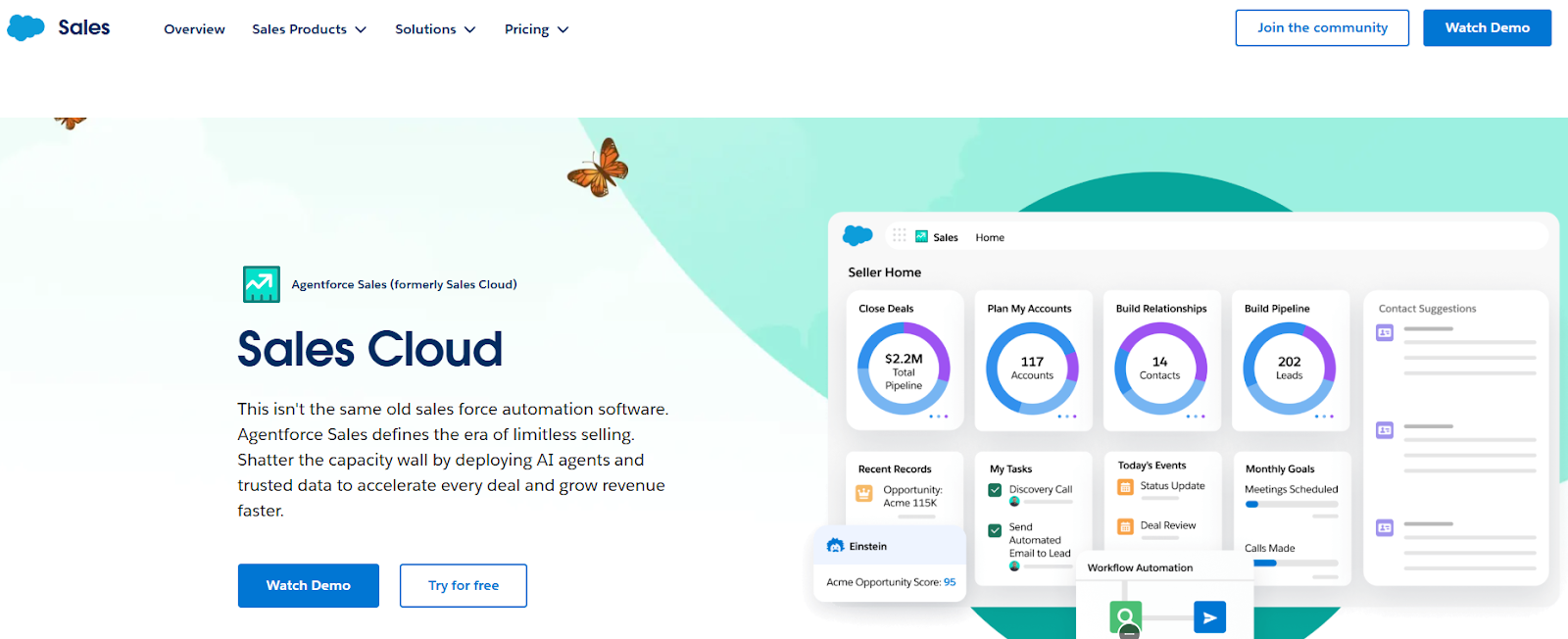
Salesforce's AI layer includes Agentforce SDR and Sales Coach agents that handle lead engagement, meeting scheduling, and rep training. Einstein provides predictive analytics and automated workflows within the Salesforce ecosystem.
Services offered:
Best for: Enterprise teams already using Salesforce, wanting native AI capabilities without additional integrations.
PhantomBuster automates LinkedIn prospecting and multi-channel outreach through no-code Flows. The platform excels at social selling automation while maintaining compliance with platform limits.
Services offered:
Best for: Sales teams heavily relying on LinkedIn for prospecting and relationship building.
Gong analyzes sales conversations across calls, emails, and meetings to provide revenue intelligence. The platform identifies patterns that lead to closed deals and surfaces coaching opportunities.
Services offered:
Best for: Revenue teams wanting deep analytics on sales conversations and deal progression.
Salesloft combines sales engagement with AI-driven cadence management and conversation intelligence. The platform optimizes when, how, and through which channel to reach prospects.
Services offered:
Best for: Mid-market and enterprise teams managing complex, multi-touch outbound sequences.
Outreach.io provides AI-powered sales engagement with voice automation that detects voicemail drops and call outcomes. The platform handles sequencing across email, calls, and social channels.
Services offered:
Best for: Large go-to-market teams needing comprehensive engagement automation with voice capabilities.
Lavender functions as a real-time email coach, analyzing drafts and providing instant feedback on clarity, tone, and personalization before sending.
Services offered:
Best for: SDRs wanting to improve email quality and response rates through immediate feedback.
Traditional outbound meant cold calls, manual research, and generic outreach that rarely connected with prospects. Sales teams lacked efficient ways to target the right people at the right time. AI-powered automation removes the guesswork. It handles repetitive tasks, identifies high-intent accounts through data analysis, manages lead flow accurately, and uses natural language processing to optimize messaging.
From manual research to automated enrichment
SDRs spent hours per day researching prospects on LinkedIn, company websites, and news sources. AI tools now scan thousands of profiles, pull firmographic and technographic data, and identify buying signals in minutes.
From generic templates to personalized messaging
Email templates felt robotic and generic. AI analyzes individual prospect data, recent activity, company news, job role, pain points, and engagement history to generate messages that sound human and relevant.
From gut-feel timing to predictive engagement
Reps guessed when to reach out. AI identifies optimal timing based on engagement patterns, job changes, funding announcements, website visits, and historical response data.
From manual scoring to intelligent prioritization
Lead qualification relied on basic demographic filters. AI scores prospects using hundreds of behavioral and firmographic signals, routing the hottest opportunities to reps first.
From reactive coaching to proactive insights
Managers reviewed calls occasionally and provided general feedback. Conversation intelligence platforms analyze every call, highlight winning behaviors, identify skill gaps, and surface coaching moments in real time.
Most AI automation failures stem from unrealistic expectations, poor tool selection, and inadequate change management.
Selecting the wrong platform wastes budget and delays results. A structured evaluation prevents costly misalignment.
Different platforms excel at different use cases. Clarity on what matters most guides every other decision.
Common objectives:
Rank these by importance. Your top 2-3 priorities determine which platforms fit best.
Many platforms claim "AI-powered" functionality. The quality varies dramatically.
Questions to ask:
Request demos that show AI in action on your actual data, not generic examples.
Surface-level integrations create more work than they eliminate. Deep integration means data flows automatically in both directions without manual intervention.
Critical integrations:
Verify whether integrations are native or require third-party middleware like Zapier.
AI recommendations are only as good as the underlying data. Poor data quality undermines even the best algorithms.
Evaluate:
Request accuracy metrics and test the platform against your known contacts.
Pricing for AI sales tools varies widely and often lacks transparency.
Common pricing structures:
Hidden costs to watch for:
Get total cost estimates for your expected usage, not just the advertised starting price.
Demos look polished. Real-world usage reveals problems.
Run pilot programs:
Compare pilot results to your current baseline before expanding to the full team.
Complex AI platforms require ongoing support. Poor customer service turns promising tools into frustrations.
Evaluate support quality:
Check review sites like G2 for complaints about support responsiveness.
AI-powered outbound sales automation tools provide immediate capacity expansion without proportional cost increases. The best platforms combine accurate data, intelligent prioritization, and personalized engagement to generate qualified pipeline at scale. The right automation partner doesn't just send more emails. It identifies prospects showing genuine buying signals, personalizes outreach based on specific context, and frees SDRs to focus on conversations that close deals. Success requires clarity on objectives, thorough platform evaluation, and realistic expectations about what AI can and cannot do. Automation accelerates proven approaches. It doesn't fix broken messaging or unclear value propositions.
Start by defining clear success metrics around qualified meetings, pipeline value, and conversion rates, not just activity volume. Evaluate platforms based on AI quality, data accuracy, integration depth, and proven results with companies similar to yours. If you want to build a scalable outbound engine that generates a predictable pipeline, see how Whistle supports revenue teams through strategic enablement, proven frameworks, and outsourced SDR services designed specifically for complex B2B sales environments.



%20.jpg)

.jpg)
%20.jpg)