

Revenue Operations

Lauren Daniels
June 11, 2026

Gartner projected that 75% of the world's highest-growth companies will run a formal RevOps model by 2025. Most already have the function. Few have the right stack behind it.
The 8 tools in this list cover every layer where RevOps breaks down in practice. The data foundation that forecasts and scoring models run on, the intelligence layer that tells you what is actually happening inside deals, the CRM operations layer that keeps records clean without manual intervention, and the project layer that stops RevOps initiatives from dying in a shared Google Doc.
Get the stack wrong and the symptoms look like execution problems. Reps missing quota. Forecasts leadership stops trusting. Pipeline reviews that produce questions instead of decisions. The tools are not the problem. The wrong tools at the wrong layer are.
This article covers 8 revenue operations tools, what problem each one solves, key features, and pricing.
Every revenue operations team has a stack. CRM, engagement platform, and some form of reporting. Maybe a forecasting tool, a data enrichment layer, a project management tool nobody updates. The problem is rarely a missing tool. The problem is that the tools are not connected to each other, which means they are not connected to the same data.
Research shows that inaccurate B2B contact data costs sales reps an average of 27.3% of their time on admin tied to verifying and correcting bad records. That is more than ten hours per week, per rep, producing zero pipeline. Across a 15-person team over a year, that number becomes a figure most revenue leaders would rather not calculate.
The data problem compounds everything downstream. A forecasting tool running on stale CRM records produces stale forecasts. A scoring model trained on incomplete firmographic data produces inaccurate rankings. B2B contact data decays at approximately 2.1% per month, meaning a database cleaned in January has meaningful accuracy loss before Q1 closes. A routing system sending leads to the wrong rep is not a routing problem. It is a data problem wearing a routing problem's clothes.
This is what a RevOps stack built on the wrong foundation looks like in practice. High activity. Inconclusive reporting. Forecasts that leadership stops trusting. Pipeline reviews that generate more questions than answers. Good RevOps tools do not fix this on their own, they fix it when each one covers the right layer.
Not every sales or marketing tool is a RevOps tool. The distinction matters before building or auditing a stack.
A point solution solves a single-function problem for a single team. A CRM manages pipeline for sales. A marketing automation platform runs campaigns for marketing. A ticketing system handles queries for customer success. Each does its job well in isolation and poorly when teams around it need to share data or hand off work across a boundary.
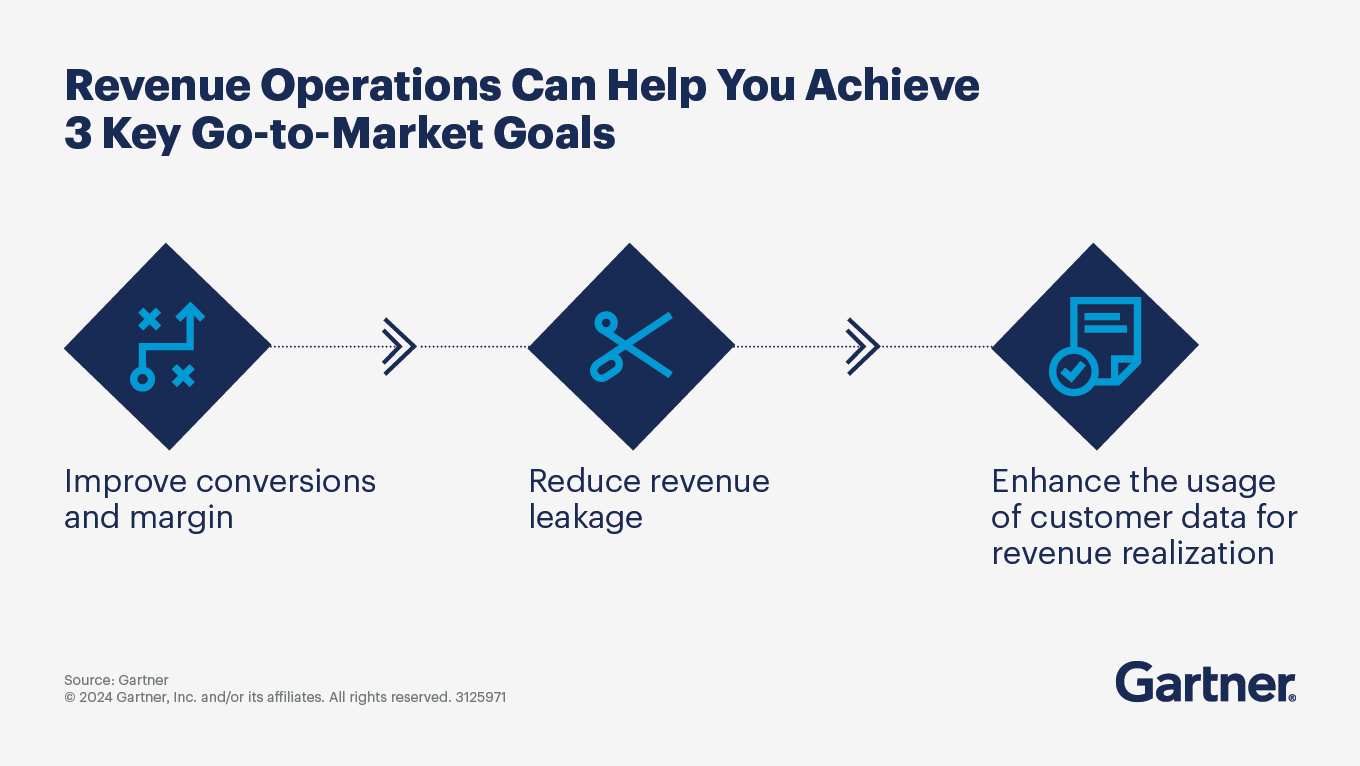
Revenue operations tools eliminate those boundaries. They centralise data, automate cross-functional workflows, and surface insights that span the full customer lifecycle. The best RevOps software either replaces multiple point solutions or serves as the connective layer that makes existing point solutions communicate reliably.
Four criteria should drive any RevOps platform evaluation.
Evaluating revenue operations software without mapping it to a specific stack gap is how teams end up with seven tools doing overlapping jobs and one critical gap nobody noticed until Q3.
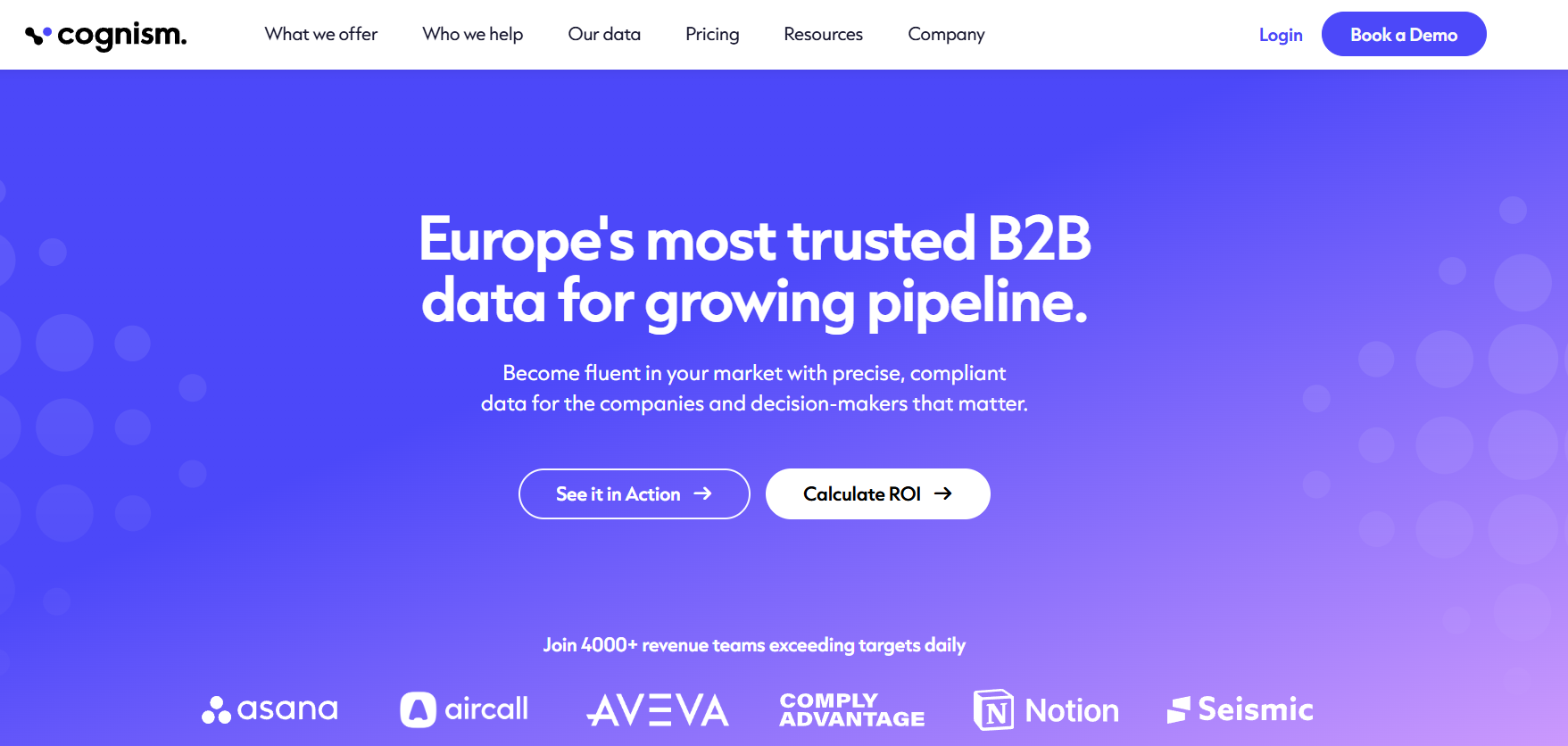
Cognism is an AI-powered revenue intelligence platform that gives RevOps teams access to verified B2B contact and account data across EMEA, NAM, and APAC. For RevOps professionals responsible for data-driven processes across revenue teams, the quality of the underlying data determines the quality of every output the stack produces.
The platform's Diamond Data product provides phone-verified mobile numbers and notified B2B email addresses, with a GDPR-first compliance framework for teams running outbound into European markets. Cognism integrates with HubSpot, Salesforce, Salesloft, and Outreach, allowing enriched contact data to move directly into CRM records and sales engagement sequences without manual export steps.
Key features include: CSV and API enrichment, AI-powered lead list building via AI Search, buyer intent data powered by Bombora, real-time signal data, and territory planning with international data coverage.
For RevOps teams whose forecasting and scoring tools are only as accurate as the records feeding them, Cognism operates at the data foundation layer that everything else depends on.
Pricing: Custom quote on request. Free trial of 25 targeted B2B leads available.

Clari is a revenue intelligence platform built around AI-powered forecasting, pipeline inspection, and deal visibility. Its core strength is surfacing what is actually happening in a pipeline rather than what reps report is happening, which are two different things in most RevOps environments.
The platform auto-captures data from customer interactions across sales conversations and email sequences, then analyses that data to identify patterns and risks. A RevOps manager can use Clari to see which deals are tracking to close based on engagement signals rather than stage updates, which ones are deteriorating silently, and where forecast variance is concentrated.
Following its merger with Salesloft, the platform is moving toward a more integrated revenue orchestration layer that combines forecasting intelligence with sales engagement. For revenue leaders who need forecast confidence and deal inspection depth in a single view, Clari is one of the strongest options in this category.
Key features include: Conversation intelligence, deal inspection, automated workflow triggers, revenue forecasting, AI-powered real-time insights, and sales engagement capabilities post-merger.
Pricing: Custom quote on request.
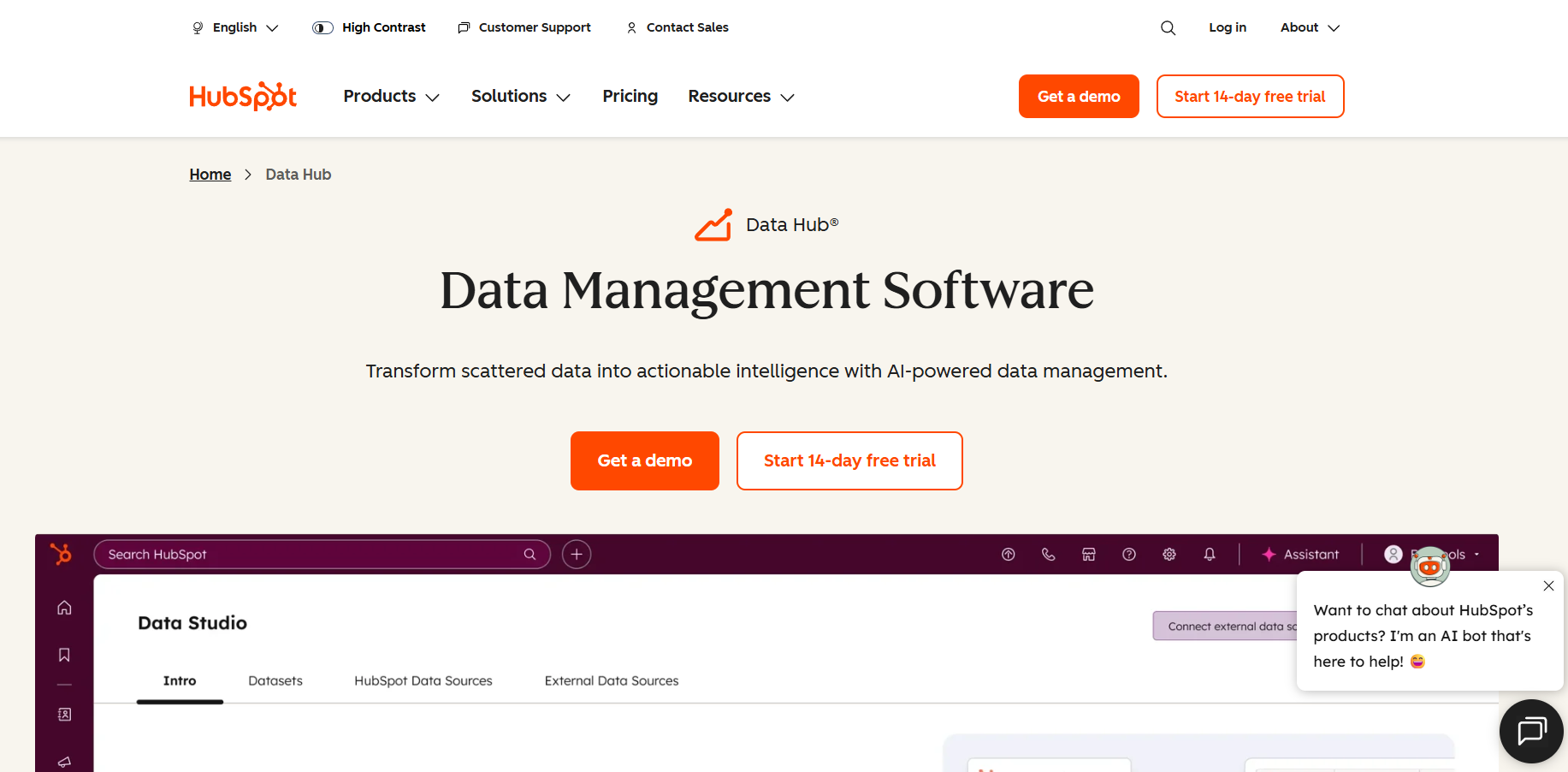
HubSpot Operations Hub is HubSpot's dedicated RevOps layer, built to help revenue operations professionals sync and clean customer data, integrate applications, automate complex processes, and build custom reports from a unified CRM platform.
Its Data Quality Automation feature handles repetitive data hygiene tasks automatically, catching and correcting formatting errors and data inconsistencies without manual intervention. Teams with technical capability can use its Programmable Automation feature to build custom workflow logic in Python or JavaScript, enabling process automation that goes beyond what out-of-the-box workflow builders support.
For RevOps teams that want a single CRM platform rather than a stitched-together stack, Operations Hub sits at the centre of HubSpot's broader product suite. The data managed here feeds directly into marketing campaigns, sales pipelines, and customer service workflows across all other Hubs.
Key features include: Data quality command centre, programmable custom automations, data modelling, custom reporting, Snowflake data share, and team management with granular permissions control.
Pricing: Free plan at $0 per month. Starter at $20 per seat per month. Professional at $800 per month. Enterprise at $2,000 per month.
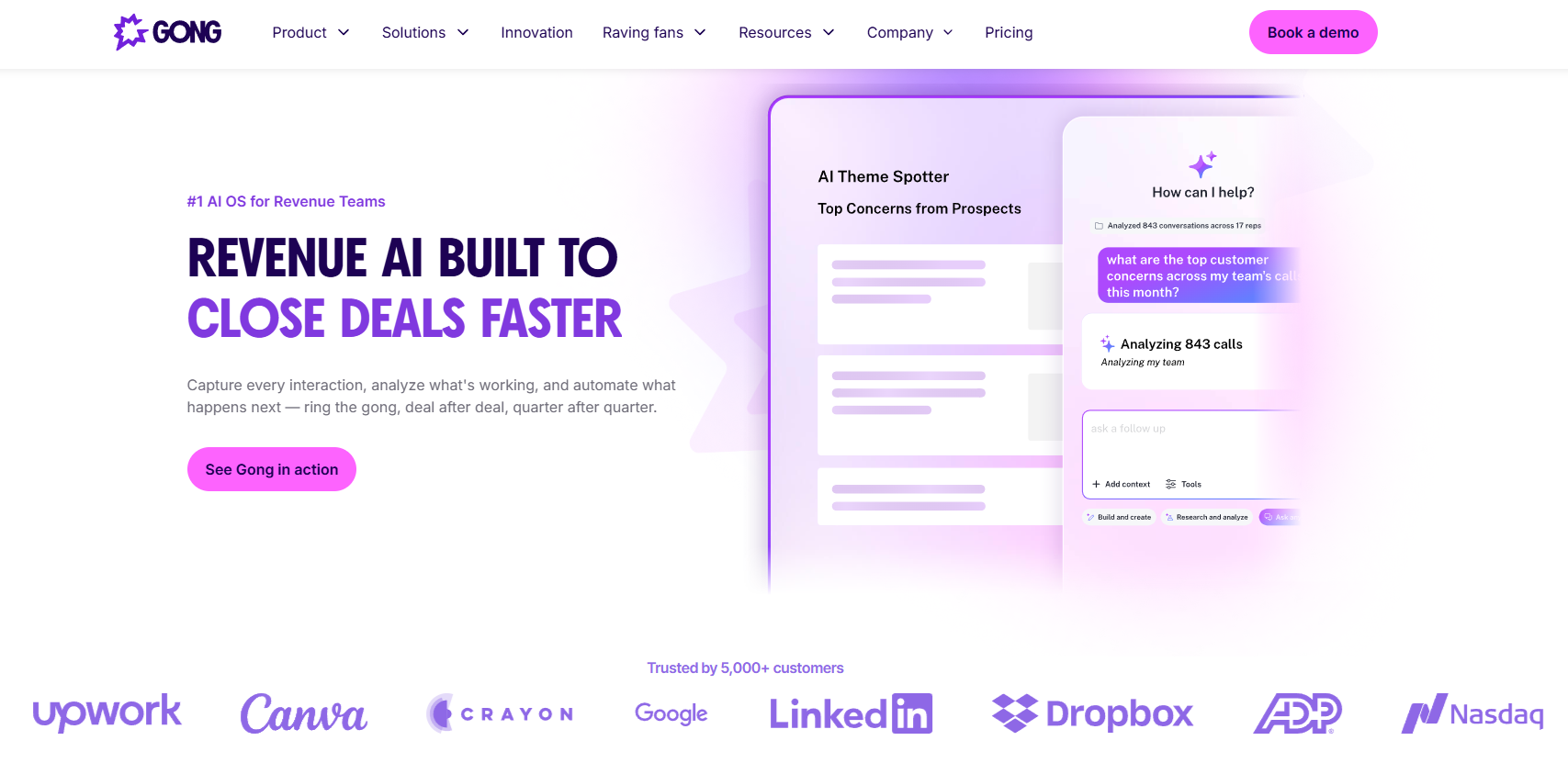
Gong is a revenue intelligence platform that captures every customer interaction across calls, emails, and meetings and turns that interaction data into actionable insights for RevOps and sales leadership. It is uniquely positioned for teams that want to improve both deal outcomes and rep performance from the same data source.
Where most RevOps platforms tell you what deals are in the pipeline, Gong tells you what is happening inside those deals based on real conversations. Its AI identifies patterns across successful and unsuccessful sales interactions, surfaces coaching signals at the rep level, and provides forecast inputs grounded in buyer engagement rather than self-reported stage progression.
A RevOps manager can use Gong to build a library of call recordings that illustrate how top performers handle specific objections at key deal stages. Reps study those recordings and adjust their approach. That self-coaching loop is rare in revenue operations software and addresses one of the highest-leverage points in sales productivity.
Key features include: Conversation intelligence, AI-powered revenue forecasting, deal inspection, call recording, market insights, AI sales coaching, and sales engagement capabilities.
Pricing: Custom quote on request, priced per user, with free integration for existing tech stacks.
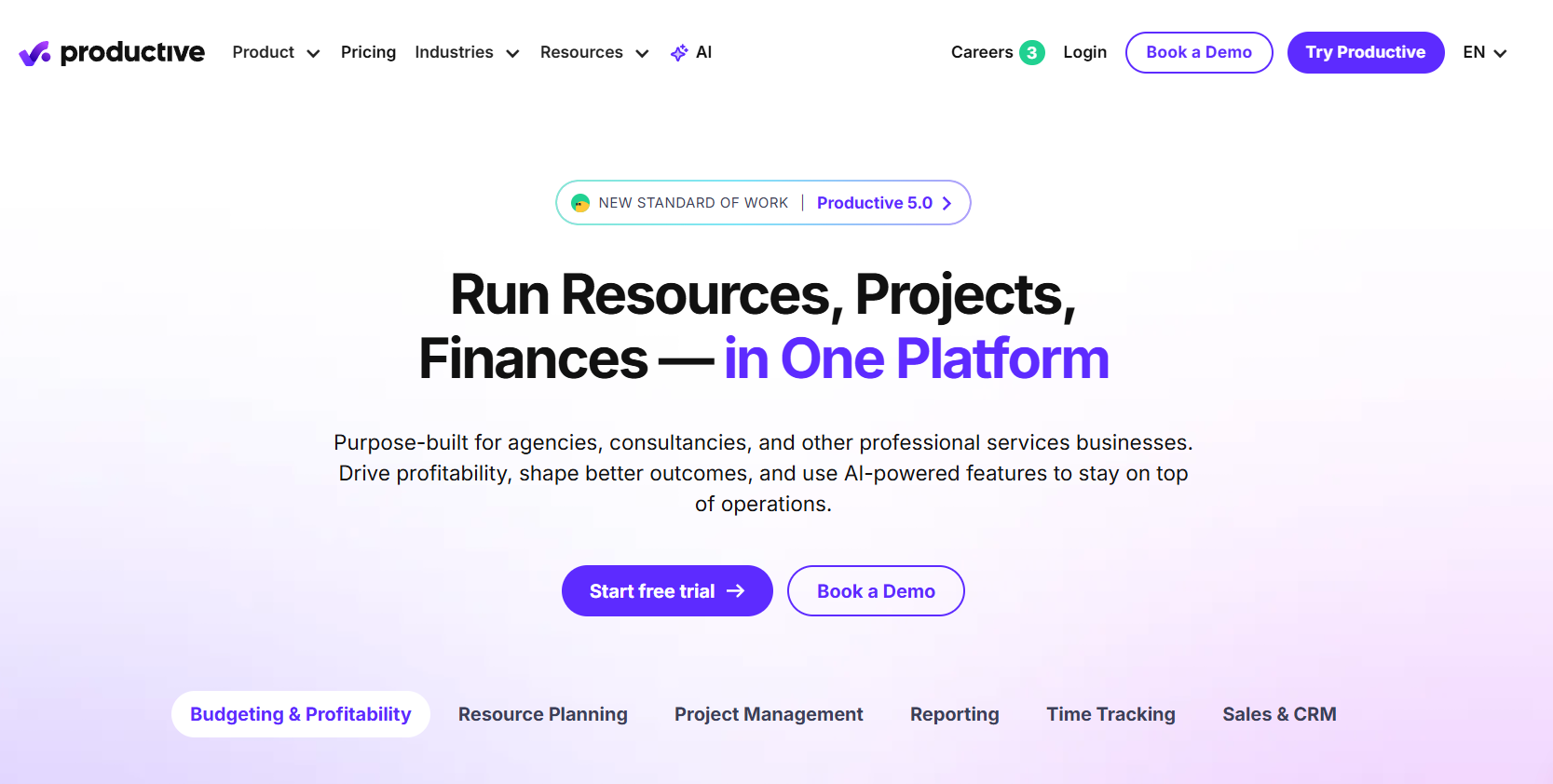
Productive is an all-in-one management platform for professional services and agency teams that integrates project delivery, resource planning, and financial reporting in a single system. For RevOps teams operating within agencies, consultancies, or managed services businesses, Productive addresses a gap that standard CRMs and sales tools do not: the connection between revenue booked and revenue delivered.
The platform gives revenue leaders real-time visibility into utilisation rates, project margins, and delivery performance alongside sales pipeline data. That combination matters for any business where revenue recognition depends on project completion, not just contract signature. It also closes the loop between the sales motion and the delivery motion, which is often where margin leakage occurs in professional services operations.
Key features include: End-to-end project and financial management, time tracking and utilisation monitoring, budgeting and margin tracking, resource allocation and capacity planning, automated invoicing, and profitability insights by client, project, or service line. Integrations include HubSpot, Salesforce, QuickBooks, Xero, and Slack.
Pricing: Plans start at $9 per user per month. Enterprise pricing on request.
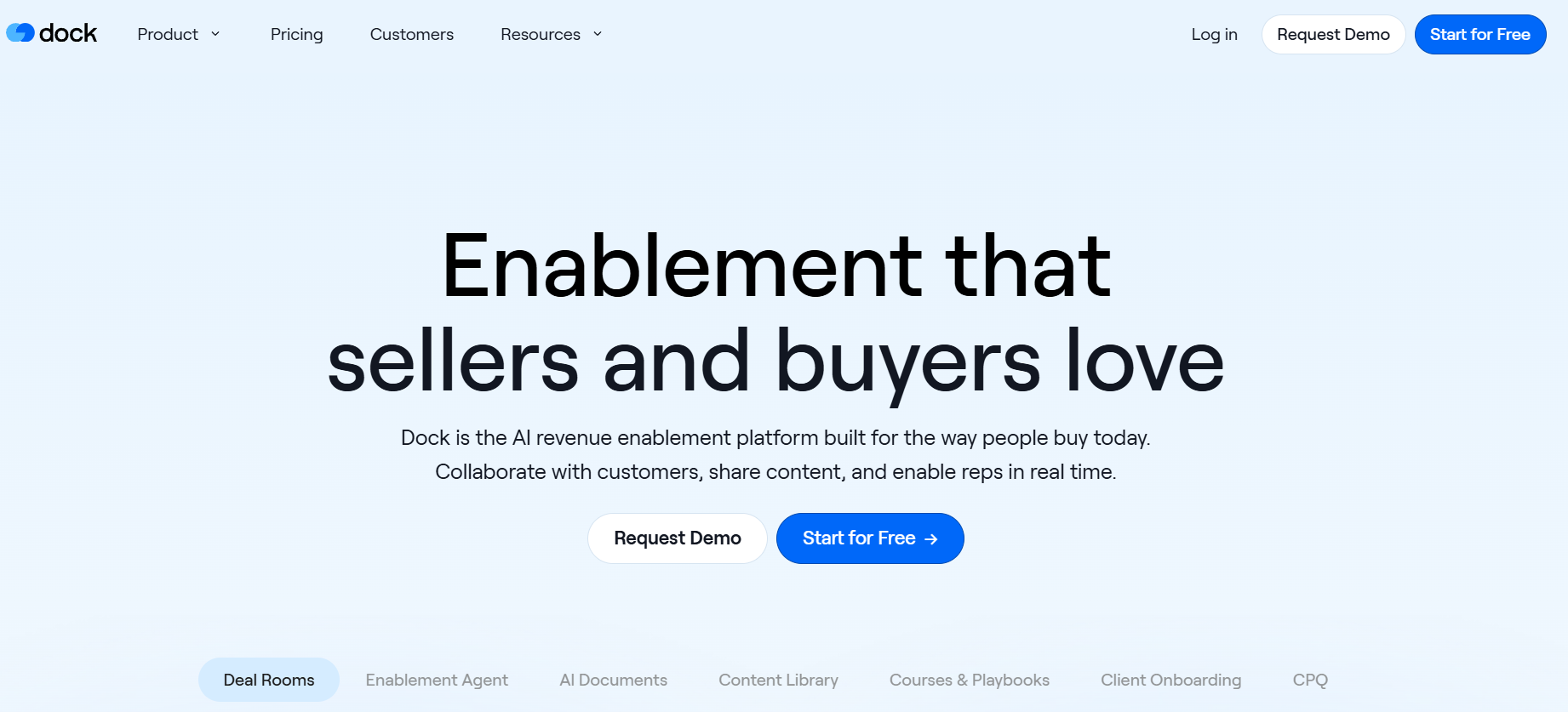
Dock is a customer onboarding and digital sales room platform that helps RevOps teams improve how deals close and how customers onboard after signing. Its central feature is the ability to create branded, digital sales rooms where sellers collaborate with buyers in a single online location throughout the deal lifecycle.
Inside a Dock deal room, sales reps can organise attachments, action plans, pricing details, and order forms that both parties can access in real time. Reps control what the buyer sees and when, progressively revealing information as the deal progresses through the pipeline. That controlled visibility removes the email attachment chaos that slows complex B2B deals and creates the kind of friction that stalls pipeline at the proposal and procurement stage.
For RevOps teams measuring deal velocity and close rate by segment, Dock provides a trackable engagement layer on top of the final stages of the pipeline, which is typically where the least visibility exists.
Key features include: Digital sales rooms, template library, content management, sales order forms, customer onboarding workflows, client portal, and collaboration tools.
Pricing: Free plan includes five workspaces. Starter at $49 per person per month. Growth at $59 per person per month plus a $250 monthly platform fee. Enterprise pricing on request.
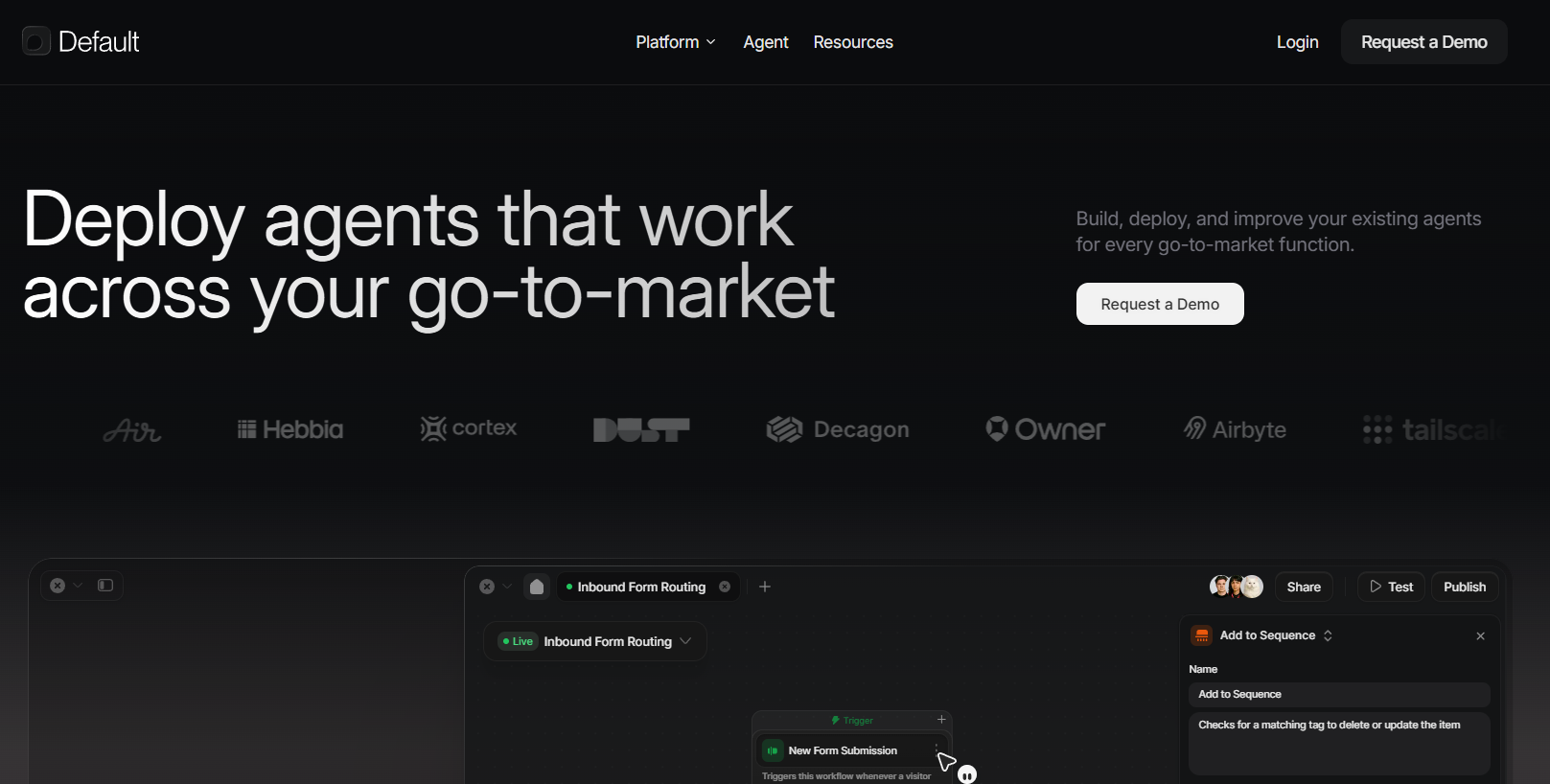
Default is an inbound lead routing, scoring, and scheduling platform that automates the operational work that happens between a lead entering your system and that lead booking a meeting with a sales rep. It is one of the more operationally specific tools in this list and one of the highest-leverage for RevOps teams where inbound pipeline volume is significant.
The platform allows RevOps teams to build routing rules based on lead location, lead score, and account or contact ownership, ensuring every inbound lead reaches the right rep without manual triage. Its scheduling features allow leads to book directly from web forms or scheduling links, cutting the back-and-forth that extends time-to-contact on inbound requests.
Response time to inbound leads is one of the most quantified leverage points in pipeline conversion. According to a research, contacting an inbound lead within five minutes makes a team 21 times more likely to qualify that lead compared to waiting 30 minutes. Default is built to eliminate the operational gaps that allow that window to close without contact.
Key features include: Lead routing, automated scheduling, lead scoring, inbound workflow builder, lead capture forms, and CRM data sync.
Pricing: Inbound plan at $665 per month including five seats. Studio and Scale plans available on request.
RevOps teams are project-driven by nature. Implementing a new lead routing system, migrating to a new CRM, building a territory model, running a quarterly pipeline audit: each of these is a multi-step initiative with owners, dependencies, timelines, and cross-functional stakeholders. Without a project management layer, these initiatives run on shared documents and Slack threads, which is how they stay perpetually in-progress.
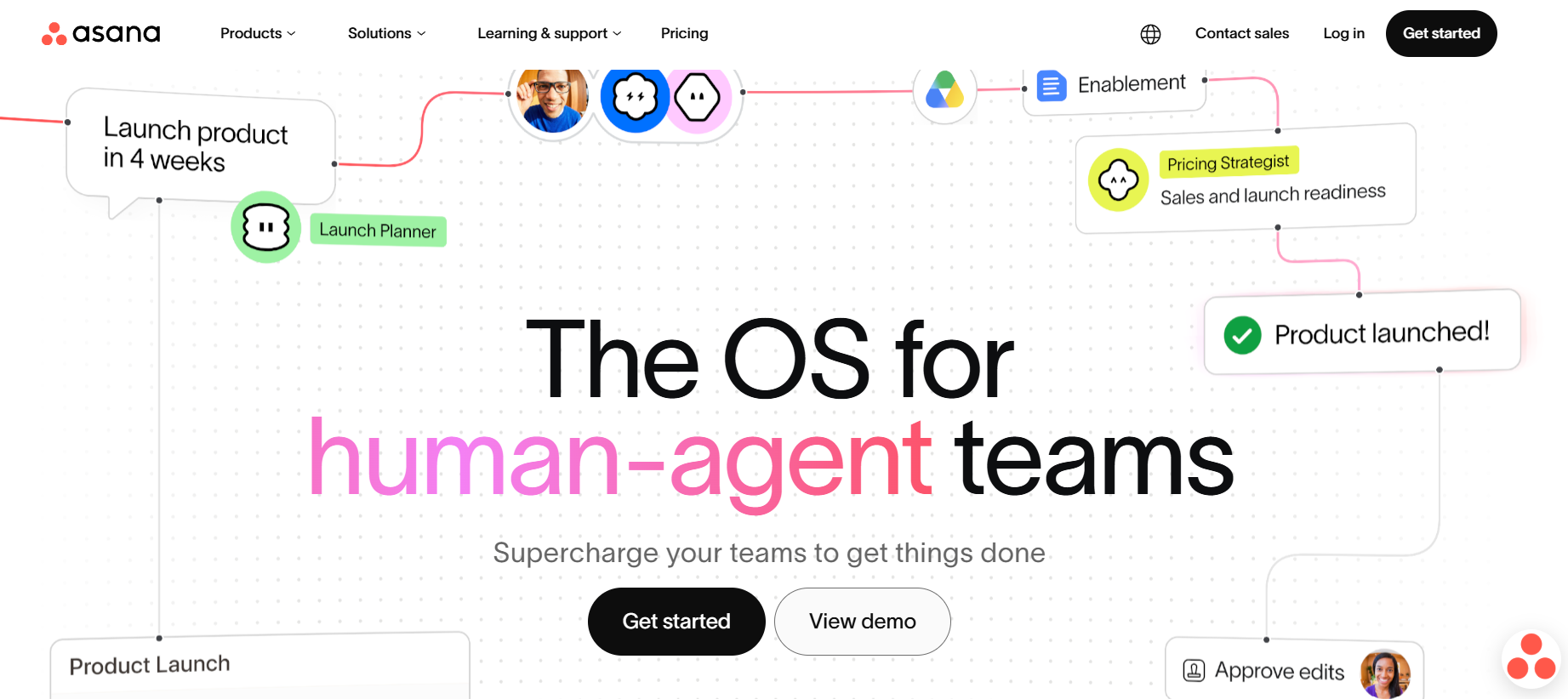
Asana is a project management platform that gives RevOps managers the ability to break large operational initiatives into trackable tasks, assign ownership, set deadlines, and monitor progress without convening a status meeting to find out where things stand. Its Task Notes and collaboration features keep institutional knowledge attached to the work rather than buried in conversation threads.
For revenue operations teams simultaneously managing a tech stack, running reporting cycles, and supporting sales and marketing with process improvements, Asana provides the operational infrastructure that keeps the RevOps function itself running cleanly.
Key features include: Kanban boards, task management, collaboration tools, calendar and inbox views, reporting, and integrations with Google Drive, Microsoft Teams, and Salesforce.
Pricing: Free personal plan. Starter at $10.99 per user per month. Advanced at $24.99 per user per month. Enterprise and Enterprise+ pricing on request.
Picking individual tools is the easy part. Building a stack where those tools communicate reliably and produce outputs that revenue leaders trust is where most RevOps implementations stall. Here is the sequence that produces a durable result.
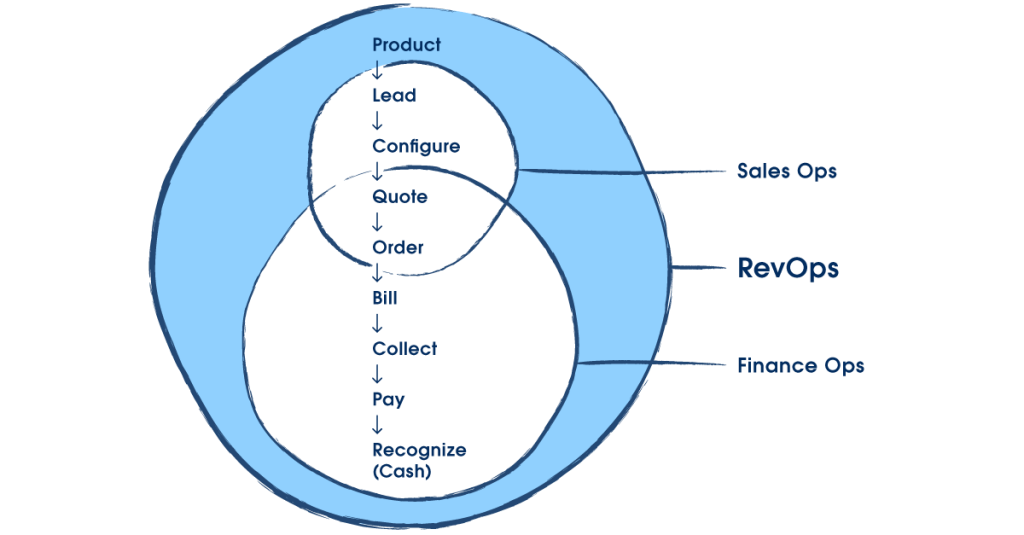
Audit the stack you already have. Before adding revenue operations tools, map every platform across sales, marketing, customer success, and finance. Identify where data breaks down between systems. The gaps you find should determine which RevOps tool category you prioritise next, not which vendor has the best demo.
Start with the data foundation. Forecasting tools, scoring models, and routing systems all run on data from your CRM. If those records are incomplete, duplicated, or outdated, every downstream tool produces unreliable outputs. Clean and enrich your data layer before layering intelligence tools on top. This is the most consistently skipped step when building a RevOps tech stack.
Map tools to specific RevOps problems. The eight revenue operations tools in this list each solve a specific category of problem: data quality, conversation intelligence, CRM operations, deal execution, project management, or lead activation. Match each tool to the gap it closes in your current stack.
Evaluate integration depth before you buy. A RevOps platform that requires a manual CSV export to connect with your CRM is not a RevOps platform. It is another silo. Confirm native integrations, API access, and bi-directional sync cadence before committing to any platform in this category.
Build the review cadence in from day one. A new revenue operations tool is not a set-and-forget investment. Build quarterly stack reviews into the RevOps operating calendar. Tools that were the right choice at 50 reps may not be the right choice at 200. The RevOps tech stack should evolve with the business.
For B2B sales teams looking to identify where pipeline gaps are forming or where the outbound motion needs a structural reset, Whistle works with growth-stage companies to build the outbound infrastructure and RevOps frameworks that connect daily SDR activity to predictable revenue outcomes across the full pipeline.