

Go-to-Market

Lauren Daniels
July 3, 2026

Cold calling in 2026 works when it is signal-based, multichannel, and executed by specialists who understand your industry. The 5 best cold calling companies ranked here combine different approaches: Whistle leads with SDR training and systematic execution frameworks. SalesHive optimizes volume with AI-assisted dialing. Leadium focuses on SMB-friendly data quality. Intelemark emphasizes human-led conversations. SalesRoads scales dedicated teams.
The biggest mistake most businesses make when hiring a cold calling agency is measuring success by meeting volume instead of meeting quality. The right cold calling service returns 10-14% conversion from calls to qualified meetings and provides real-time visibility into every interaction.
Before signing any contract, ask for three things: random call recordings by tomorrow, the written definition of a qualified meeting, and proof that data syncs to your CRM in real-time.
Best-performing B2B cold calling companies typically start between $3,000-$5,500 per month for dedicated execution and deliver 30-50+ qualified meetings monthly depending on your industry and deal size.
Here is what most sales leaders assume about cold calling in 2026: it is dead.
But the data tells a different story.
24% of sales teams still use cold calling as their primary channel, while another 25% use it in a secondary role. That is nearly half your market still picking up the phone. Yet the average booking rate for cold calls hovers around 2%-3%.
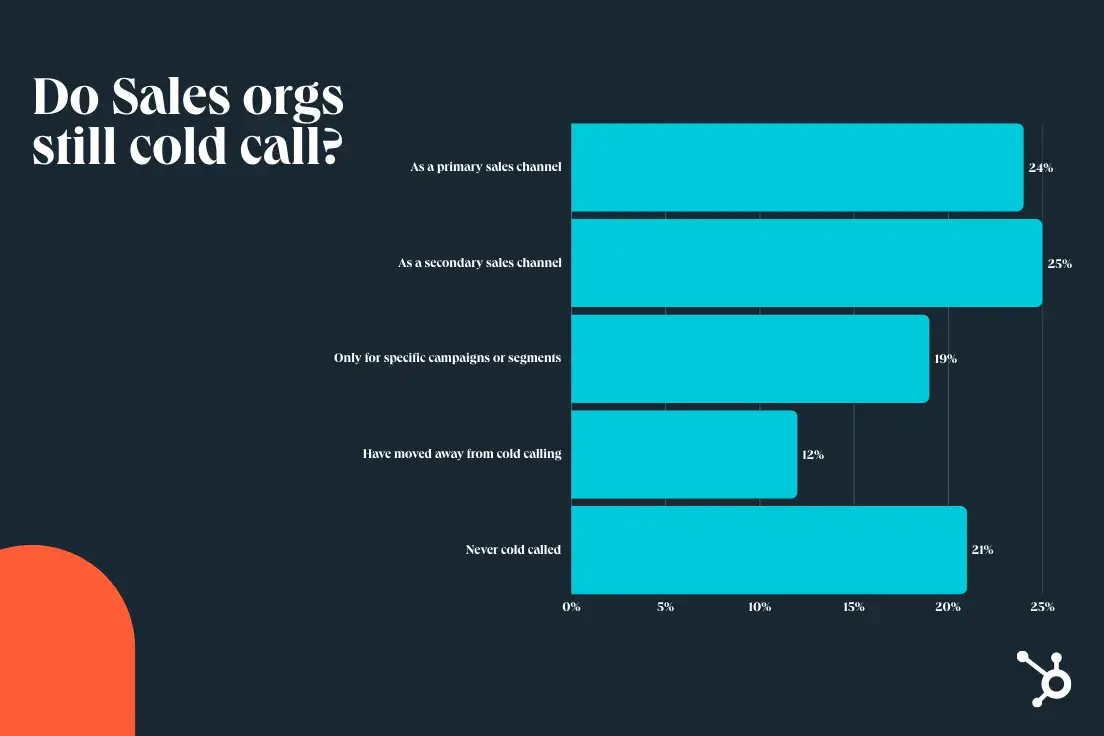
This is not a dead channel problem. This is an execution problem.
B2B buyers now consume information through roughly 10 different interaction channels during their buyer journey. Single-channel outreach no longer works. But here is what separates the best cold calling companies from the rest: they understand that calls should not be blind. Signal-based calls, made when a prospect has just taken a specific action like opening an email or visiting your pricing page, connect at 12%-15%. That is 4-5x better than traditional cold dialing.
The difference between a cold calling company that builds a pipeline and one that just fills your calendar with low-quality meetings is strategic. The right partner uses data, timing, and intent signals to reach prospects when they are actually receptive.
Here are the best cold calling services that actually deliver on that promise.
I have watched too many sales leaders kill their pipeline by not having a strategic cold calling motion.
Here is the pattern: they hire an SDR who burns through the TAM in three months. Or they hire a traditional dialing shop that fills the calendar with meetings, and 70% of them are with people who have no buying authority or budget.
The problem is not cold calling itself. The problem is that most cold calling companies were built for a 2015 market where:
That world is gone.
Modern cold calling services operate differently. They use intent data. They coordinate across email, LinkedIn, and phone. They call when prospects have taken specific actions. They preserve your TAM instead of burning it. And they measure success by pipeline conversion, not call attempts.
For companies that need to scale outbound without hiring 3-5 full-time SDRs, outsourcing to the right cold calling agency is the fastest path to consistent pipeline growth.
Best for: Teams that want to build internal SDR capability while running active outbound campaigns
When I think about what separates good cold calling companies from great ones, it comes down to this: do they teach your team how to execute, or do they just execute for you?
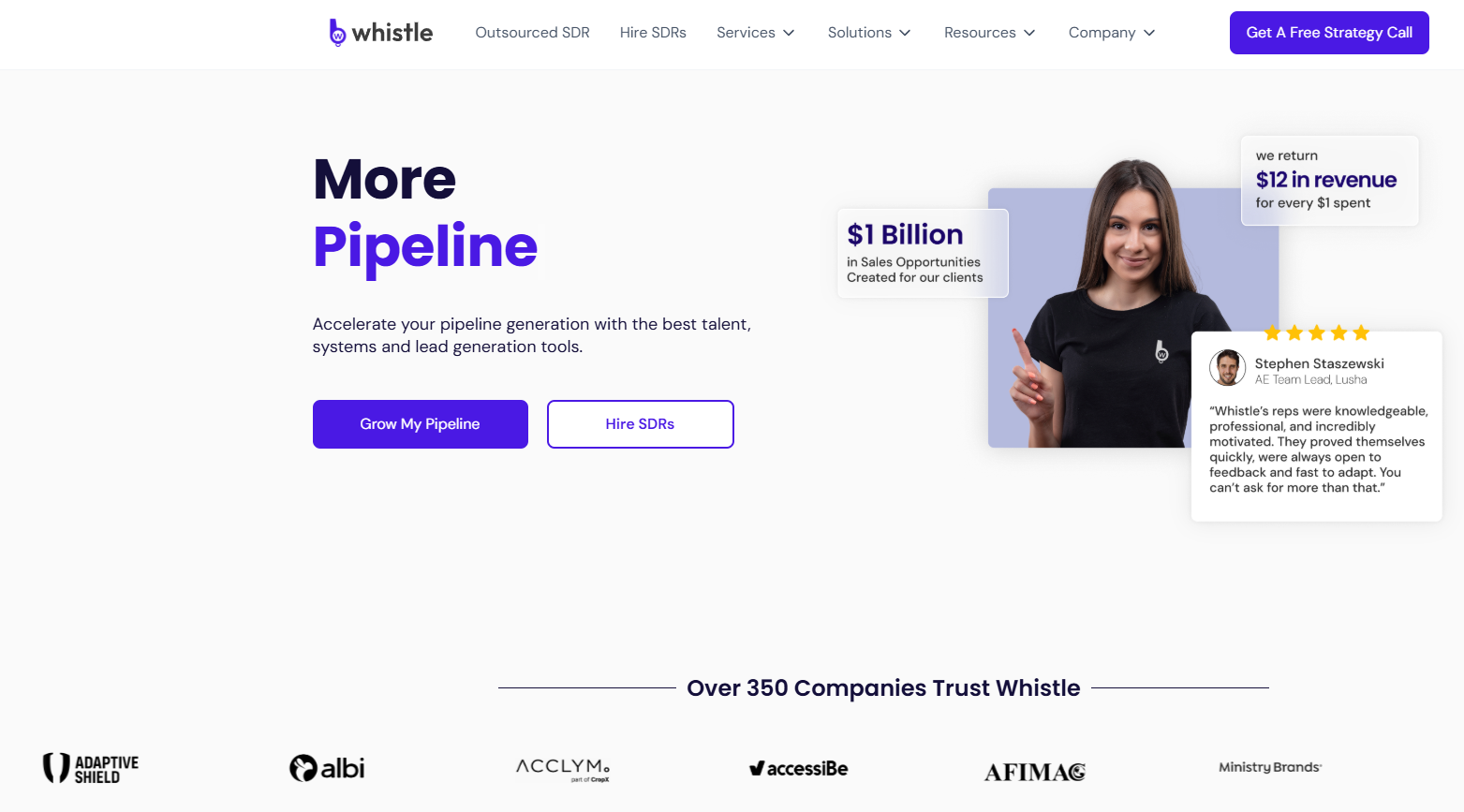
Whistle operates differently from traditional cold calling services. Whistle focuses on training SDR teams (whether internal or outsourced) to execute a systematic outbound motion.
This means your SDRs learn:
The Whistle approach applies whether you are building in-house, outsourcing to offshore teams, or running a hybrid model. The training ensures consistent execution regardless of where the SDRs sit.
Why this matters: Most cold calling agencies teach reps to follow processes. Whistle teaches reps to think strategically. That difference compounds over time. An SDR trained on frameworks adapts to market changes. An SDR trained on scripts gets stuck when prospects deviate.
Pricing: Custom based on your team structure and campaign scope
Best for: Sales leaders who see outbound as a capability to build, not just a service to buy
Why teams choose Whistle:
Best for: Mid-market companies ($15K–$50K ACV) that need consistent volume without sacrificing conversation quality
SalesHive solves a specific problem: how do you scale call volume while keeping calls that sound human, not robotic?
Their model is straightforward: AI handles the operational work (dialing, lead scoring, call prep), but every live conversation is with a trained human SDR.
What this looks like in practice:
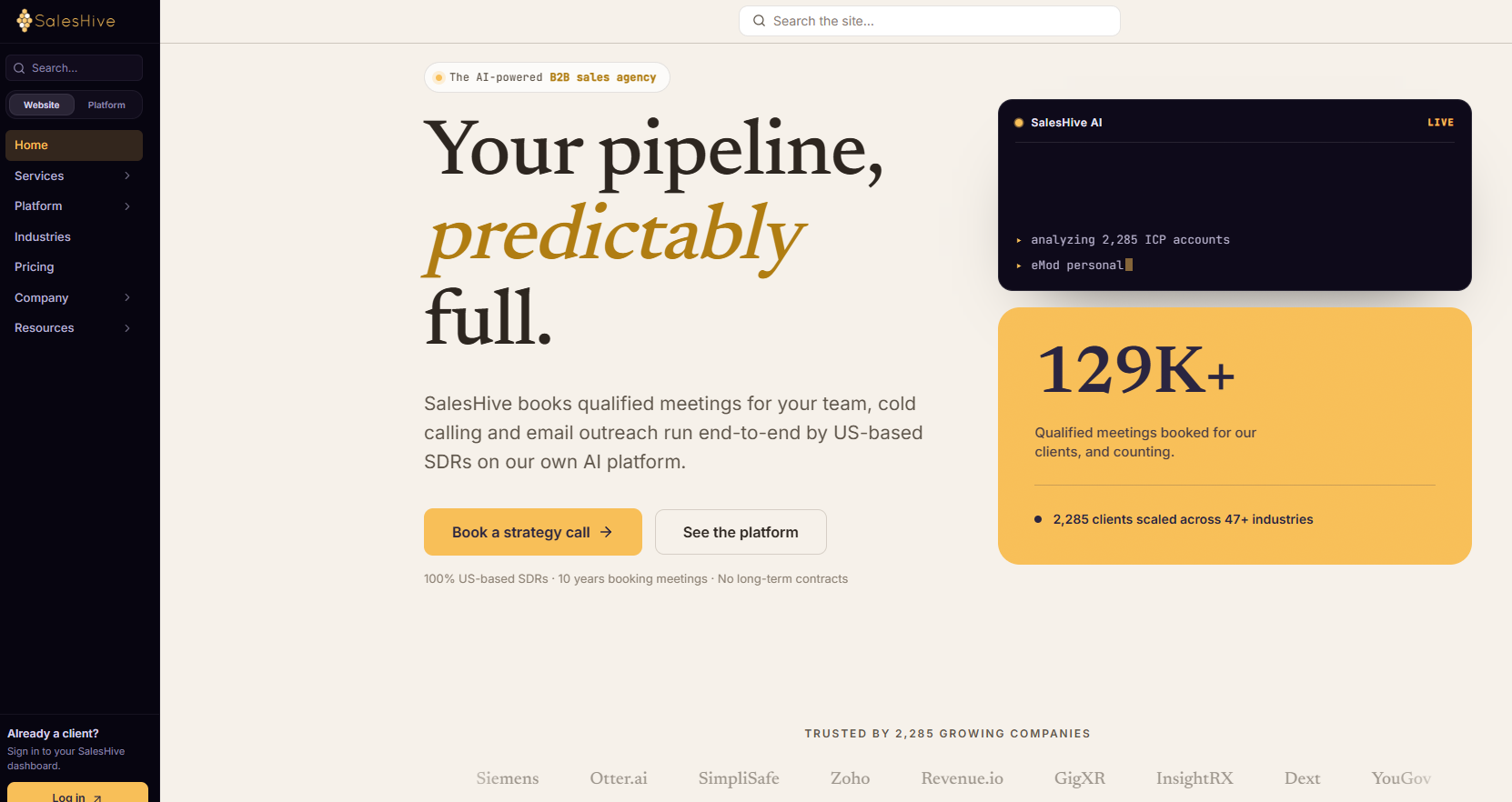
The results: Their platform has set 117,000+ meetings for 1,500+ companies across technology, SaaS, FinTech, and healthcare. That volume with human-led conversations is the draw.
Pricing:
Best for: Growing companies that need high-volume outreach but refuse to sound like dialers
Why teams choose SalesHive:
Real client experience: One market research company booked nearly 200 meetings through SalesHive. The feedback: "They helped us double our sales meetings in a couple of months." That kind of velocity matters when you need to build a pipeline fast.
Best for: Smaller companies ($10K–$50K deal size) that do not have a dedicated SDR team
Leadium is built for founders and sales leaders who need a cold calling company but cannot afford enterprise pricing.
Their advantage: they build and verify contact data in real time instead of buying static lists. This means the people you call actually exist at the companies you are targeting, with verified direct dial numbers.
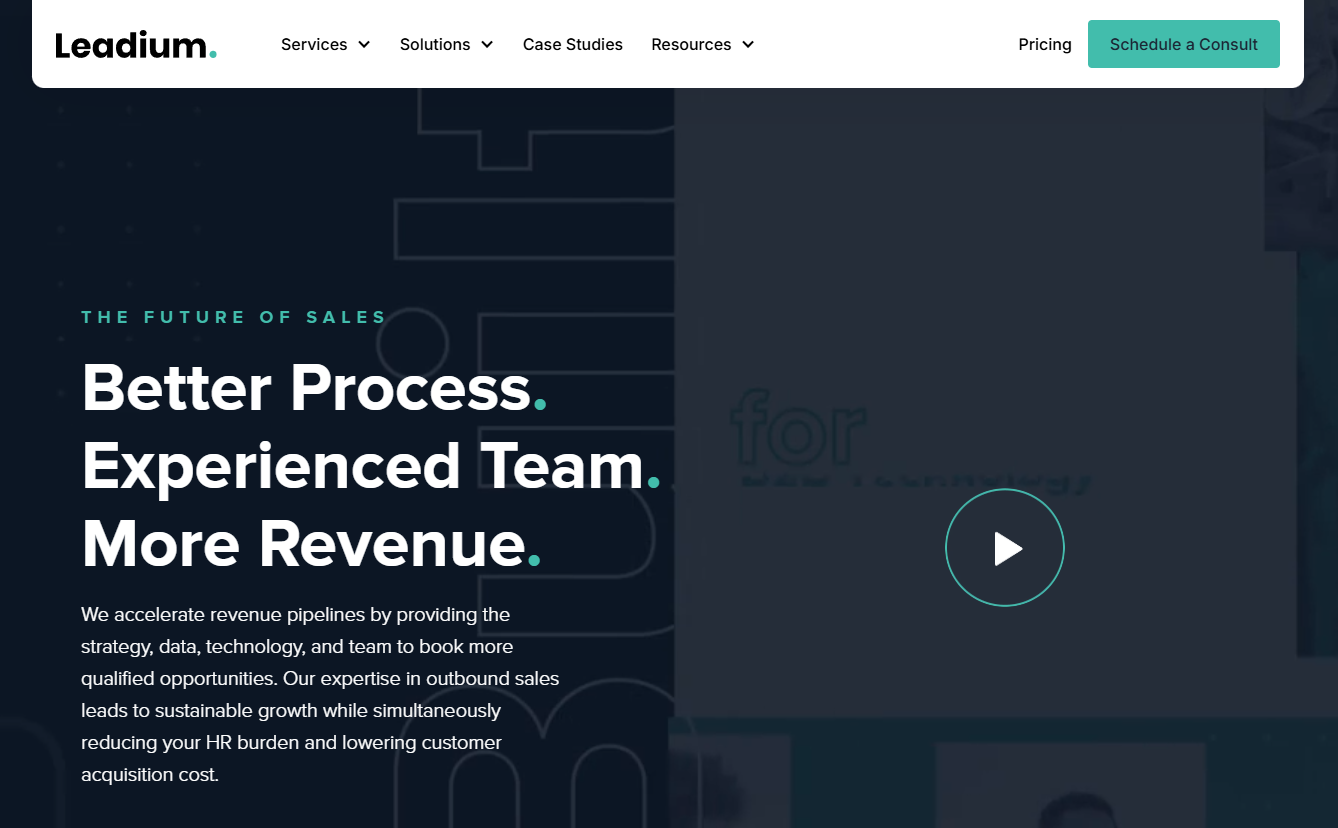
Leadium has generated $1B+ in revenue pipeline across 1,200+ organizations, which tells you they have learned what works at scale for mid-market SMBs.
How they approach cold calling:
Case study insight: All Dry Services (a restoration company with 130+ locations) worked with Leadium and hit a 35% call connect rate with 20+ qualified meetings per month. For a regional services company, that is significant velocity.
Pricing: Custom monthly retainers, typically $2,000–$3,000/month to start, with a 30-day free trial available
Best for: Founders and small sales teams that need expertise without enterprise overhead
Why teams choose Leadium:
Best for: Mid-market to enterprise companies that prioritize call quality and prospect engagement over raw volume
Intelemark has been running cold calling services since 2000. That longevity means they have learned what actually moves deals: human conversations, not scripted pitches.
Their positioning is clear: they are not a dialer shop. They are a cold calling agency built around trained, thoughtful SDRs who understand your business and can handle objections in real time.
What sets them apart:
For companies selling into enterprise accounts where one bad call to a VP means a permanently closed door, Intelemark's deliberate approach matters.
Why enterprise companies choose them:
Best for: Mid-market to enterprise companies that need to scale outbound without hiring 3-5 full-time SDRs
SalesRoads (founded 2007) takes a different approach: they build dedicated SDR teams for clients, with cold calling as a core channel for pipeline generation.
Rather than pooling SDRs across multiple clients, SalesRoads assigns dedicated teams to yours. This means your callers know your product, your ICP, and your messaging deeply.
How they structure engagements:
Why this matters: Shared resources dilute focus. Dedicated resources align incentives. SalesRoads builds teams that own your pipeline, not manage it.
Best for: Companies that want the benefits of outsourcing without losing the accountability of a dedicated team
Most evaluations look like this:
Here is a better process.
Ask for random call recordings by tomorrow.
A strong cold calling agency will not hesitate. They will be proud to share. Listen for someone who sounds like they could work at your company. Do they know what they are talking about? Can they handle a question without stumbling back to a script?
If they push back, citing privacy concerns as a blanket excuse, that tells you what you need to know about call quality.
Get their definition of a "qualified meeting" in writing.
Low-tier cold calling services book whoever will take a call just to hit their monthly quota. They count no-shows as meetings. They count junior employees with no authority as meetings.
The definition should include:
Write this into the contract before signing. If they resist, move on.
Confirm data syncs to your CRM in real-time.
If they are sending monthly CSV exports, you are already operating blind. By the time you see the data, the window to act has closed.
Every objection, every competitor mentioned, every reason a prospect said no needs to be in your CRM immediately. That feedback loop is what makes your entire GTM strategy work.
I have watched teams hire cold calling companies and celebrate when the calendar fills up.
Then they watch 70% of those meetings result in "not a fit" or "no budget."
The problem was never the cold calling agency. The problem was the success metric.
Booking meetings is not the goal. Booking meetings with decision-makers who have budget, authority, and genuine timing is the goal.
The best cold calling services understand this distinction. They qualify harder. They book fewer meetings. But the ones they do book convert.
Most growing companies do both: outsource to build a pipeline while training internal SDRs to eventually own the motion long-term.
Here is what separates mediocre cold calling companies from the ones that actually build a pipeline:
Traditional cold calling: "Hi, I have not met you, but I want to pitch my product."
Signal-based cold calling: "I saw you downloaded our guide on optimizing SDR workflows. I wanted to follow up directly."
The difference in connect rates is dramatic: blind cold calls connect roughly 2–3% of the time, while signal-based calls connect at 12–15%.
That 4-5x difference is not small. That is structural. That is what separates best cold calling companies from the rest.
At Whistle, we approach cold calling differently because we know most SDR teams do not need a dialer shop. They need:
Whether you build in-house, hire a cold calling agency, or run a hybrid model, the principles remain the same. SDRs should be having real conversations with prospects who fit your ICP, at moments when those prospects are actually receptive, using messaging that references why you are reaching out.
Most cold calling services optimize for volume. We optimize for execution quality and conversion. That means fewer calls but better results. Fewer meetings but higher close rates. Less TAM burned but stronger pipeline velocity.
If you are evaluating cold calling companies this year, ask yourself: do they promise more dials, or do they promise better deals?
The answer matters more than you think.



%20.jpg)

.jpg)
%20.jpg)