

Go-to-Market

Lauren Daniels
May 15, 2026

LinkedIn outreach tools help teams send up to 5x more messages than manual efforts while maintaining personalization. Dedicated LinkedIn tools cost $15-$100 per user monthly, while multichannel platforms combining LinkedIn with email, phone, and SMS range $25-$500+ monthly. Cloud-based tools prove safer than browser extensions for avoiding account restrictions. Top-rated options include Salesflow with a 4.3/5 G2 rating for multichannel sequences, Waalaxy with a 4.6/5 rating for budget-conscious teams, and HeyReach with a 4.7/5 rating for multi-account management. Must-have features: compliance safeguards, sequence automation with smart delays, response detection that stops campaigns when prospects reply, and unified inbox management.
Avoid tools that run only as Chrome extensions, lack inbox detection, or overpromise AI capabilities without substance. LinkedIn automation tools divide into three categories: multichannel platforms like Reply.io and Apollo.io that combine LinkedIn with email and calling, dedicated LinkedIn tools like Dripify and Expandi focused solely on the platform, and email scrapers like Lusha and Kaspr that extract contact data for outreach outside LinkedIn. The choice depends on whether LinkedIn is your only channel or part of a broader outbound strategy.
Your SDR team sends 50 LinkedIn connection requests daily. Manually.
LinkedIn outreach tools automate that volume to 250+ daily while adding email, follow-up sequences, and response tracking. The difference is not just speed. It is whether your pipeline runs on systematic outreach or sporadic effort.
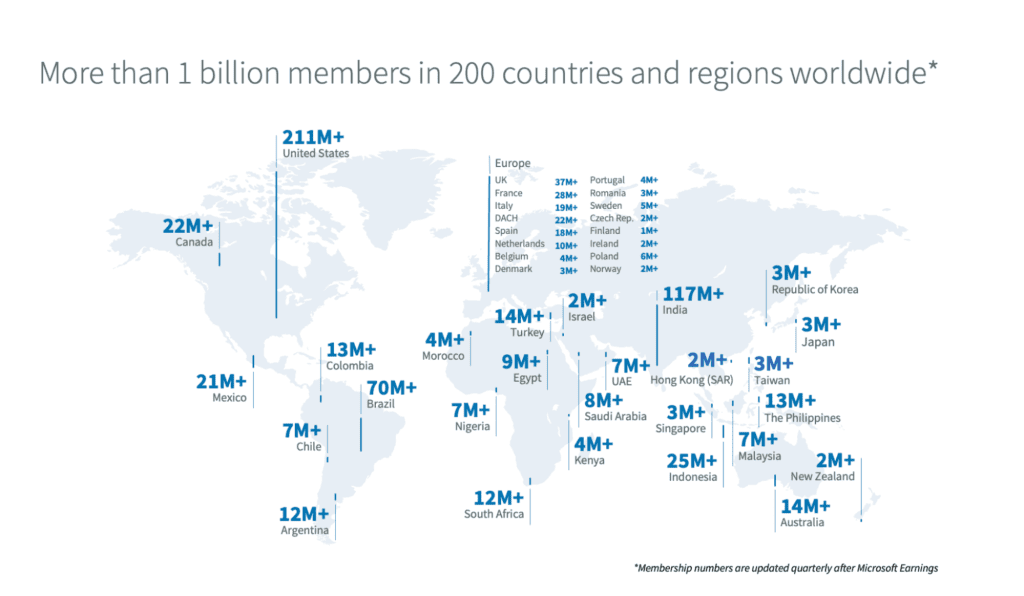
With over 1 billion professionals on LinkedIn, the platform remains the primary channel for B2B prospecting. But manual outreach does not scale. Here are the 12 best tools that do.
Not all LinkedIn automation tools deliver equal value. Some get accounts banned. Others waste budget on features you will never use.
Compliance and safety mechanisms. Cloud-based tools prove safer than browser extensions for avoiding LinkedIn restrictions. Good platforms follow LinkedIn limits, run dedicated IPs, and include safeguards keeping you under the platform's radar.
Core automation with smart delays. At minimum, tools should automate connection requests, messages, and follow-ups with customizable delays and personalization variables. Response detection that stops campaigns when prospects reply prevents embarrassing double-touches.
Usability without technical overhead. If you need developer support just to run a campaign, the tool fails its purpose. Built for salespeople, not engineers.
Verified user satisfaction. G2 and Capterra ratings from actual users matter more than feature lists in marketing decks.
Multichannel outreach combining LinkedIn with email, phone, and SMS significantly increases response rates for true outbound at scale.
Native CRM integrations with HubSpot, Salesforce, or Pipedrive streamline workflow and reduce manual data entry.
Analytics beyond basic stats, showing response rates by campaign, rep performance, and message variation testing.
Team features include user management, shared inboxes, and campaign visibility for agencies or sales teams with multiple reps.
Chrome extensions as the only deployment option increase the risk of LinkedIn restrictions compared to cloud-based alternatives.
No inbox detection means follow-ups keep sending after prospects reply, damaging your brand and killing deals.
AI buzzwords without substance. "AI-powered personalization" that is just mail merge with extra steps does not count as real functionality.
| Tool | G2 Rating | Best For | Key Strength |
|---|---|---|---|
| Salesflow | Sales teams, agencies, SMBs | Multichannel (LinkedIn + email), unified inbox, AI sentiment detection | |
| Waalaxy | Solo professionals, founders | Budget-friendly, AI prospect finder, 99+ templates | |
| HeyReach |  For budget-conscious solo professionals: Waalaxy delivers LinkedIn plus email automation with 99+ ready-made templates and a 4.6/5 rating from 800+ users. Built-in email finder and AI prospect detection at a fraction of competitor pricing. 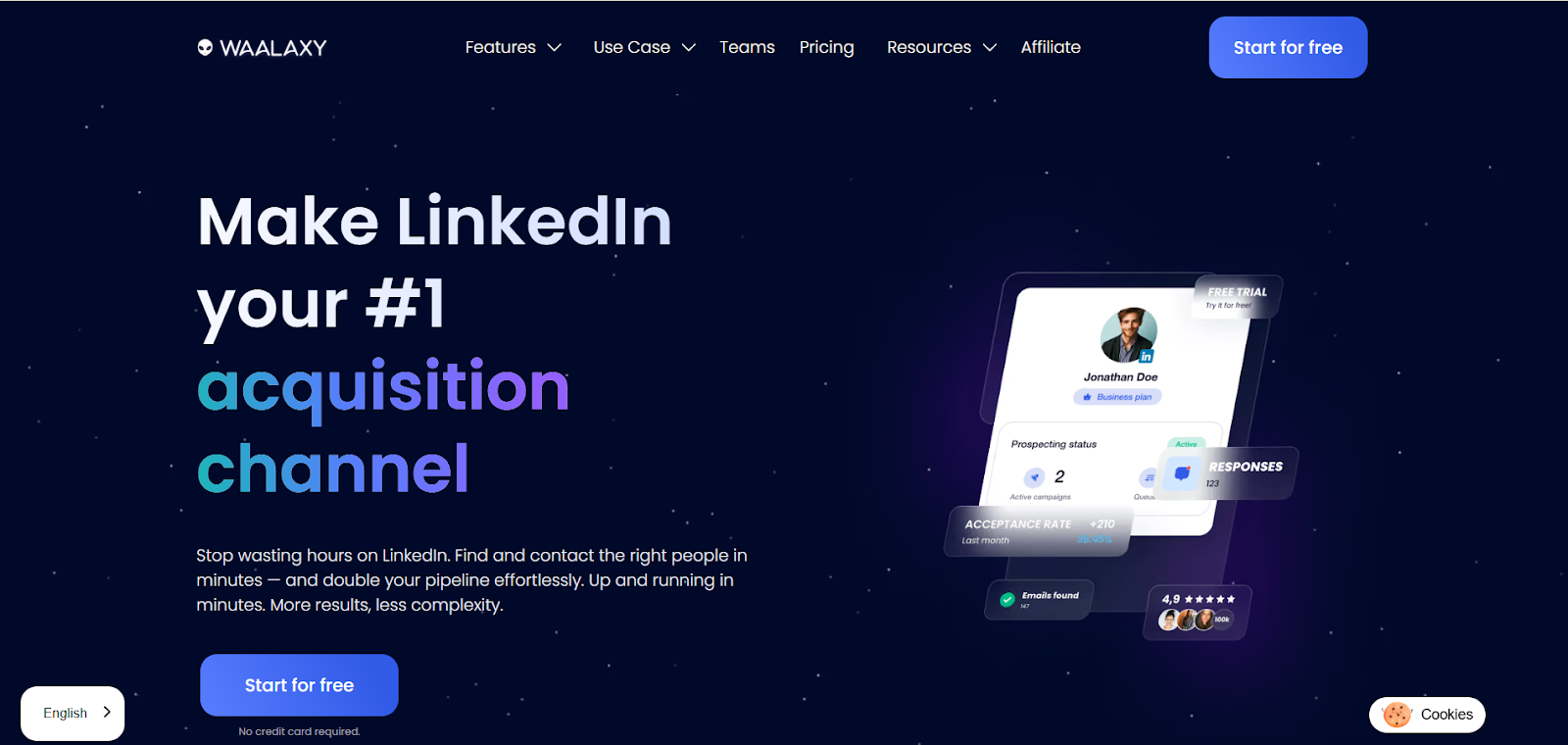 For agencies managing multiple accounts: HeyReach supports multi-account rotation with unlimited users, a unified inbox, and a 4.7/5 G2 rating. Designed specifically for teams running high-volume LinkedIn outreach across multiple sender profiles. 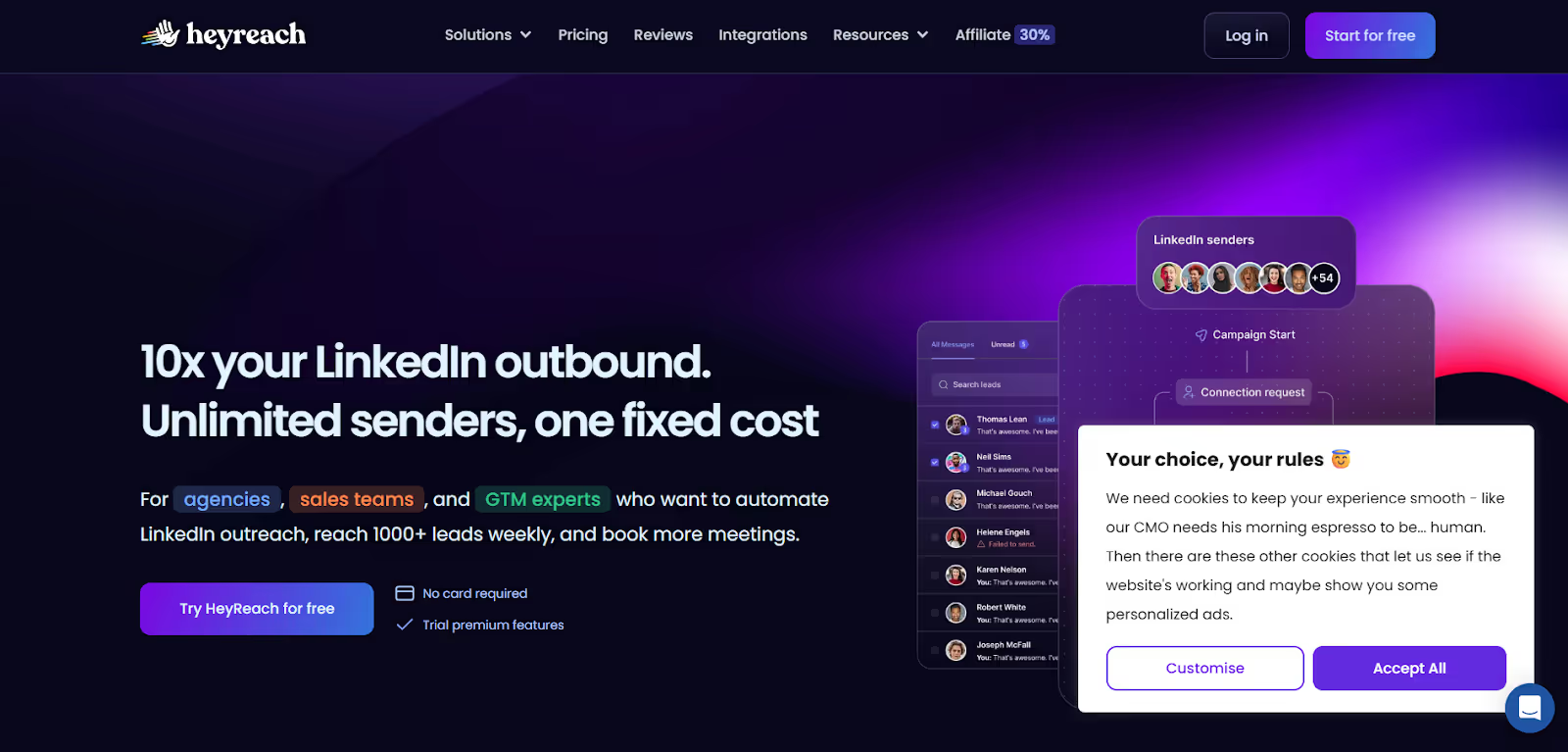 For teams wanting proven safety mechanisms: We-Connect emphasizes account warm-up, country-based IP routing, and human behaviour simulation with a 4.6/5 rating. CRM sync with HubSpot, Salesforce, and Zoho is included.  For simple drip campaigns without complexity: Dripify offers a clean UI, an easy campaign builder, and a smart inbox with a 4.5/5 rating from 291 reviews. Minimal setup, maximum clarity.  For teams needing a native lead database, Apollo.io provides an extensive contact database alongside LinkedIn automation, eliminating the need for separate data providers. Multichannel sequences with email and calling included. 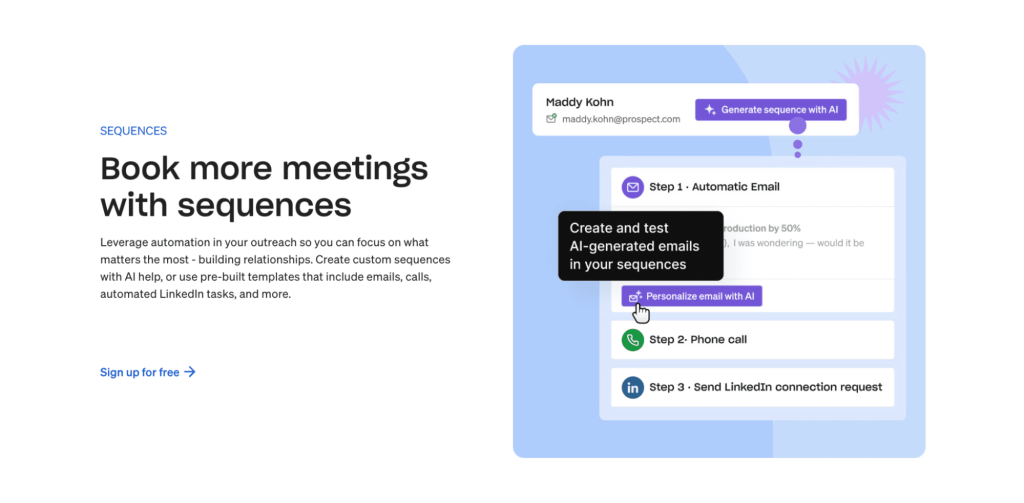 Three Categories of LinkedIn ToolsLinkedIn outreach tools divide into distinct categories serving different needs: Multichannel outreach platforms like Reply.io, Salesloft, and Outreach.io combine LinkedIn with email, phone, and SMS in coordinated sequences. These work when LinkedIn is one component of a broader outbound strategy. Dedicated LinkedIn automation tools like Expandi, Dripify, and LinkedFusion focus exclusively on the platform, often with deeper features like post engagement automation, endorsement campaigns, and advanced if-then sequence logic. LinkedIn email scrapers like Lusha, Kaspr, and LeadFuze extract verified contact information from profiles, enabling outreach through channels outside LinkedIn. These supplements rather than replace automation platforms. The choice depends on whether you run LinkedIn-only campaigns or integrate the platform into multichannel outbound motions. Safety Considerations: Cloud Vs Browser-BasedBrowser extension tools carry a higher risk of LinkedIn restrictions compared to cloud-based alternatives. Chrome extensions run automation through your browser, leaving activity patterns visible to LinkedIn monitoring systems. Cloud-based tools like Salesflow, We-Connect, and Skylead operate on dedicated IPs with randomized timing that mimics human behaviour more effectively. Tools with account warm-up features, country-based IP routing, and human behaviour simulation reduce the risk of platform flags. Look for providers offering dedicated IPs rather than shared infrastructure. The cheapest tools often skimp on safety features. Dux-Soup reports a significant percentage of users receiving LinkedIn warnings, while premium cloud-based platforms maintain better compliance records. What LinkedIn Outreach Tools Cannot FixAutomation scales bad processes as efficiently as good processes. If your connection request acceptance rate sits below 20%, the problem is likely messaging or targeting, not tool selection. LinkedIn outreach tools help send up to 5x more messages, but they cannot write better copy or identify better prospects. Response detection stops follow-ups after prospects reply, but it cannot repair relationships damaged by irrelevant outreach or tone-deaf messaging. The tool enables scale. The strategy determines whether that scale produces pipeline or spam complaints. Teams expecting tools to solve fundamental go-to-market problems (unclear ICP, weak value proposition, poor qualification criteria) typically burn budget without improving results. Fix the foundation first, then apply automation to amplify what works. Choosing the Right Tool for Your TeamStart with channel strategy. If LinkedIn represents your entire outbound motion, dedicated tools like Dripify, HeyReach, or Expandi deliver deep platform-specific functionality. If LinkedIn integrates with email and calling in coordinated sequences, multichannel platforms like Salesflow, Reply.io, or Apollo.io prevent juggling multiple tools. Consider team size and account management needs. Solo professionals and small teams find success with Waalaxy or We-Connect. Agencies managing multiple sender accounts need HeyReach's multi-account rotation or similar capabilities. Evaluate safety features relative to volume requirements. High-volume outreach demands cloud-based tools with dedicated IPs and human behaviour simulation. Lower volume allows more flexibility. The best LinkedIn sales tools are the ones your team will use consistently, with features matching your actual workflow rather than theoretical capabilities you will never activate. For sales development teams implementing LinkedIn outreach as part of broader prospecting strategies, Whistle provides training frameworks that teach SDRs how to craft connection requests that prospects accept, write follow-up sequences that maintain conversation momentum without feeling automated, and coordinate LinkedIn touches with email and phone outreach to create cohesive multi-channel cadences. Our approach emphasizes understanding that tools enable execution but cannot replace the fundamental skills of identifying right-fit prospects, personalizing outreach based on genuine research, and building authentic relationships through systematic professional persistence rather than relying on automation to compensate for weak messaging or poor targeting. Explore more from our blogUnlock the B2B sales playbooks, outreach strategies, and closing techniques we’ve refined across more than 1,000 successful campaigns. Not Sure Which Service Is Right for You?Let’s figure it out together. Book a quick call and we’ll walk you through the best-fit options based on your goals, team structure, and current setup. Latest posts Demo contentInterviews, tips, guides, industry best practices, and news.  UX review presentationsHow do you create compelling presentations that wow your colleagues and impress your managers? Read post  Migrating to Linear 101Linear helps streamline software projects, sprints, tasks, and bug tracking. Here’s how to get started. Read post  Building your API StackThe rise of RESTful APIs has been met by a rise in tools for creating, testing, and managing them. Read post |
%20.jpg)

.jpg)
%20.jpg)