AI SDR tools are reshaping how sales teams prospect, qualify leads, and book meetings. We've analyzed the leading platforms operating in 2026, including Knock AI, Saleshandy, Apollo, 11x, Qualified, Drift, and more, to help you understand where each excels.
Rather than generic feature lists, this guide looks at how these tools handle real sales challenges such as inbound qualification accuracy, outbound personalization at scale, routing logic, conversation intelligence, and CRM integration depth.
The comparison focuses on what matters most: which platforms deliver autonomous qualification, which require human oversight, and how each fits into different go to market motions from high volume outbound to complex B2B inbound conversion.
Your SDR team is drowning in repetitive tasks. Between researching prospects, crafting personalized emails, logging activities, and following up across multiple channels, sales development reps spend more time on admin work than actual selling. For many teams, this means missed opportunities, inconsistent outreach, and a pipeline that never quite hits target.
AI SDR tools promise to change this. The best platforms do not just automate email sequences. They engage prospects autonomously, qualify intent in real time, route opportunities intelligently, and keep your CRM updated without manual intervention.
But not all AI SDR tools solve the same problem. Some excel at high-volume outbound automation. Others specialize in inbound website qualification or sales team enablement. Choosing the wrong category often leads to disappointing results, regardless of how advanced the AI claims to be.
We've evaluated the leading AI SDR platforms based on real-world performance across six key criteria: conversation intelligence, qualification accuracy, integration depth, personalization capabilities, security standards, and ROI measurement. You'll see which tools are built for outbound scale, which handle complex inbound qualification, and which support your team during active deals.
What Are AI SDR Tools and Why Do They Matter?
AI SDR tools are software platforms that use artificial intelligence to automate sales development tasks traditionally handled by human SDRs. These include prospecting, outreach, qualification, meeting booking, and CRM updates.
The core difference from traditional sales automation is adaptability.
Traditional tools follow predetermined sequences and rules. AI SDR platforms adapt based on context, buyer behavior, and real-time signals. They can:
Engage prospects in natural, multi-turn conversations
Detect buying intent across channels
Qualify leads using structured discovery frameworks
Route opportunities based on complex criteria
Personalize messaging using account-level context
Operate autonomously around the clock across time zones
Why AI SDRs Matter in 2026
The shift from AI copilots to autonomous agents is accelerating. Major enterprise vendors now deploy AI agents that handle entire workflows, including updating records, generating reports, and managing tasks without constant human supervision.
Real-world adoption is growing fast. Sales teams increasingly rely on AI to research clients, simulate objections, summarize calls, and update deal statuses. The human role is shifting toward high-trust conversations, while AI handles consistency and execution.
Economics also matters. A fully loaded SDR costs more than sixty thousand dollars annually and still cannot cover nights, weekends, or global inbound traffic. AI SDR platforms typically cost a fraction of that and operate continuously.
Where AI SDRs Deliver Immediate Impact
First touch response with instant engagement
Inbound qualification using structured discovery
Outbound personalization at scale
Meeting coordination without back and forth
Pipeline hygiene through automatic CRM enrichment
How We Evaluated These AI SDR Tools
We tested platforms over ninety-day periods across different industries and company sizes, interviewing more than two hundred sales professionals to understand real-world performance.
Evaluation Criteria
Conversation Intelligence: Can the tool sustain natural conversations, retain context, and ask relevant follow-up questions
Qualification Accuracy: Does it run structured discovery aligned to frameworks like MEDDPIC or BANT and capture explicit buying signals
Integration Ecosystem: Depth of CRM, calendar, and sales engagement integrations and whether structured data is written cleanly
Personalization at Scale: Use of real accounts and role-level context rather than surface-level tokens
Security and Compliance: SOC 2, GDPR, role-based access controls, and data handling standards
Performance Analytics: Ability to tie activity directly to pipeline outcomes
Best AI SDR Tools in 2026
1. Knock AI – Best for Messaging-First Inbound Qualification
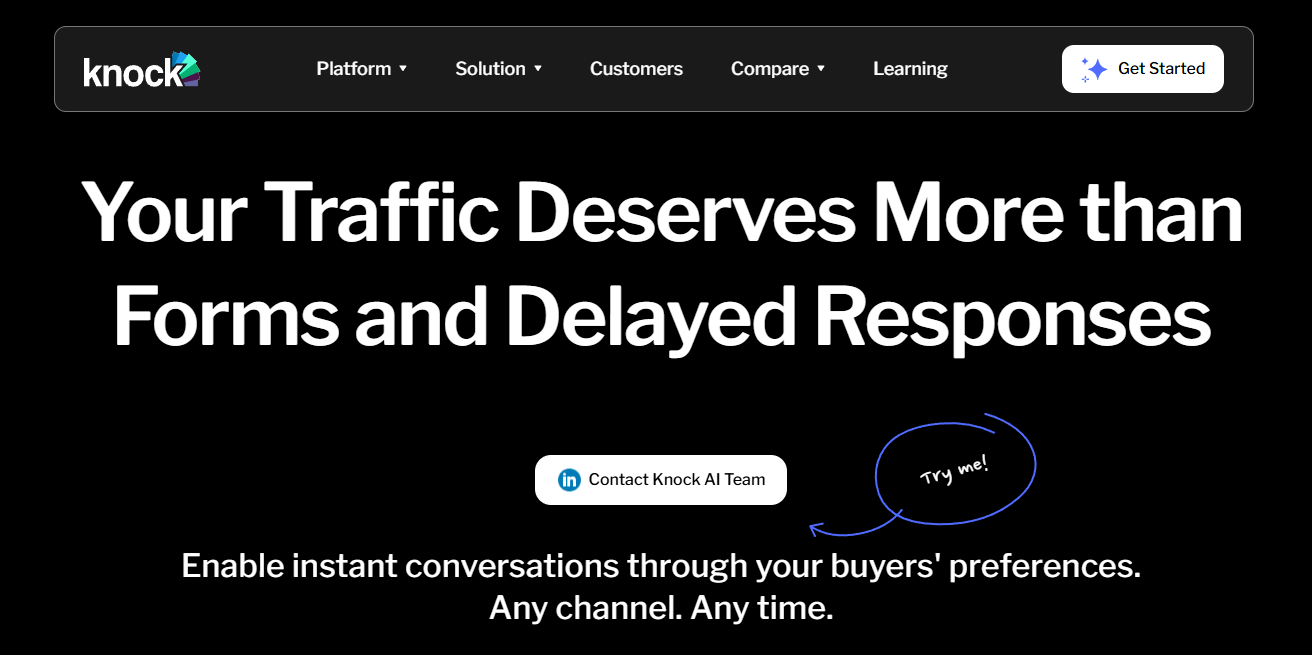
Knock AI takes a fundamentally different approach to inbound qualification. Instead of relying on website forms or delayed email follow-ups, it meets buyers where they already are inside Slack, LinkedIn, and WhatsApp.
When a prospect reaches out, Knock AI detects their intent, enriches their information in real-time, qualifies them using your framework, routes to the correct rep, and books the meeting, all within the conversation thread.
Key Features
Messaging-first engagement across Slack, LinkedIn, and WhatsApp
Continuous learning improves answer quality as new questions appear
Intent detection separates sales, support, partnerships, and customer inquiries
Real-time enrichment for cleaner CRM records
Automatic routing based on territory, segment, or use case
Live monitoring lets humans supervise and take over instantly
Agent-per-intent to avoid collisions between departments
Pros
Cons
Meets buyers in their preferred channels (no form friction)
Dramatically reduces abandonment rates
Real-time qualification removes manual triage
Cleaner CRM data through inline enrichment
Fast implementation (~ 1 hour setup)
Continuous learning improves accuracy over time
Does not run outbound email sequences
Complex routing may require initial planning
Not designed for call intelligence or recording analysis
2. Saleshandy – Best for AI-Assisted Cold Email Automation
Best For: Teams running high-volume cold email campaigns
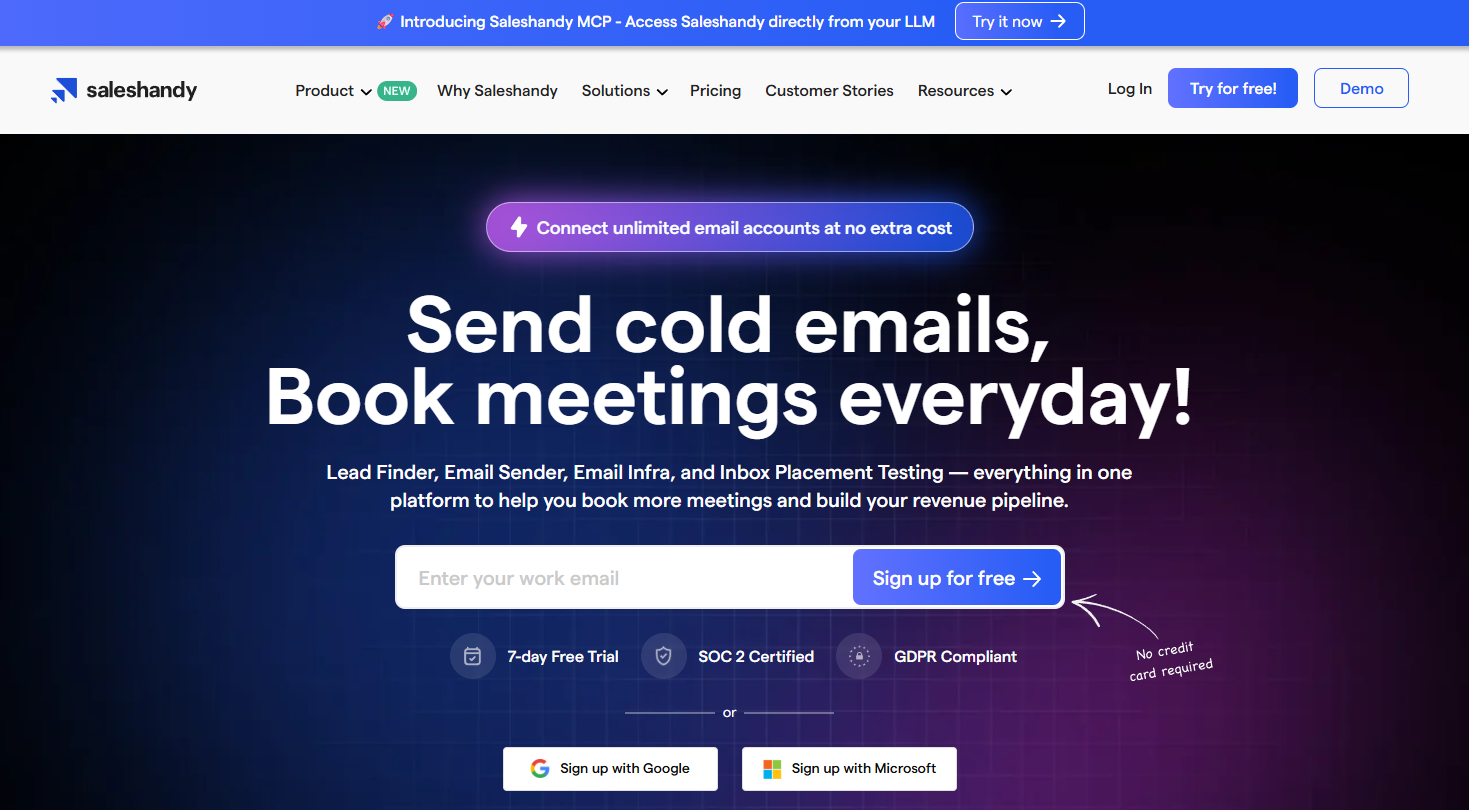
Saleshandy is a cold email automation platform with powerful AI features designed to maximize deliverability and response rates. It's built for SDR teams who need to scale personalized outreach without sacrificing inbox placement.
Key AI Features
AI Custom Variant: Automatically generates multiple unique email variations
AI Bounce Detection: Analyzes bounce types and pauses accounts to protect sender reputation
AI Reply Categorization: Analyzes responses and categorizes them (Interested, Not Interested, Booked, Closed)
Additional Features
B2B Lead Finder with 700M+ contacts and 60M+ companies
Personalization through custom fields, merge tags, and spintax
Multi-step sequences with timezone optimization
Deliverability suite (warm-up, spam checker, account health)
3. Apollo.io – Best All-in-One Prospecting Platform
Best For: Small to medium teams needing database + outreach in one platform
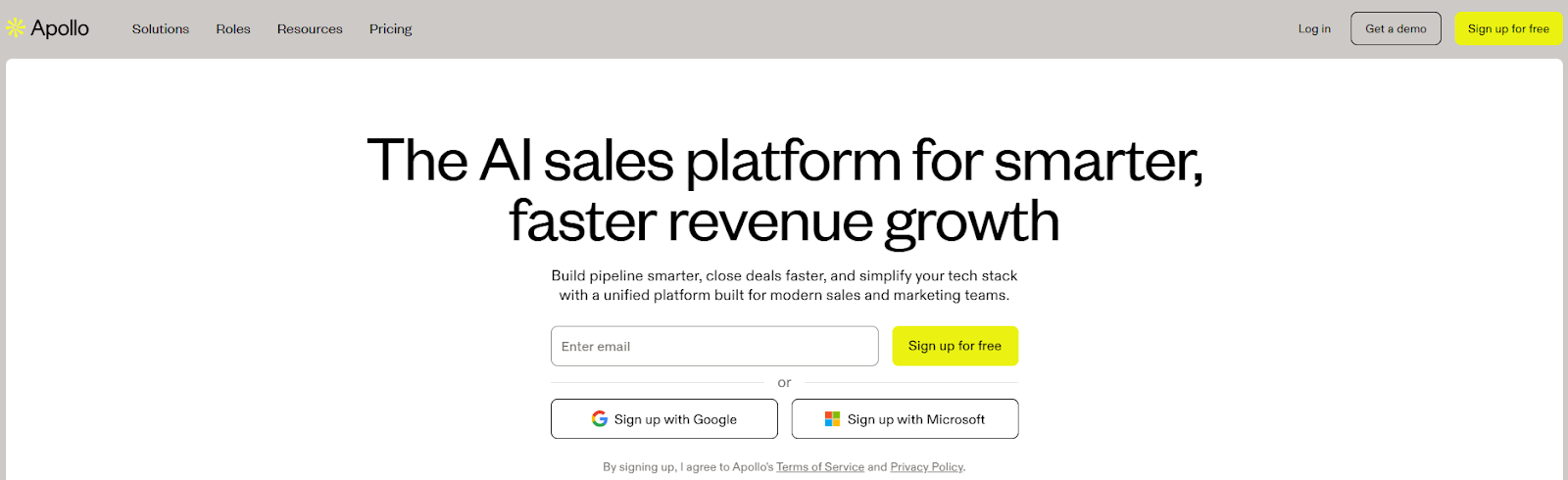
Apollo.io combines a massive B2B database (270M+ verified contacts) with AI-powered outreach automation, making it a comprehensive solution for teams that need both prospecting data and execution capabilities.
Key AI Features
AI-assisted meetings: Pre-meeting insights consolidating attendee research
AI call recordings: Captures insights and action items
AI copywriter: Generates personalized messaging at scale
Exceptional value combining database and automation
User-friendly interface
Strong deliverability management
Extensive integration ecosystem
Active community and education resources
Cons
Data accuracy varies by region
Limited advanced AI compared to specialized platforms
Customer support can be slow during peak times
4. 11x (Alice) – Best for Autonomous Outbound SDR Workflows
Best For: Teams wanting to scale outbound without adding headcount
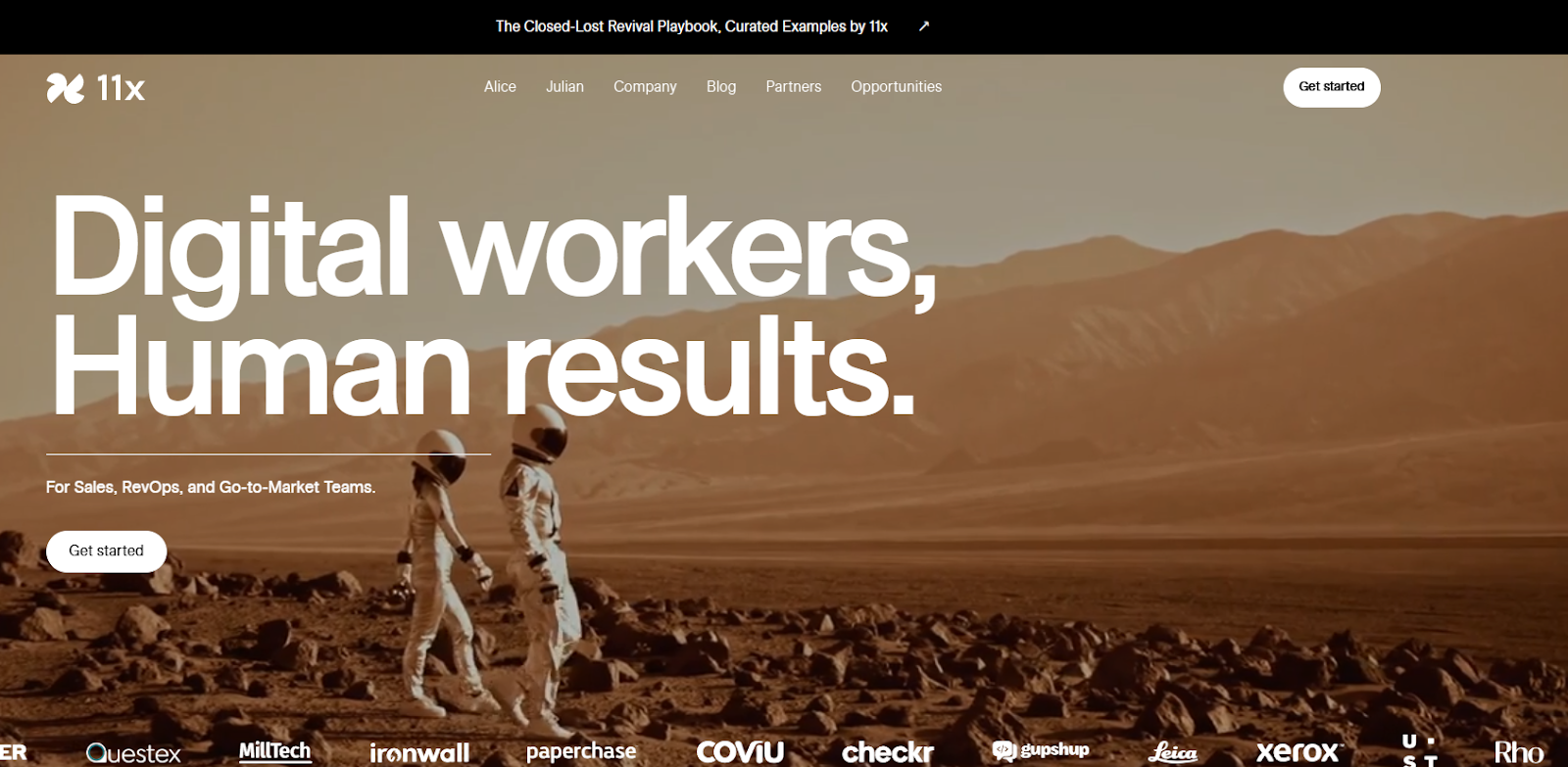
11x deploys "digital workers" (AI SDR agents) that handle the entire outbound workflow, from researching prospects to personalizing outreach, running cadences, and booking meetings autonomously.
Key Features
Fully autonomous AI SDR agents
Multi-channel outreach (email + LinkedIn)
Continuous learning and optimization
Prospect identification and enrichment
Reply handling and scheduling
CRM and calendar integration
Pros
Automates large portions of SDR workflow
Operates 24/7 across time zones
Combines lead generation + outreach + booking
Strong for volume-outbound motions
Cons
Messages can feel generic without supervision
Significant investment required
Requires well-defined ICP and clean processes
Less effective for account-based or complex sales
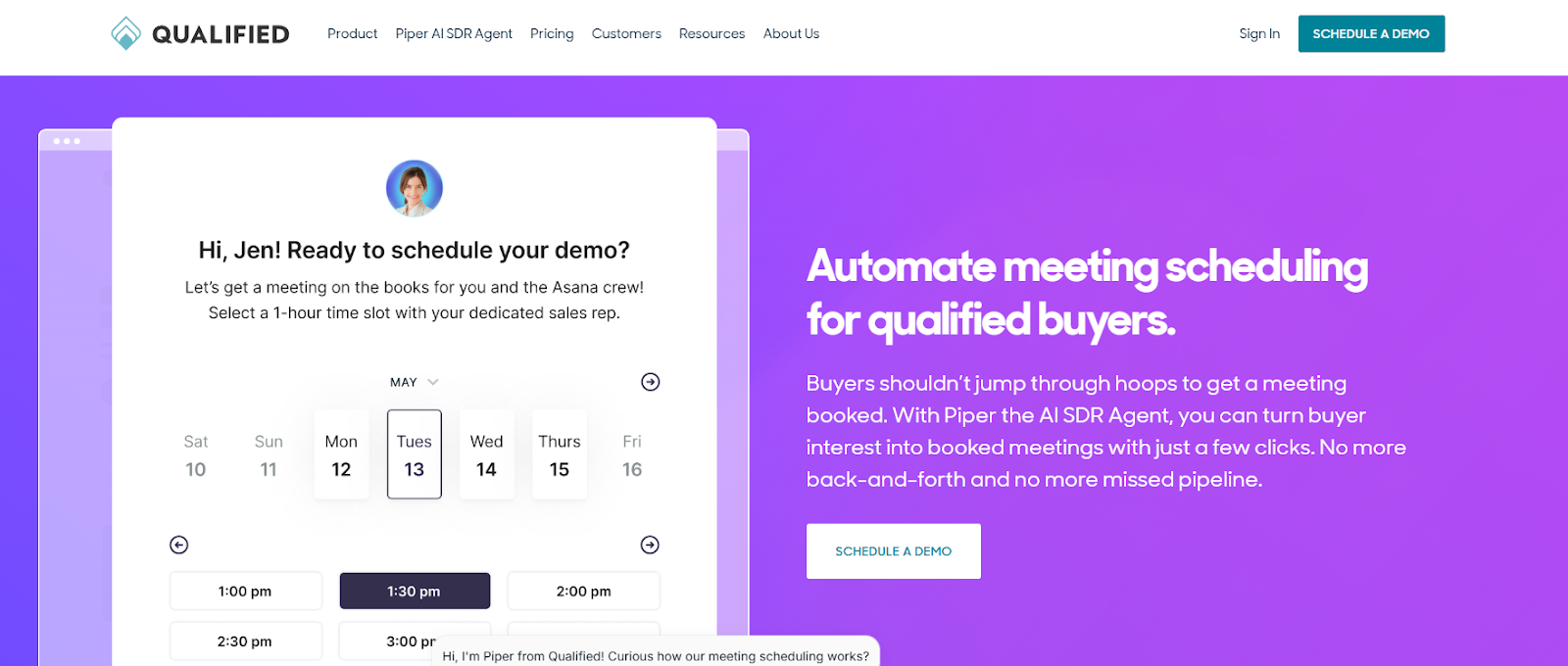
5. Qualified (Piper) – Best for Salesforce-Native Inbound Conversion
Best For: Salesforce-first enterprises with ABM programs
Qualified is built specifically for Salesforce environments, focusing on converting high-intent website visitors into qualified meetings through their AI SDR agent, Piper.
Key Features
AI-powered website visitor engagement
Account identification and qualification
Intelligent routing by territory, product, or segment
Real-time meeting booking
Pipeline analytics tied to visitor paths
Alerts when target accounts arrive on site
Pros
Deep Salesforce integration
Strong ABM support
Accurate account identification
Real-time engagement capabilities
Cons
Website-only (conversations move to email follow-ups)
Requires Salesforce investment
Can be expensive for early-stage teams
Limited to rule-based qualification paths
6. Drift – Best for Conversational Marketing and Routing
Best For: Teams wanting to replace forms with chat
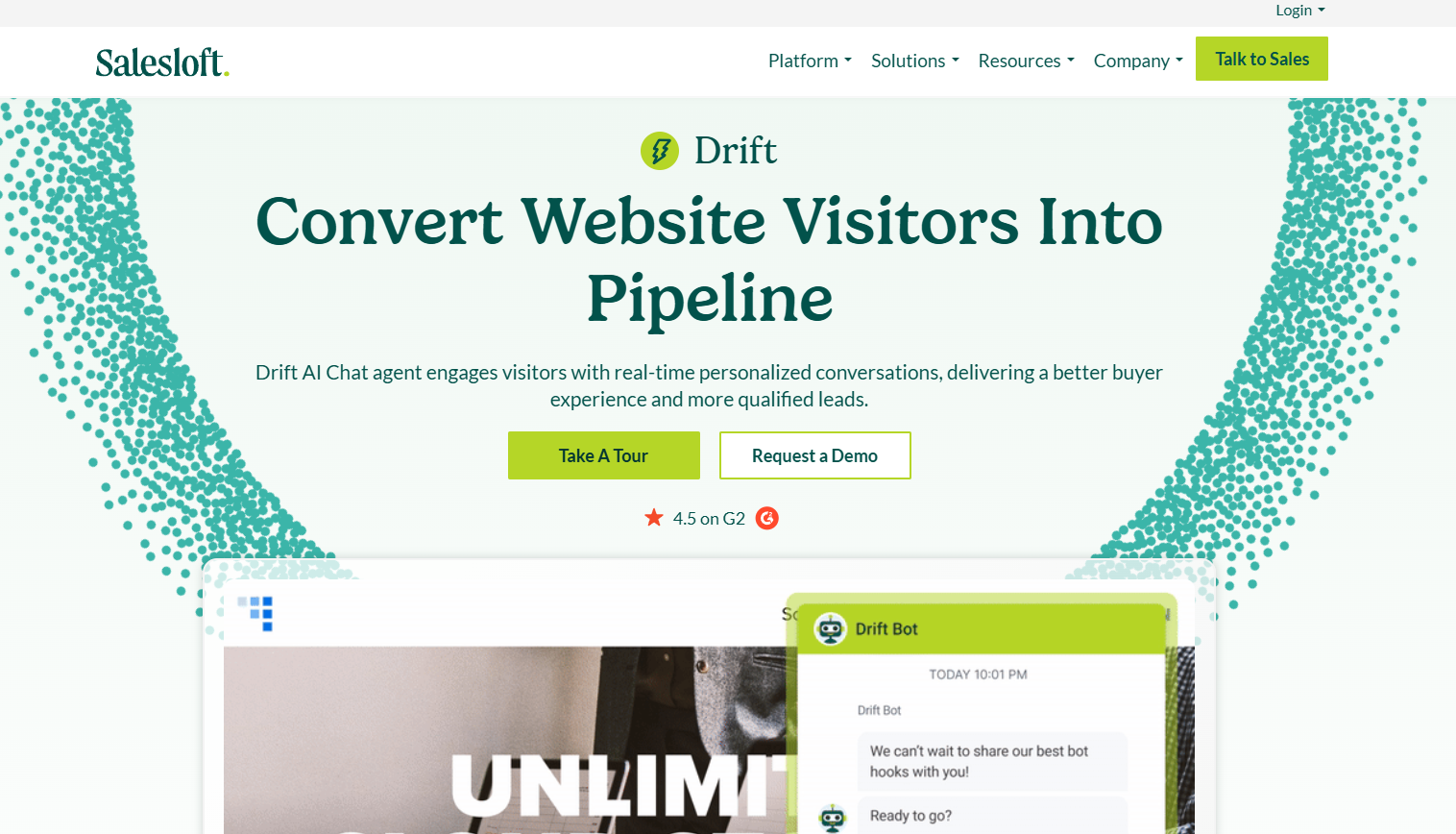
Drift pioneered conversational marketing through website chat. Now part of Salesloft, it focuses on engaging visitors, routing leads, and booking meetings through chat playbooks.
Key Features
Conversational chatbots with qualification flows
Playbook builder for common scenarios
Meeting booking directly in chat
Live rep takeover for high-value visitors
Routing based on account tier or geography
CRM syncing for contextual handoffs
Pros
Mature platform with proven results
Easy-to-deploy routing playbooks
Reduces form friction
Strong analytics
Cons
Website chat only (no messaging apps)
Conversations typically move to email
Setup can be complex
Does not continuously learn like modern AI agents
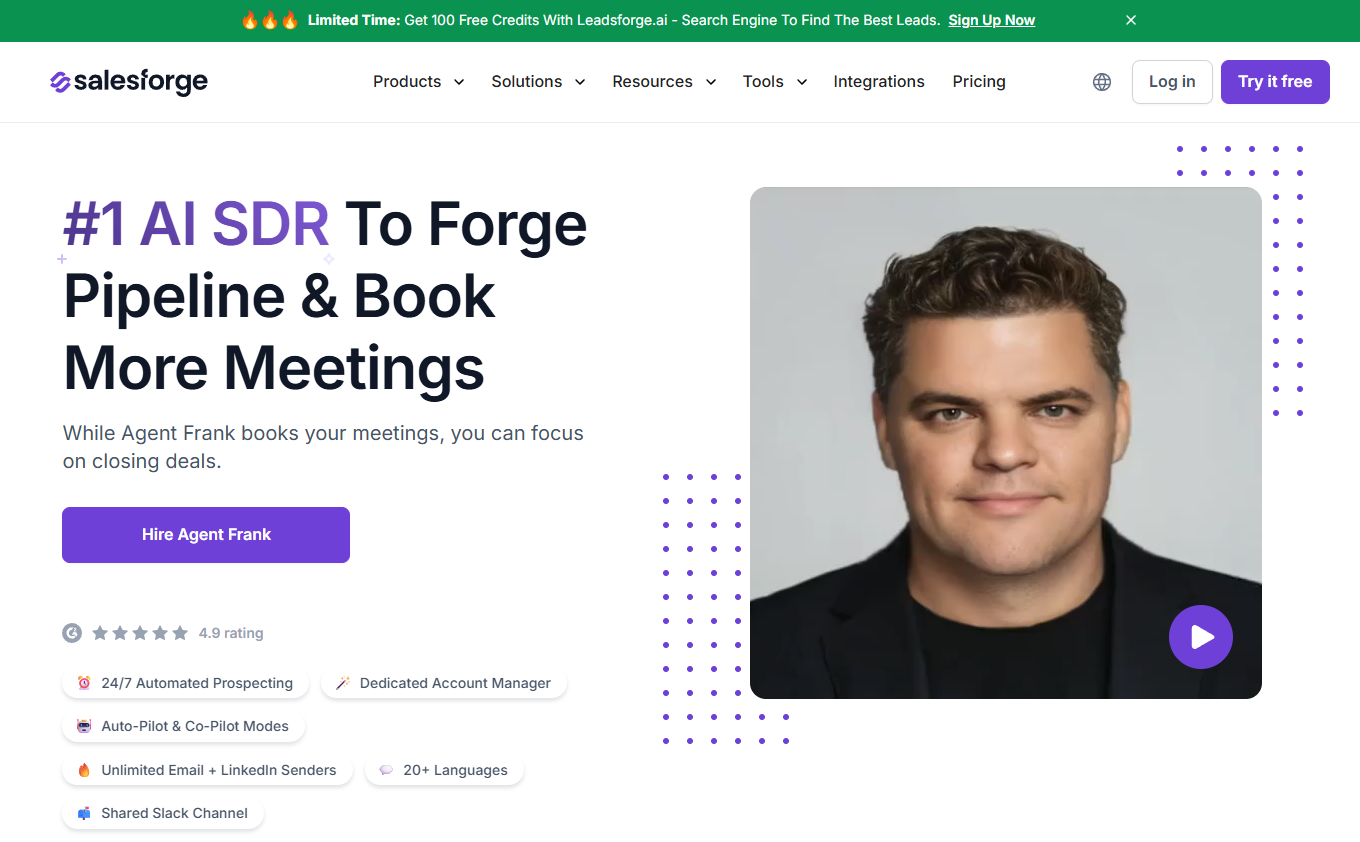
7. Agent Frank by Salesforge.ai – Best for Autonomous Outbound with Co-Pilot Mode
Best For: Teams wanting flexible AI SDR control
Agent Frank is an AI-powered SDR that learns from your best-performing sequences and applies those tactics to create high-converting campaigns. It offers both autopilot and co-pilot modes for flexibility.
Key Features
Intelligent Prospecting: Builds and enriches lead lists automatically
Email Integration: Works with existing mailboxes or new domains
Adaptive Learning: Improves personalization using past campaign data
Smart Scheduling: Manages calendars and auto-follows up
Dual operation modes (autopilot and co-pilot)
Pros
lexible control options
Real-time data enrichment
Multi-channel outreach (email + LinkedIn)
Dedicated customer success support
Cons
Requires quarterly billing commitment
Best results need quality historical data
Learning curve for optimization
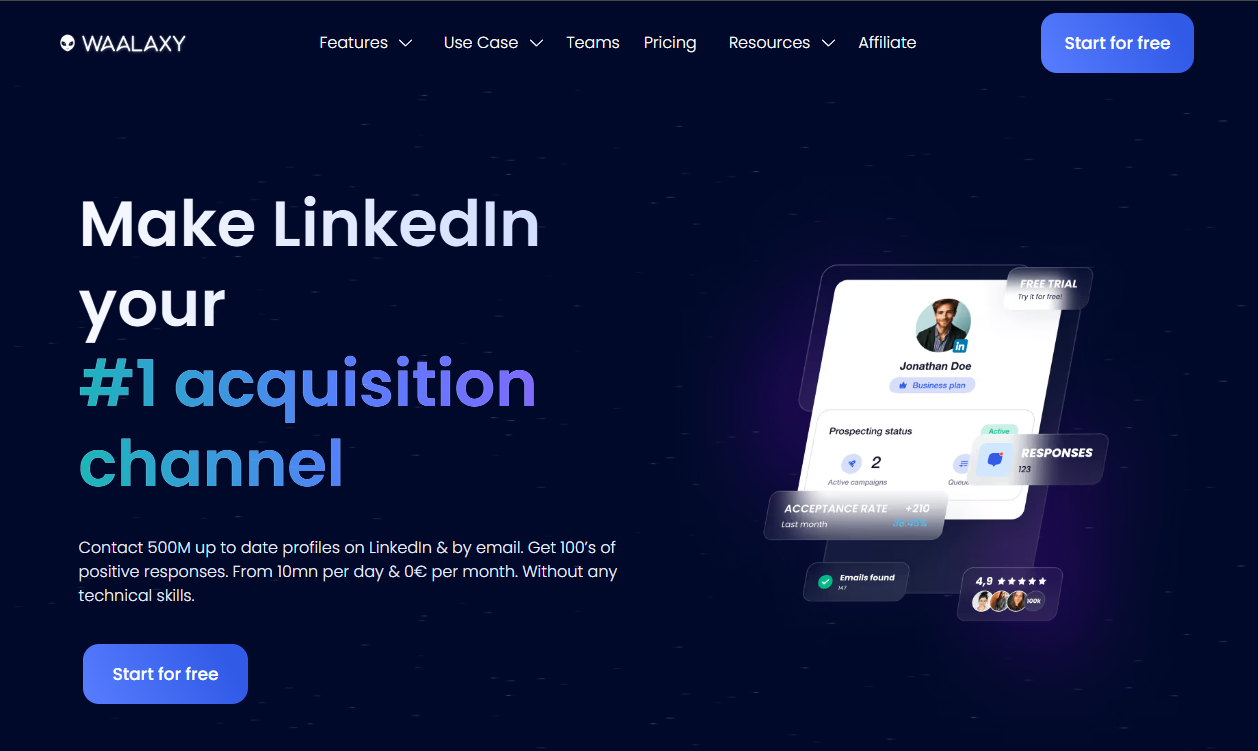
8. Waalaxy – Best for LinkedIn Automation
Best For: LinkedIn-focused prospecting and social selling
Waalaxy specializes in LinkedIn outreach automation with 99+ pre-built sequences for complete LinkedIn workflows.
Key AI Features
Waami: AI message generator for unique LinkedIn messages
AI Prospect Finder: Finds prospects based on ICP
AI ICP Generator: Creates detailed ideal customer descriptions
Automated invitations and messages
Trigger-based workflows
CRM integrations (Pipedrive, Salesforce, HubSpot)
AI-powered search engine
Pros
Specialized LinkedIn expertise
Affordable pricing
Good personalization capabilities
Strong team collaboration features
Cons
Limited to LinkedIn and email
Dependent on LinkedIn policy changes
Requires careful management to avoid restrictions
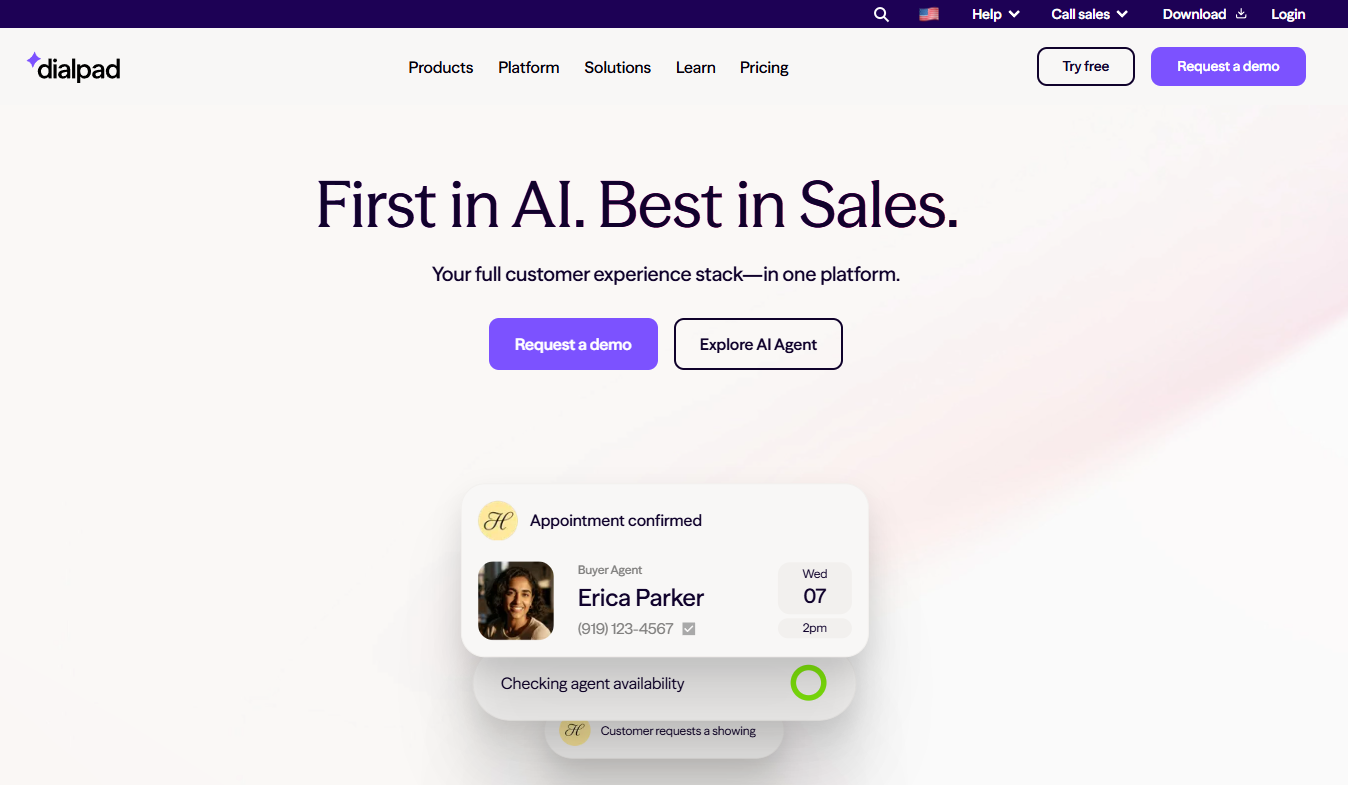
9. DialPad – Best for AI-Powered Cold Calling
Best For: Teams prioritizing phone-based outreach
DialPad is the leading AI cold calling platform with advanced features that automate dialing processes and provide real-time conversation guidance.
Key AI Features
AI Sentiment Analyzer: Analyzes conversation tone
AI Playbooks: On-call guidance and response suggestions
AI Recap: Captures meeting notes and conversation summaries
Deal velocity: Enablement tools (Knock AI Sales Agent)
Step 2: Evaluate Your Current Stack
Which CRM do you use? How do you handle sales engagement? Where does data currently break down?
Step 3: Consider Implementation Speed
Can you deploy in days or does it require weeks? Teams with limited resources should favor quick-start platforms.
Step 4: Calculate Total Cost
Beyond subscription pricing, factor in implementation effort, training, and opportunity cost of delayed results.
Step 5: Test with Real Use Cases
Request demos using your actual data. Define success metrics upfront and run controlled pilots.
How to Choose the Right AI SDR Tool
Start by identifying your main bottleneck such as inbound conversion, outbound scale, or deal velocity. Evaluate how well the tool integrates with your CRM and existing sales stack. Consider speed to implementation and total cost including opportunity cost. Always test using real data and defined success metrics.
Conclusion
AI SDR tools are fundamentally changing how modern sales teams build pipelines. The most effective platforms no longer force a tradeoff between speed and quality. They deliver both through context-aware automation, accurate qualification, and clean CRM execution. There is no single best AI SDR tool for every team. The right choice depends on where friction exists in your revenue process, whether that is inbound leakage, outbound inefficiency, or inconsistent qualification.
Teams that prioritize accuracy, context retention, and integration depth consistently outperform those chasing activity volume alone. When chosen correctly, an AI SDR tool does not just save time. It reshapes how your team engages buyers and builds a pipeline that actually converts.
Explore more from our blog
Unlock the B2B sales playbooks, outreach strategies, and closing techniques we’ve refined across more than 1,000 successful campaigns.
Let’s figure it out together. Book a quick call and we’ll walk you through the best-fit options based on your goals, team structure, and current setup.
Latest posts
Demo content
Interviews, tips, guides, industry best practices, and news.



.png)



%20.jpg)

.jpg)
%20.jpg)